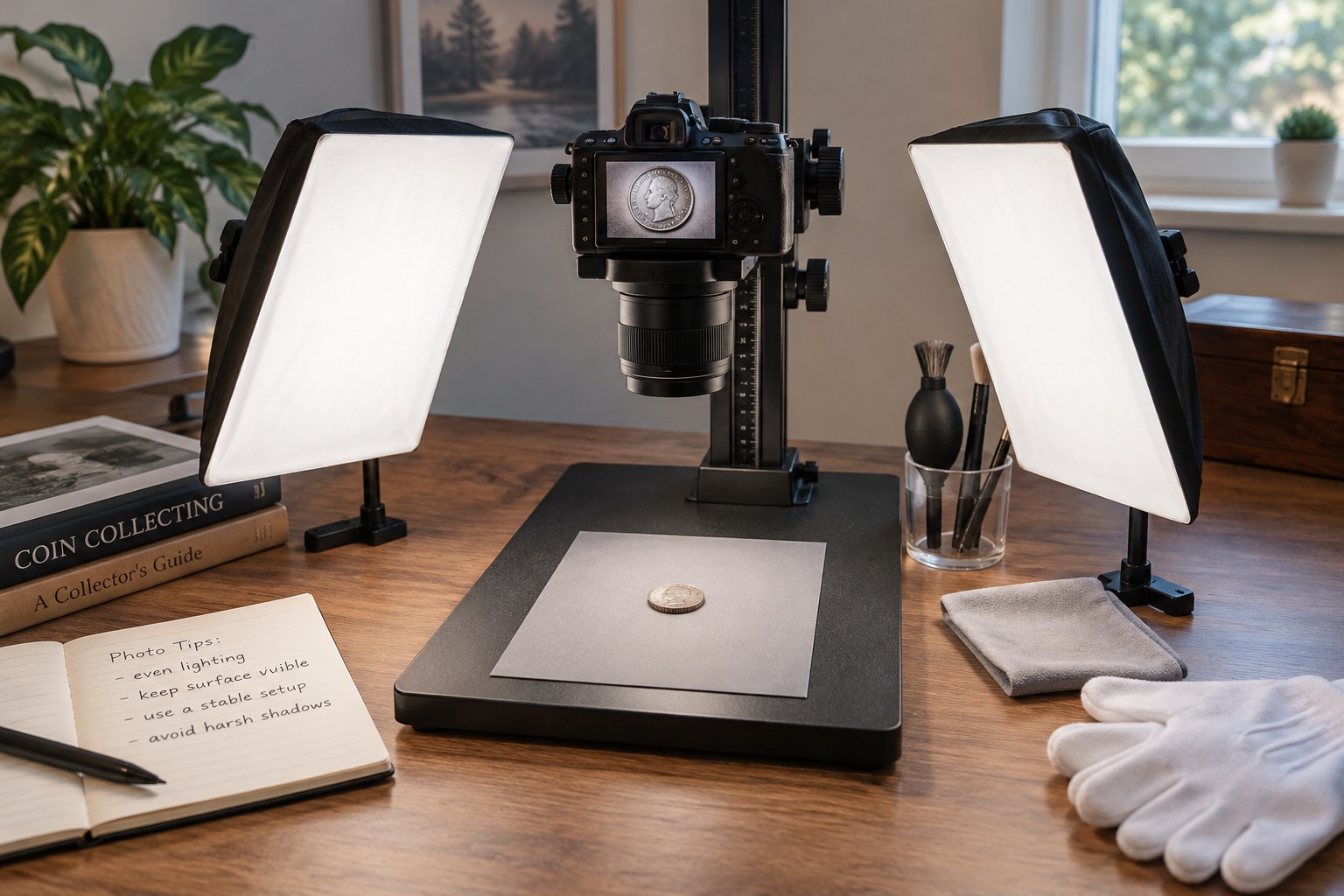
Organising duplicates for exchange
Two coins with the same basic description are not automatically interchangeable. A duplicate list works best when it records the individual examples you are actually willing to exchange.
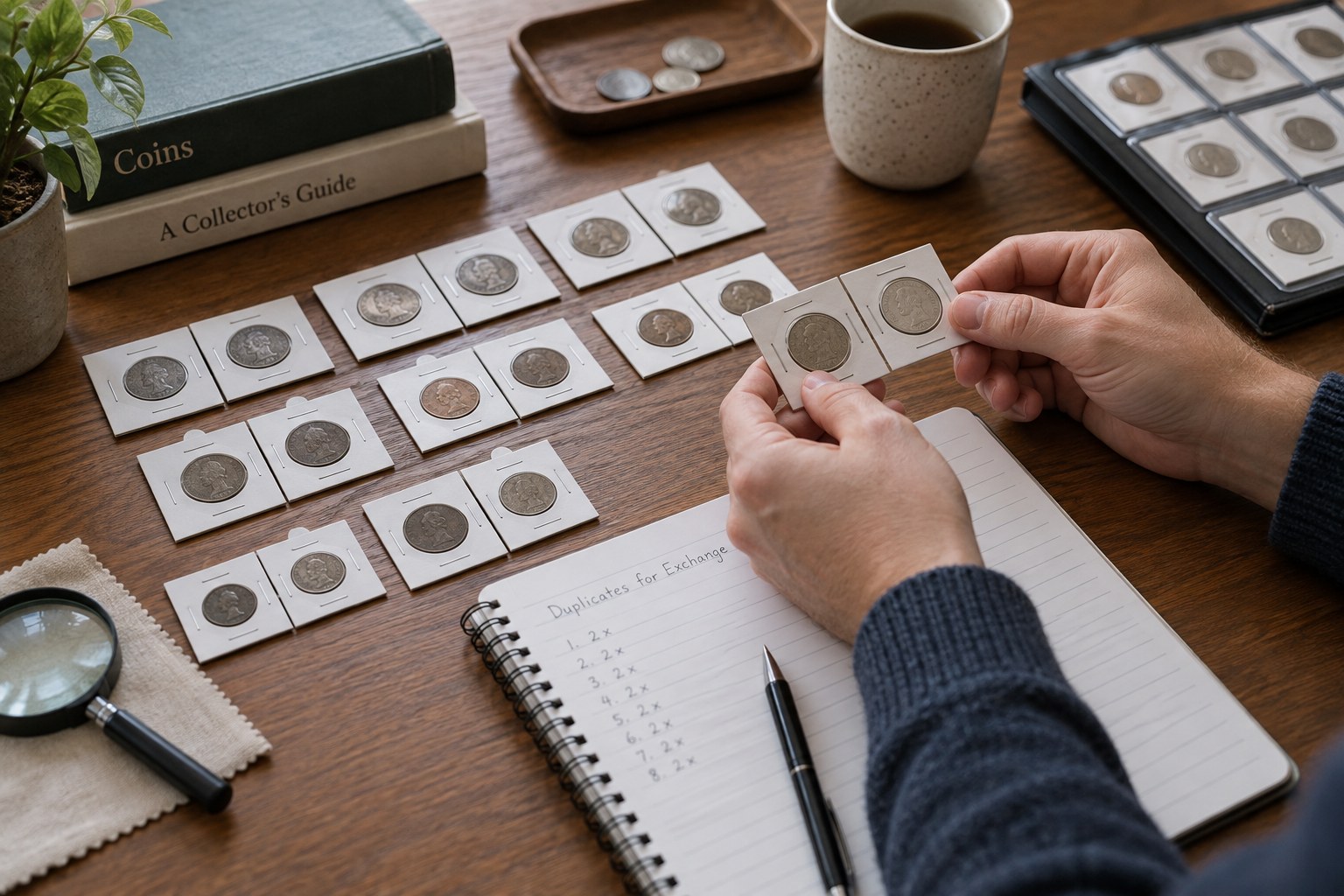
Define duplicate for your collection
Decide whether duplication means the same denomination and year, the same issue and mint, or simply another example of a design you already own. Different collecting goals produce different answers. A second coin may be useful for a teaching set or a comparison of wear even when it is redundant in a date sequence. Record the reason for keeping or offering each example.
Do not move an object to the exchange group merely because an inventory search returns a similar title. Compare the actual pieces, their dates, marks and related paperwork. Keep separate IDs even when they look identical. If you later choose to keep one and trade the other, the history and photographs should continue to describe the correct coin.
Build an offer record
Give each available item a clear status, location and photograph set. Describe visible condition and any limitation in identification. Include both faces and the edge when it can be documented safely. A group photograph can introduce the selection, but the other collector needs to know which individual coin an offer refers to.
State what is included: holder, label, packaging or only the coin. Keep your own acquisition record private unless a particular document is relevant to the exchange. If you share a spreadsheet, make a separate export that omits personal addresses, storage details and unrelated purchase correspondence. Review the exported file, not only the screen from which it was produced.
Compare the whole exchange
Write down both sides of a proposed exchange before agreeing. Identify the exact objects and the information still needed about them. A photograph of a desirable design does not answer questions about the actual example’s condition. Ask for missing views and agree how the parties will handle a mismatch between description and delivery.
Include packing and delivery arrangements in the discussion. An exchange of several inexpensive pieces may still require substantial work and shipping costs. Do not assume equal catalogue figures establish equal desirability or a fair transaction for both people. Agree on the objects and terms because both sides understand them, rather than using one reference number as a substitute for the conversation.
Prevent crossed promises
When an item is being discussed, mark it reserved with the date and the relevant conversation reference. Keep reserved separate from completed. If an offer lapses, update the status before presenting it elsewhere. This avoids promising the same duplicate to two collectors while assuming the first conversation has ended.
Before packing, compare each physical object with the agreed photographs and inventory ID. Keep the identifier with the protective enclosure and prepare a contents list. Photograph the packed arrangement if useful for your records, but remember that packing photographs do not prove what happens during transit.
Close the record without erasing it
On completion, mark the outgoing object as exchanged and link it to the incoming item’s new record. Retain the agreed description and relevant correspondence. If the incoming coin needs further identification, make that status explicit. The exchange history can then explain why one example left and another entered, even after your collecting focus changes.