Organising topical stamps while retaining provenance
A thematic collection can connect stamps from many places. Keep the route by which each stamp entered the collection visible while creating that new order.
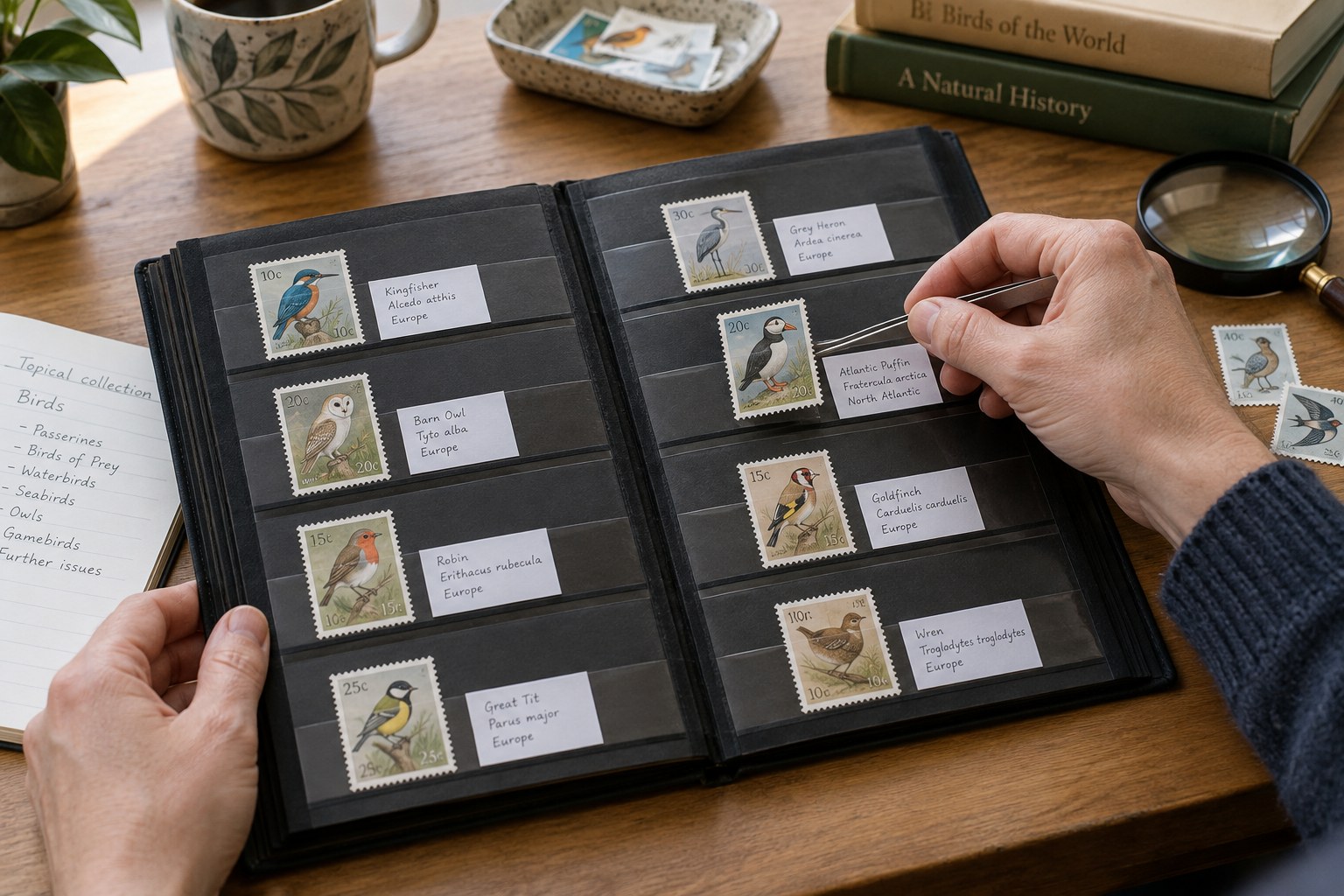
Give the theme a workable boundary
Choose whether the theme follows a pictured subject, an event or a broader idea. A collection of birds shown on stamps differs from a collection about migration that also includes maps and transport. Write a short inclusion rule and test it against a few borderline examples. This prevents every attractive design from becoming a reason to expand the theme indefinitely.
Use several descriptive tags when one stamp belongs to more than one subject. A stamp showing a ship and a lighthouse need not be duplicated physically to appear in both searches. Keep one stable inventory ID and let the index provide the connections. Avoid using the current theme name as the entire object identifier, because the theme may change later.
Preserve the former arrangement
Before moving material from an older album or packet, photograph its position and copy the associated labels. Record the source group, purchase reference and any previous identification. If a label contains an uncertain attribution, retain it as a previous statement rather than silently adopting it as fact. The new arrangement should add an interpretation, not erase the old evidence.
Keep complete covers, blocks and other related units intact when separating them would destroy useful context. A reference photograph can represent the subject in a thematic page while the original remains stored appropriately elsewhere. Note its actual location so the image does not become an unexplained substitute for a missing stamp.
Build pages that can change
Arrange a small group first and leave room for labels and new discoveries. Describe why each item belongs, using observable design details or a supported issue reference. Do not invent an artist’s intention simply because the picture fits your theme. When the connection is your own interpretation, make that clear in the caption.
Review repeated designs and decide whether they contribute a meaningful comparison. Several near-identical examples may show differences in marking or format, but they may also occupy space without advancing the project. Keep surplus material in linked storage rather than squeezing it onto the page to avoid making a choice.
Keep the collection legible to another person
Maintain an index connecting theme, inventory number, source group and physical location. Add a short explanation of the page order so someone else can follow the narrative without guessing. When an item leaves through sale or exchange, preserve its record and update the page reference. Provenance is easier to retain when it is part of the routine from the first rearrangement, not a reconstruction attempted years later.


