Planning a temporary display at home
A temporary display can tell a small story without putting the whole collection on view. Give it a defined purpose, a manageable selection and a clear plan for returning everything to storage.
Choose one connection between the objects
Select a theme that can be understood from a few pieces: changing packaging, different scales of one subject, or several approaches to the same design feature. Write a short sentence explaining the connection. If an object needs a long justification to belong, it may be better saved for another display.
Choose objects that can be displayed safely in the available space. A fragile favourite does not have to appear merely because it is central to the theme. A photograph or a reference note can represent an example that should remain in storage, provided it is clearly identified as an image rather than a physical object on show.
Plan supports and positions
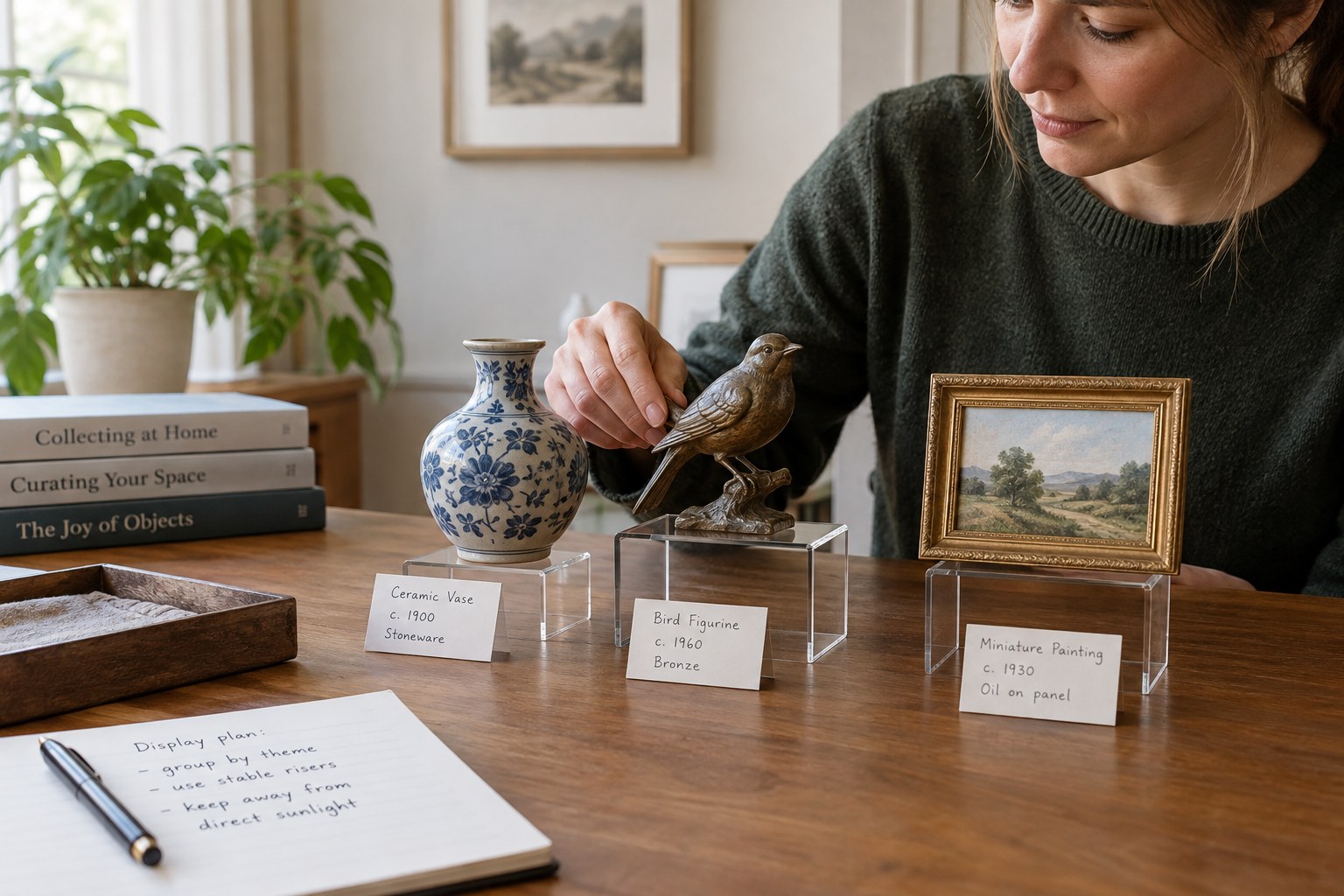
Measure the display surface and each object in its proposed support or case. Draw a layout with space between projecting parts and room for removal. Consider the view from the front and from a seated position. A temporary display should not depend on leaning objects against one another or using unstable household items as risers.
Check light, access and surrounding activity. Keep the display away from direct sunlight, drinks and places where everyday tasks require reaching across it. If visitors will be present, make the viewing boundary clear and decide which, if any, objects can be handled. Do not improvise handling arrangements once people are already gathered around the table.
Write labels that explain the selection
Use brief labels with the object name, relevant date or scale where confirmed, and the feature that connects it to the theme. Keep uncertain information visibly qualified. Avoid turning labels into sales descriptions or unsupported claims of rarity. Put detailed records in the catalogue for anyone who wants to read more.
Include inventory identifiers discreetly in your setup notes so similar objects can be returned to the correct locations. Photograph the finished arrangement and keep a list of the pieces included. This provides a practical record without placing catalogue paperwork among the display objects.
Set an end date and a return routine
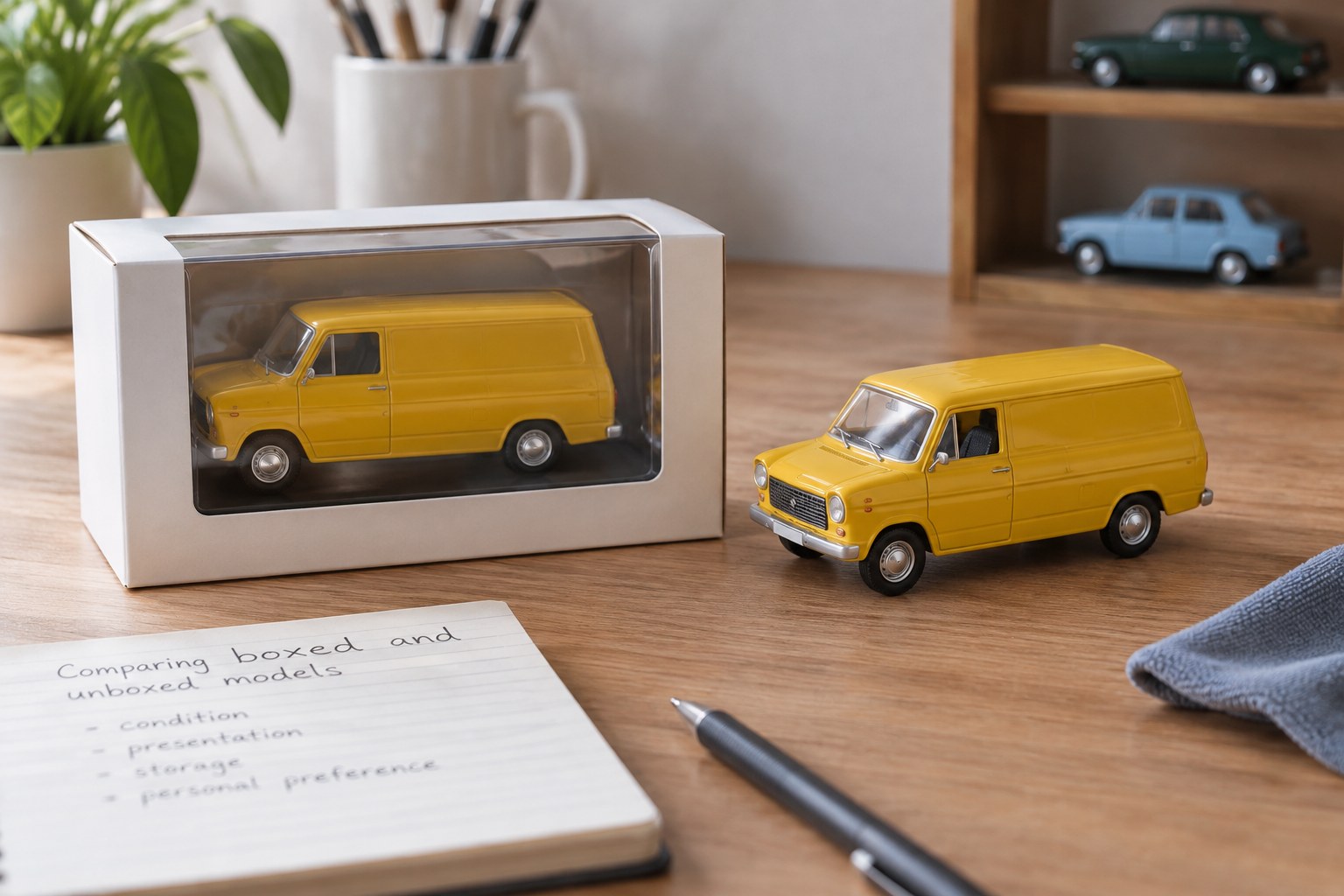
Decide how long the display will remain and where each object will go afterward. Keep its normal enclosure and associated accessories identified while it is on view. An empty box should not be mistaken for surplus packaging during the temporary arrangement.
At the end, compare the objects with the setup list, inspect their condition and return them to their recorded locations. Note any handling or layout problems that would change the next display. A temporary exhibition succeeds when it makes the collection easier to understand and can be dismantled without confusion, pressure or missing components.