Preparing coins for a specialist assessment
A specialist can make better use of an organised enquiry than an unexplained box of coins. Prepare the identity, question and handling history before arranging an assessment.
Specify the question you need answered
Identification, condition assessment, conservation advice and a market valuation are different services. Write the main question in one sentence, then list any secondary questions. For example, you may need to know which issue a coin belongs to before deciding whether a formal grading service is relevant. Choosing the service around the question avoids paying for an assessment that does not address your concern.
Describe the intended use of the answer: updating a family inventory, preparing a sale, deciding on storage or resolving an uncertain attribution. Ask what form the response takes and whether it includes a written report. Confirm fees, expected scope and any exclusions directly with the specialist. Do not assume that an informal photographic comment has the same status as an examination of the object.
Build a short evidence packet
Give each coin an inventory number and supply clear images of both faces and the edge where safely accessible. Include readable photographs of existing labels and holders. State dimensions or weight only when you know how they were obtained, and identify measurements that include packaging. Avoid attaching dozens of nearly identical images without explaining which detail matters.
Add a concise history: when and how the coin entered the collection, any accompanying receipt or certificate, and treatments you know about. Distinguish documented facts from family recollections and seller claims. If you do not know whether it was cleaned, write unknown. A complete-looking history assembled from assumptions is less useful than a short record with honest gaps.
Keep the objects unchanged
Do not polish, remove deposits or open a sealed holder to improve the presentation before asking what the specialist needs. Existing packaging and labels may contribute information, even when they look untidy. Photograph the current arrangement and describe any access limitations. If the specialist requests a change, clarify who will perform it and what the risks or consequences are before proceeding.
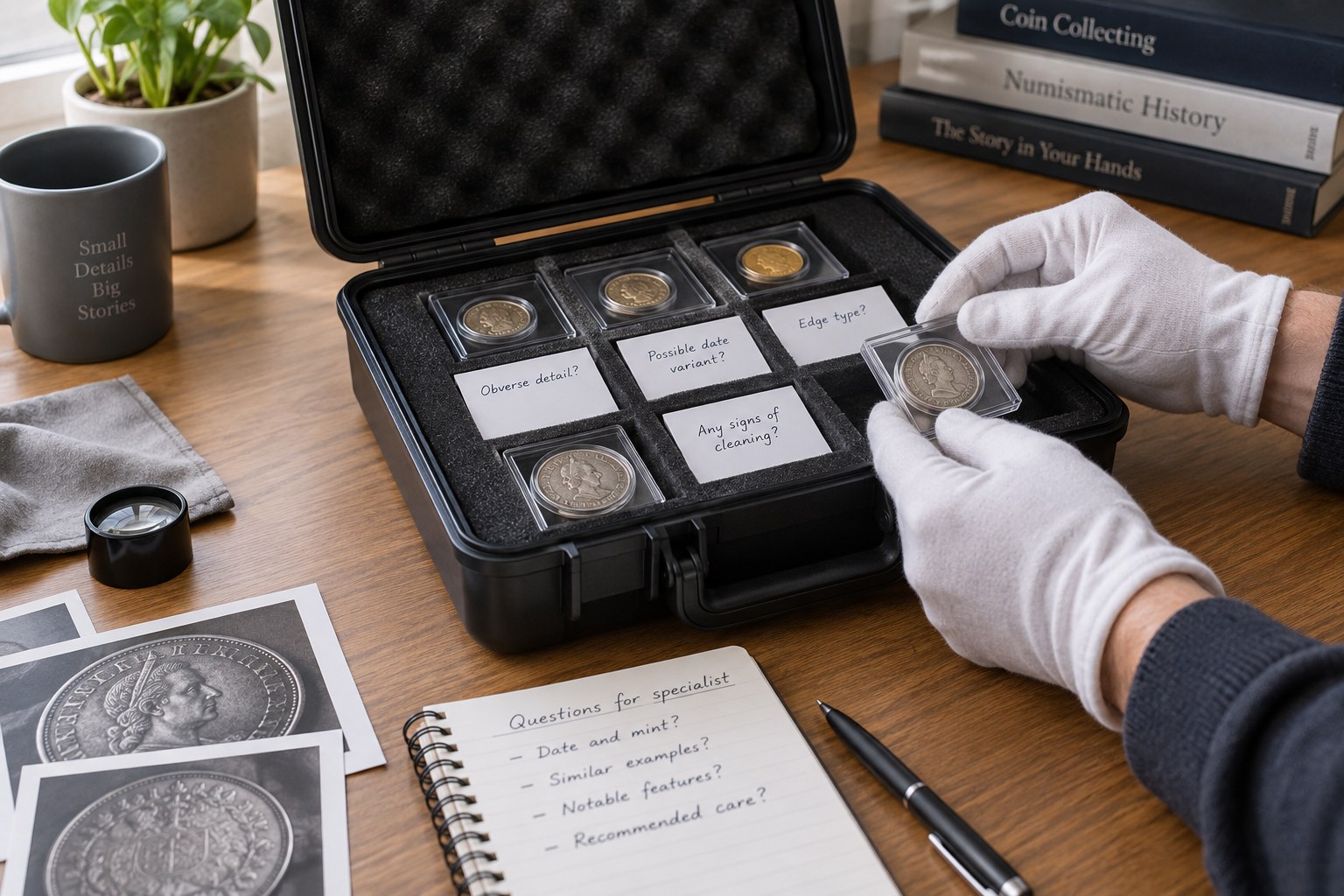
For an in-person appointment, ask how the objects should be presented and how many can be examined within the booking. A tray or box should keep each coin associated with its record. Prepare a list that can be checked on arrival and departure. Avoid bringing loose piles that require sorting during the appointment.
Agree the handover details
If shipment is necessary, obtain the recipient’s instructions before packing. Confirm the destination through an established contact channel, the contents expected and how receipt will be acknowledged. Discuss suitable transport arrangements and responsibility directly with the service provider. The appropriate arrangements depend on the objects and service; a generic parcel method should not be assumed sufficient.
Keep a dated contents list and condition photographs. Identify holders and documents as components of the handover so they are not overlooked. Retain copies of paperwork rather than sending your only record of a purchase or earlier assessment. Record the location as with specialist and keep the handover reference in the inventory.
Read the returned opinion precisely
When the assessment arrives, check that the inventory numbers and described objects match your submission. Record conclusions with their stated qualifications and keep the full report. Do not shorten a cautious attribution into an absolute identification when updating a sale description. If a question remains unanswered, ask specifically whether it falls outside the service or requires additional examination. The value of the record lies in preserving what the specialist actually concluded.