Preparing fragile paper for a conservation enquiry
A conservation enquiry should show what the paper object is, what has changed and what you need to do with it. You do not need to diagnose the problem before asking.
Describe the object and the concern
Give the object an inventory reference and describe its format, dimensions and known materials. State whether it is loose, bound, mounted or attached to other components. If you do not know the paper or printing process, say so. A confident but mistaken material identification can direct attention away from the actual question.
Explain the concern in observable terms: a tear at a named edge, a fold that resists opening, loose fragments or a change compared with an earlier photograph. Say when you first noticed it and whether you know it is new. First noticed today is not the same as occurred today. Keep that distinction in the enquiry and in your own record.
Photograph without staging a treatment
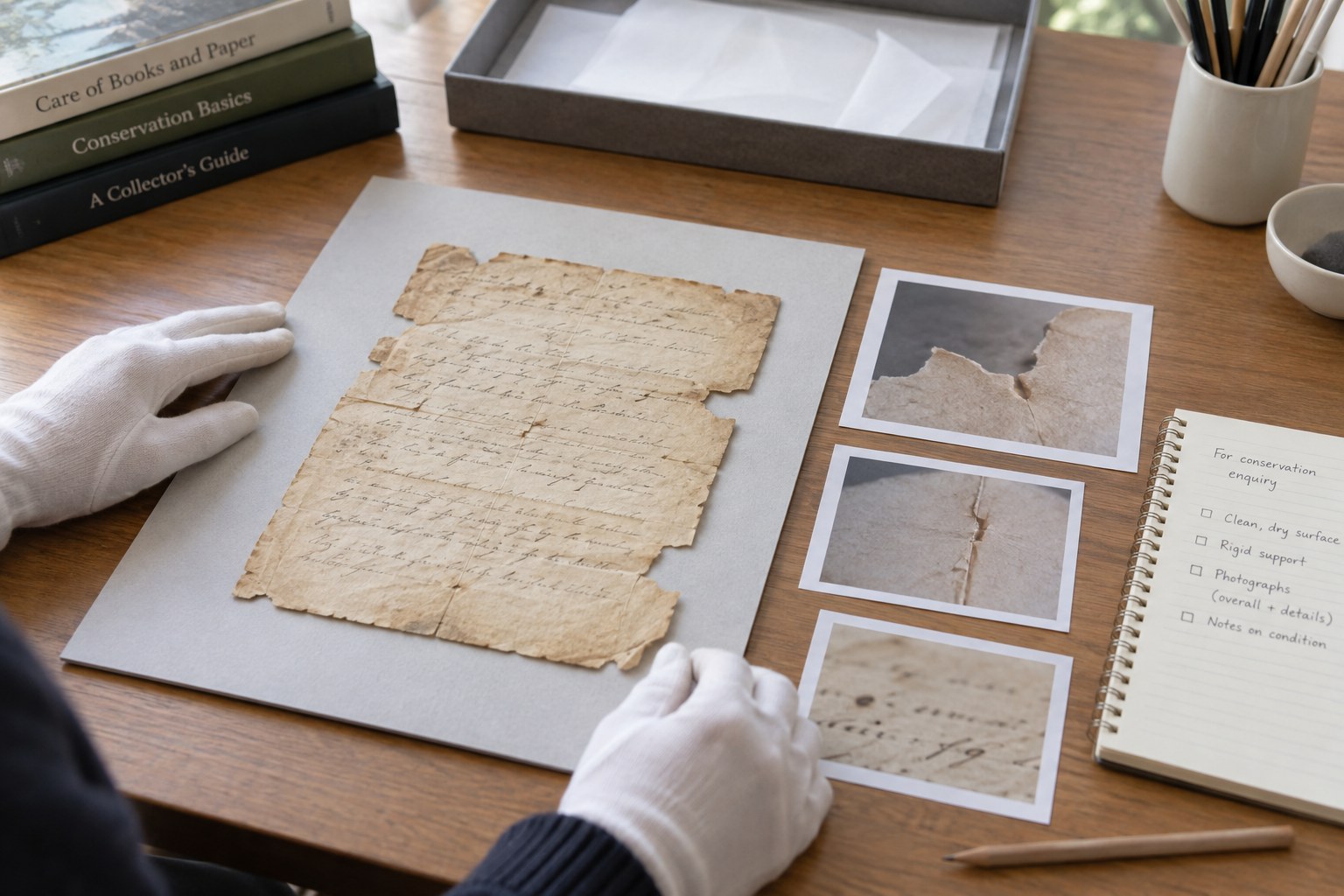
Provide an overall view, an accessible reverse view and details of the relevant area. Keep the object supported and include its existing enclosure when that helps explain the problem. Do not remove mounts, peel attachments or unfold resistant sections to create a more complete photographic set. State what cannot be seen safely.
Use lighting that makes the feature readable without pressing the paper against a surface. Include a scale beside the object if it can be placed without contact, or state dimensions separately. Keep the original images and label the detail views by position. Several explained photographs are more useful than a large folder of unlabeled close-ups.
Supply the history you actually know
Summarise storage location, any recent move and known exposure to water or unusual conditions. Include previous treatment information, even if a household repair seems embarrassing. The conservator needs accurate history, not a polished account. Attribute recollections and distinguish them from dated records or photographs.
Preserve loose fragments and associated labels without attempting to reattach them. Ask the conservator how they should be housed and transported before changing the arrangement. Do not apply tape or adhesive to stop a tear for the journey unless specifically directed by the professional responsible for the object.
Ask about the next decision
Explain whether you need safe storage, access for research, preparation for display or advice before a sale. Ask whether the next step is an in-person examination, further photographs or another specialist. Discuss fees and the scope of any proposed assessment directly. A photograph-based response may help triage the enquiry without providing a complete treatment proposal.
Keep the response with the object’s record and note any handling restrictions. If sending the original is recommended, obtain packing and receipt arrangements first. Retain copies of all documentation and update the location in the inventory. A successful initial enquiry creates a clear next step while leaving the object available for informed examination.


