Protecting toy boxes without hiding their condition
A protective cover should make a toy box easier to handle without disguising its condition. Document the box first, then choose an enclosure that fits without pressure.
Record the packaging before covering it
Photograph the front, back, sides and accessible flaps on a clean surface. Include existing creases, tears, price labels, writing and window damage. If the box is sealed, do not open it simply to complete an internal photograph; state which areas have not been inspected. A clear description of the inspection limit is better than an unsupported claim about the contents.
Record the box dimensions at their widest points. A bowed panel or raised flap can make the actual shape different from an ideal rectangular measurement. Do not press the box flat to fit a protector. If it contains the toy, consider the weight and the internal support as well as the outer card surface.
Choose space rather than compression
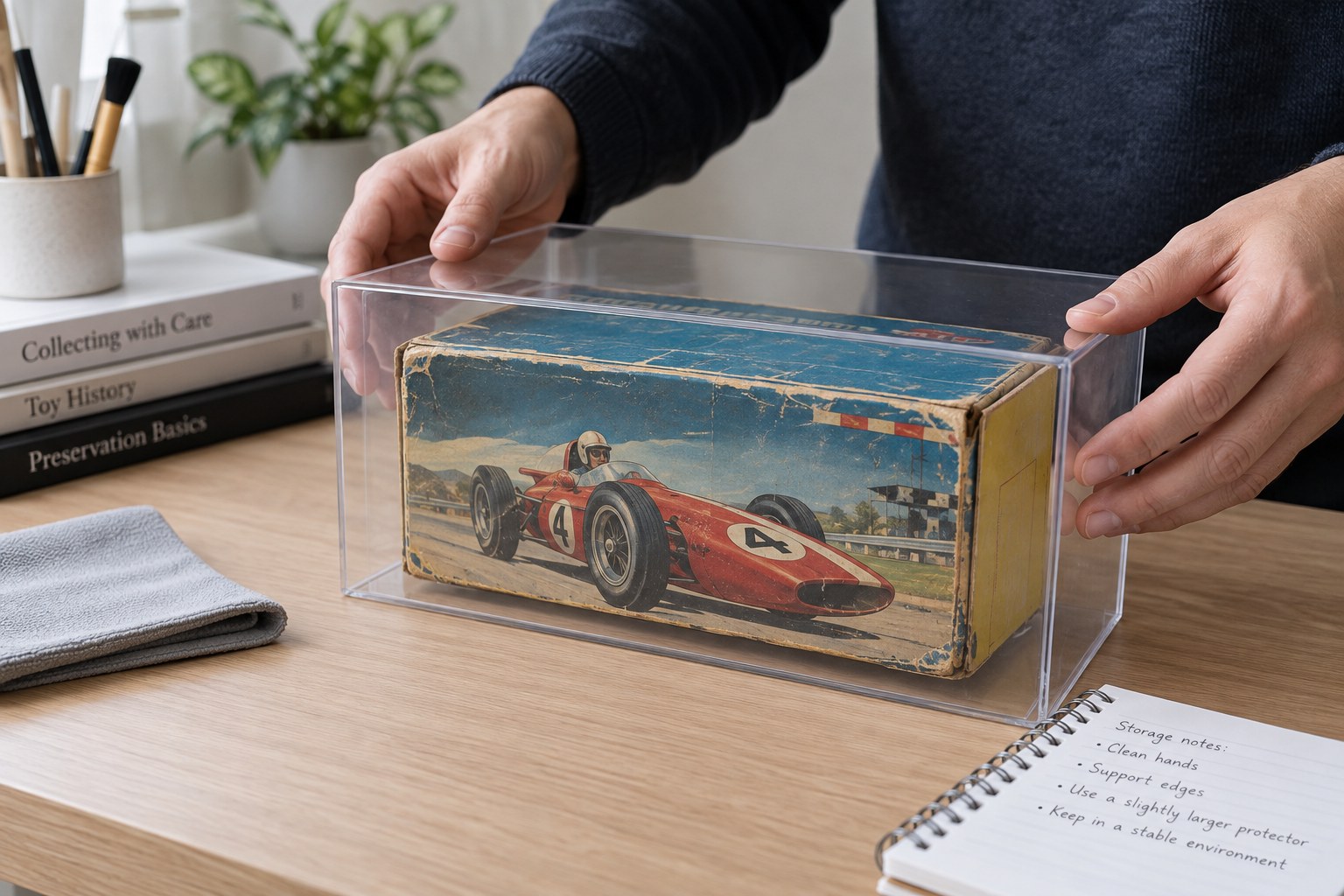
Ask for the enclosure's usable internal dimensions and the way it opens. A rigid cover that just matches the nominal box size may catch corners during insertion. Check that there is room to place and remove the box without scraping edges or pushing against a fragile window. A small sample order is preferable to buying many identical covers before testing the fit.
Keep labels on the protective enclosure rather than the original packaging. If you use an inventory label, place it where it does not hide an important panel or a known defect. Avoid decorative stickers that make a damaged area appear intact when photographed through the cover. Protection should not change the information a viewer can obtain from the box.
Show covered and uncovered views honestly
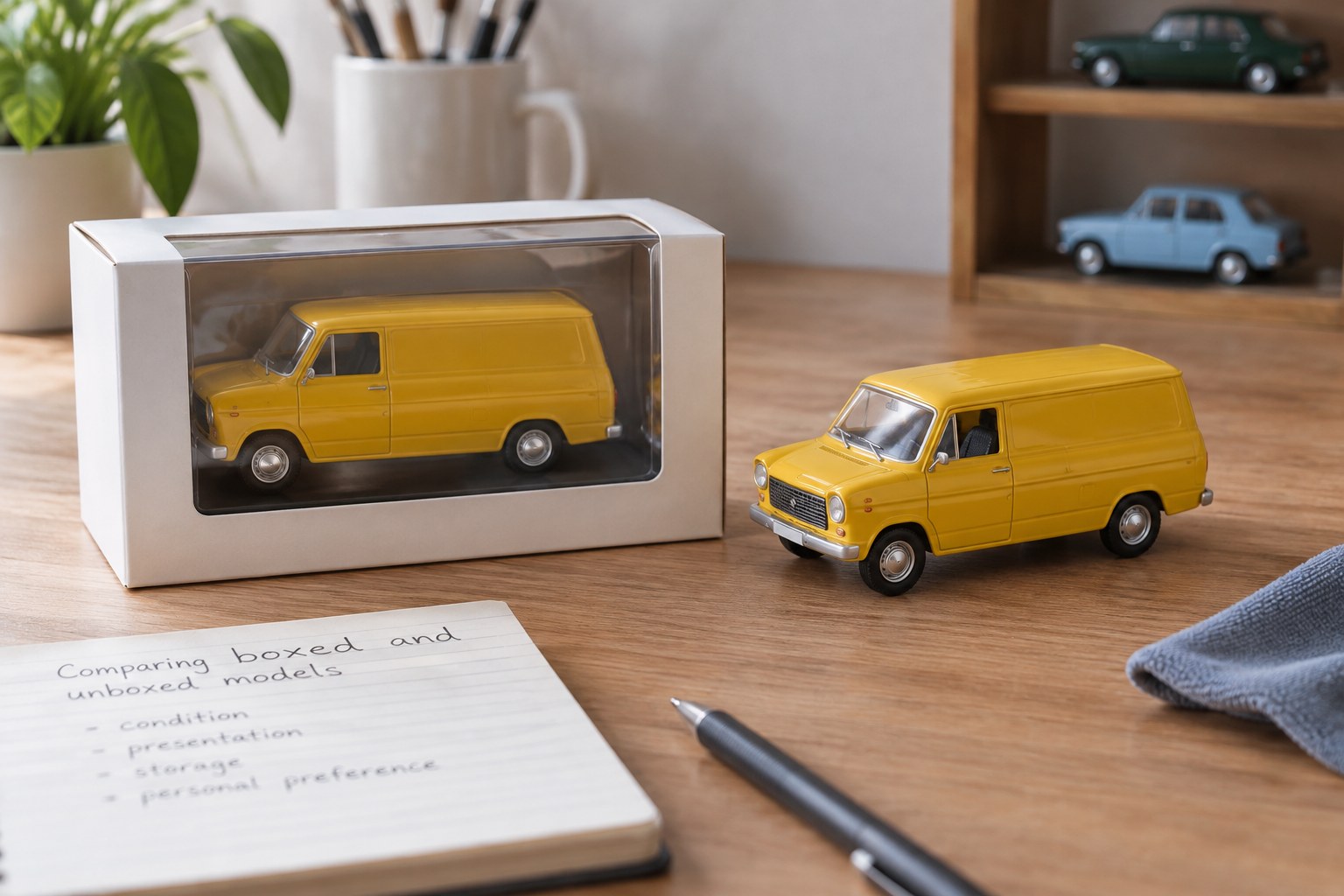
For a sale or exchange, explain whether photographs were taken through a protector. Reflections can conceal creases and make plastic-window damage difficult to interpret. Include the earlier uncovered photographs when they still represent the current condition, and date them if there has been a substantial interval.
Check the box after moving it into the enclosure and after later retrieval. Record any change rather than continuing to use an old description automatically. If removing the box would now risk damage, explain that limitation and provide the clearest available views. The purpose of housing is to support future care, not to make inspection impossible or turn an uncertain condition into an apparently flawless one.