Questions before buying a collectible model train
A collectible train can be bought for display, operation or historical interest. Decide which role matters before asking whether it works, because that single question leaves many important details unanswered.
Establish the exact model
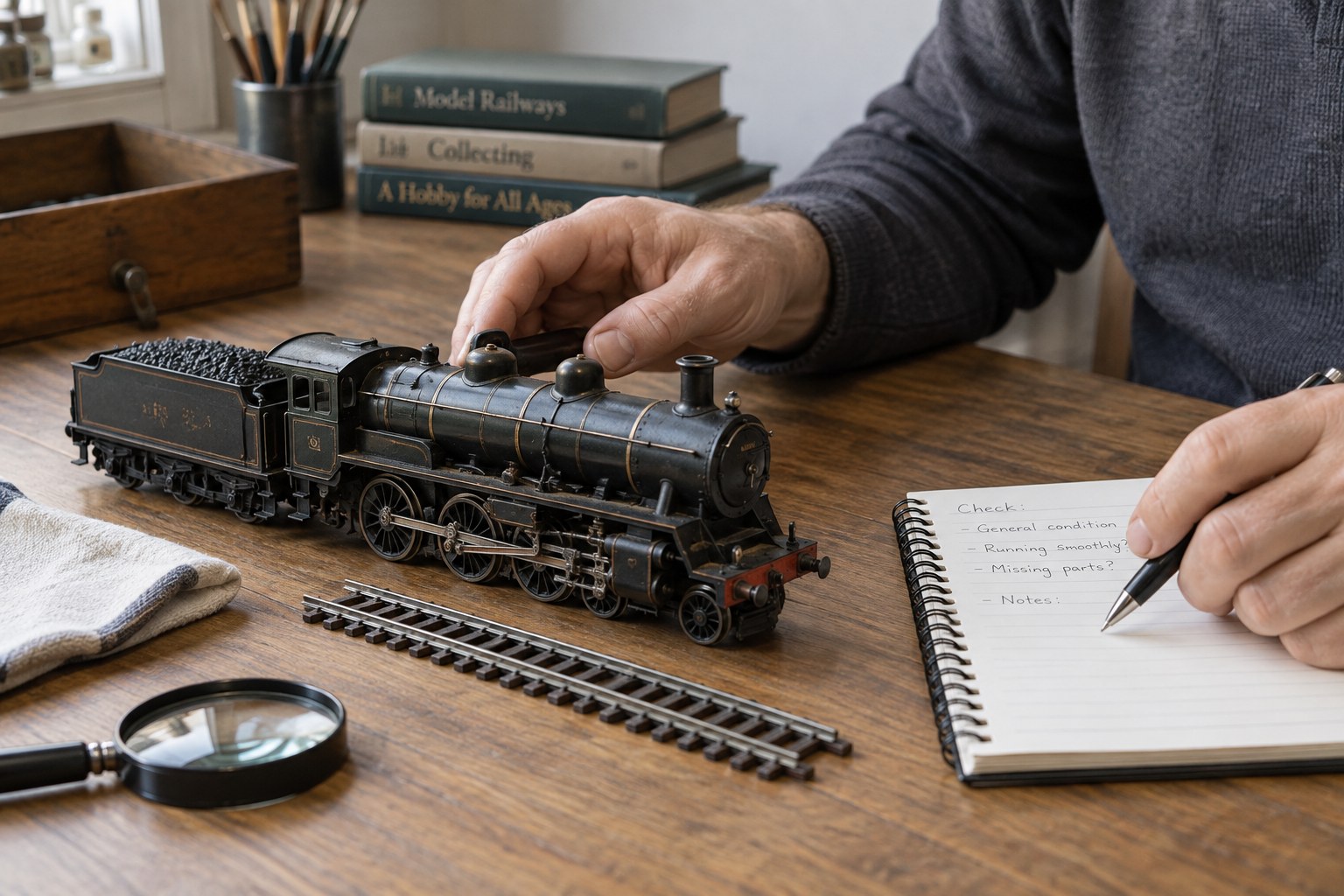
Ask for the maker, product reference, stated scale and track gauge, supported by photographs of labels and markings. Compare the locomotive, tender or cars with the box description rather than assuming they were always together. If a model has been renumbered or repainted, record the visible identity separately from the manufacturer's original reference.
Clarify what is included: locomotive, tender, couplings, loose detail parts, instructions, packaging and any electronic accessories. A photograph of a train on a layout may show track or rolling stock that is not part of the offer. Request a written contents list so the purchase is not defined by background objects.
Ask what working means in this listing
Request the date and scope of any test. Was the model observed moving in both directions, were lights checked, or was only the motor heard? Ask what equipment was used and whether the seller can provide a video of the actual model. A statement that it worked years ago is historical information, not a current test result.
Keep untested distinct from faulty and from working. A seller may have no suitable equipment, which limits the evidence without proving a defect. Decide whether the price and purpose still make sense if operation cannot be confirmed. Do not buy a display object on the assumption that an unexplained electrical problem will be easy to repair.
Check compatibility independently
Consult the maker's instructions for the exact version's power and control requirements. Scale and gauge alone do not establish electrical compatibility. Ask whether electronics have been fitted, removed or changed, and whether documentation for those changes is available. A modified model may no longer match the standard specification in an old catalogue.
If you intend to operate it on an existing layout, compare the documented requirements with that layout before purchase. Do not test an unfamiliar train by connecting it to whatever controller is nearby. For uncertain or older equipment, seek a competent model railway technician's advice. This article is a buying checklist, not a wiring or repair procedure.
Inspect physical completeness and previous work
Request clear views of both sides, ends, roof and accessible underside. Ask about broken steps, missing handrails, damaged couplings and loose parts relevant to the model. Do not ask the seller to invert a fragile locomotive without suitable support simply to satisfy a checklist; the inspection should respect the object's condition.
Ask specifically about repainting, replacement wheels, mechanical work and other alterations. Separate documented servicing from unverified claims such as fully restored. If invoices or work notes exist, ask what they cover and whether they accompany the purchase. A repair history can be useful without guaranteeing that no further maintenance will be needed.
Plan the arrival
Confirm how the train and any loose parts will be immobilised and protected. Original inserts may be missing, degraded or unsuitable for a modified model. The shipping arrangement should support robust areas and keep projecting details free from pressure. Ask how the recipient should remove the model from its packaging.
On arrival, compare identity and condition with the saved description before operating or modifying anything. Keep packaging until the inspection is complete. If the model was bought for display, record that intended use and any untested functions. A clear account of what was purchased is more valuable than allowing the phrase collectible train to conceal unresolved questions.