Recording dates and mint marks
Dates and small marks are easy to miscopy when several similar coins are on the table. A record should preserve the reading you can support and make uncertainty searchable.
Keep literal and normalised fields
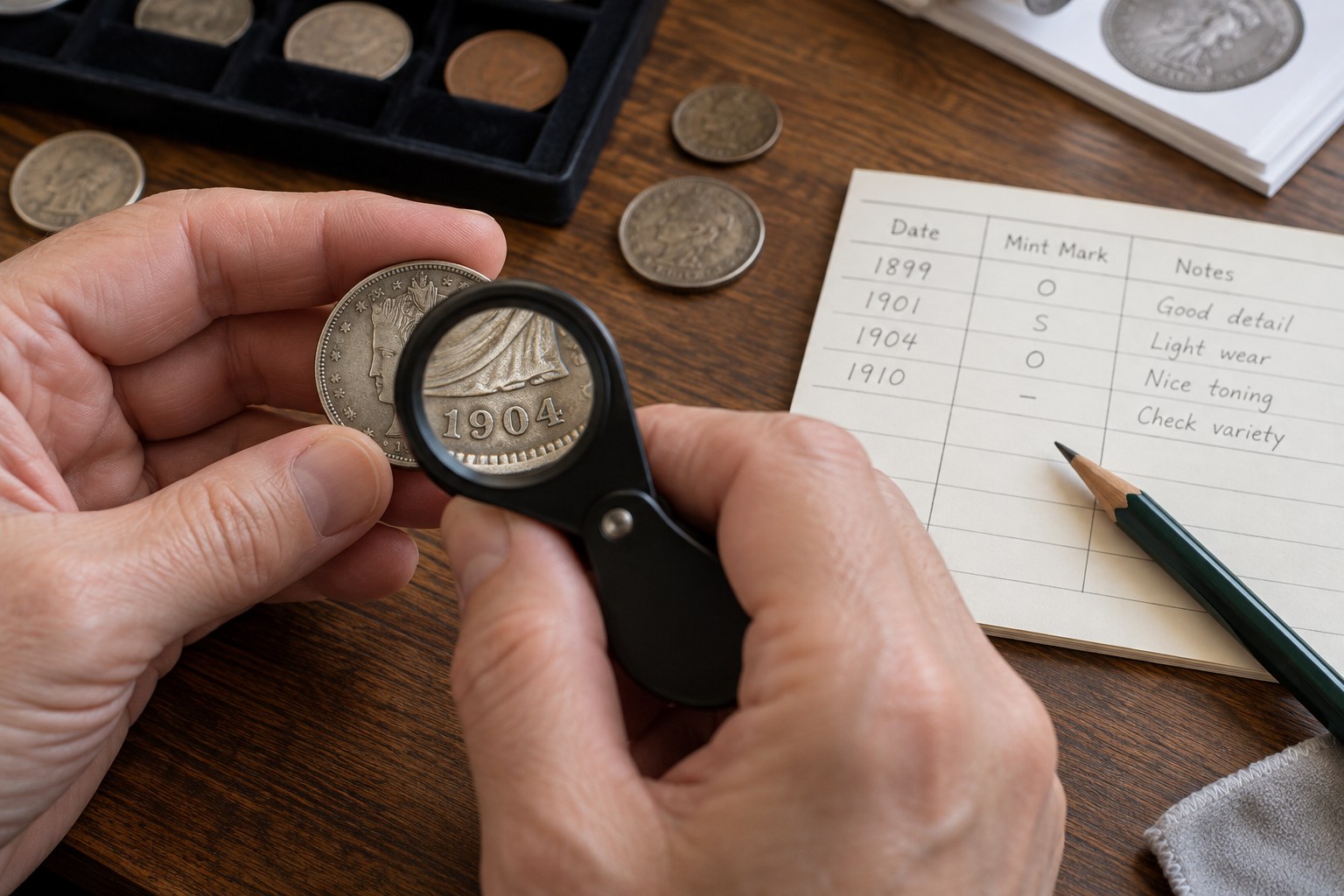
Give the coin an inventory number before transcribing details. In a date-as-seen field, copy the visible characters, including a partly missing digit or unfamiliar numeral. Use a separate field for the year you use to sort the collection. That distinction matters when a date needs interpretation, when a series carries more than one date or when the coin’s date is not the same as the date of manufacture you are researching.
Choose an uncertainty convention and explain it in the spreadsheet notes. A question mark can identify an uncertain character, while a blank can mean that you have not examined the area. Do not use zero for an unreadable date: spreadsheet sorting will treat it as a real number. Keeping these situations distinct makes later research more efficient.
Locate the mark, then identify it
Describe the position of a small mark before naming it. For example, record that a letter appears beneath the main design or beside the date. Not every small letter on a coin is necessarily a mint mark; it could belong to another part of the design. Consult a reference for the exact issue before assigning a meaning.
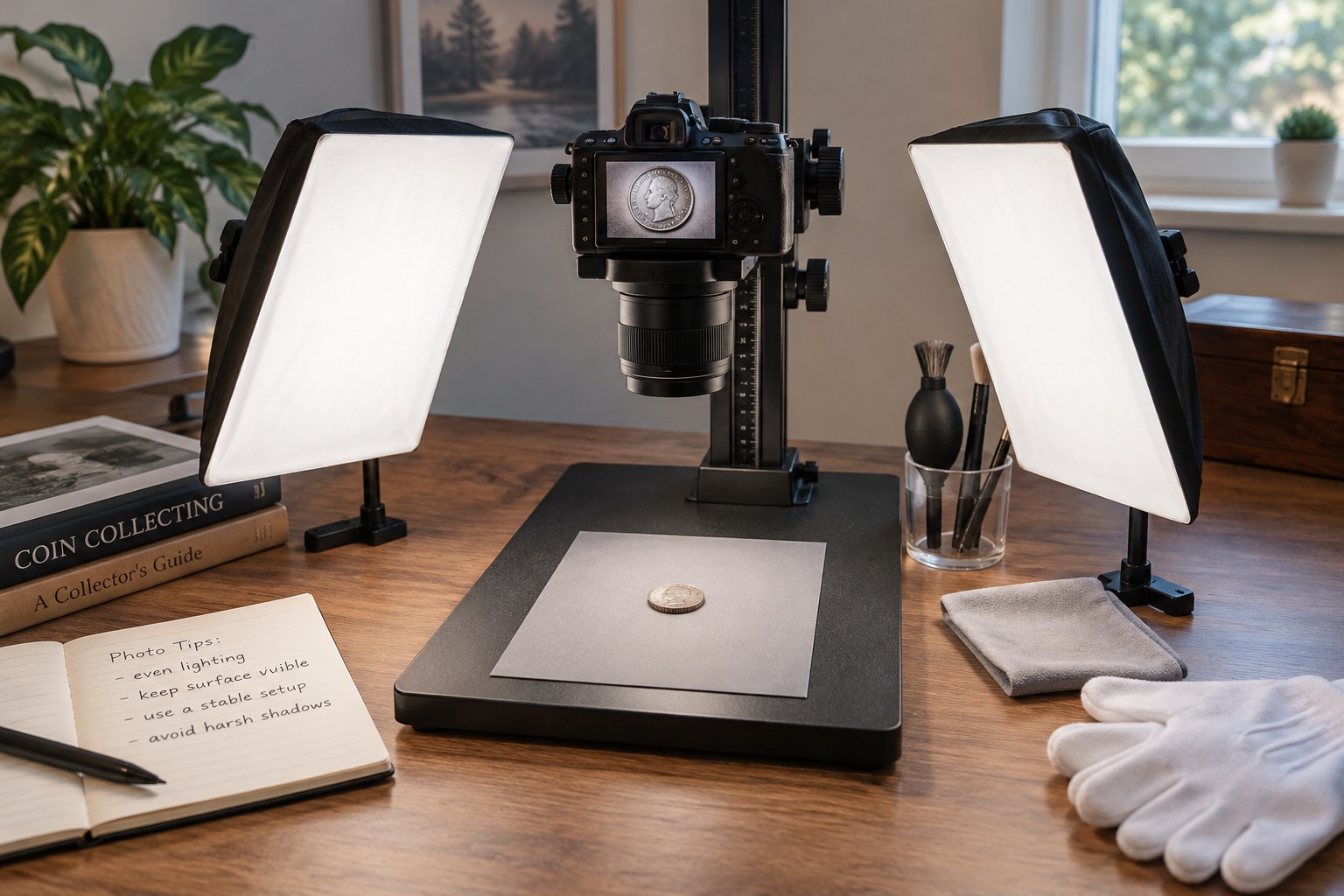
Save a close photograph with the mark’s position indicated on a separate annotated copy. Include a complete face photograph as context. An isolated crop can be difficult to interpret later because it loses scale, orientation and neighbouring details. Name the files with the inventory number rather than the proposed mint, so a corrected identification does not break the connection.
Make corrections visible
Store the reference title, relevant page or stable link and the date you consulted it. Record whether the source identifies the mark directly or merely shows an example that looks similar. A matching photograph can guide further research without proving that your coin belongs to the same variety. Leave a note about the feature that still needs confirmation.
When a reading changes, retain the earlier reading in a dated note. This is particularly useful if an old sale description or family list used the mistaken identification. You can then explain why two records disagree instead of treating one as a different object. Review a small sample of entries after each recording session; consistent transcription is easier to maintain than to reconstruct after hundreds of coins have been entered.