Reviewing a mixed coin lot before buying
A mixed lot is a group purchase, not a promise that every visible coin will be useful. Review what is actually included before dividing the price by the advertised count.
Define the part you want
Start with the collection gap the lot might fill. Are you seeking a range of countries, examples for teaching, duplicates for exchange or one particular issue? Write that purpose beside the listing. A large number of unrelated pieces can be inexpensive per item and still be a poor purchase for a narrowly defined collection.
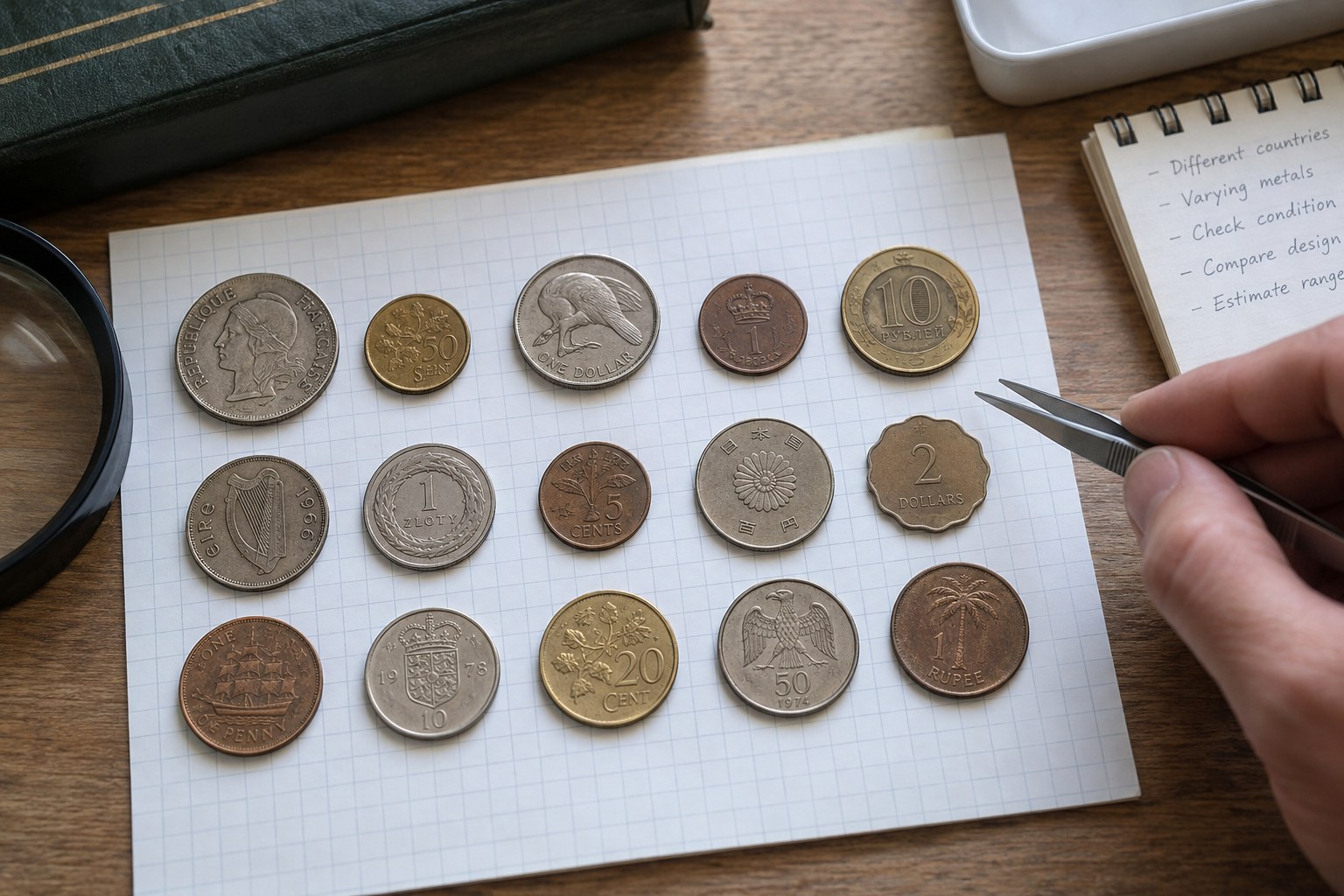
Separate visible candidates from unidentified pieces. Make a brief list of the coins you can recognise from the photographs, those you cannot read and any that appear repeated. Do not assign hopeful identities to obscured examples. If the purchase only makes sense when the hidden coins prove desirable, the listing has not yet provided enough evidence for your decision.
Check the photograph-to-lot connection
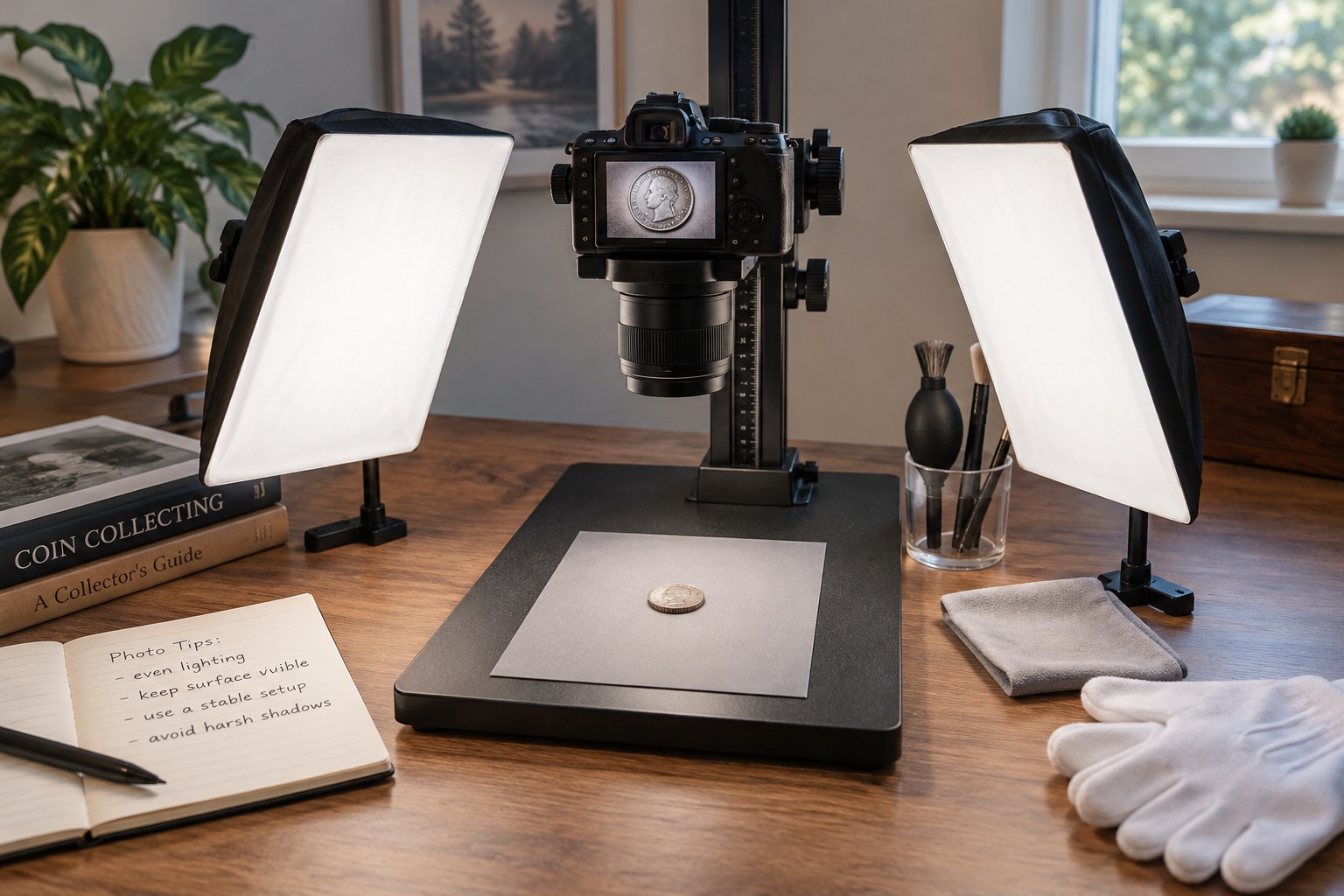
Ask whether the photographs show the exact group for sale or a representative selection. Confirm the count and whether holders, envelopes or accessories are included. A picture containing several overlapping piles may show far less information than its apparent size suggests. Request a spread-out view of both sides where feasible, or clear images of the specific coins that motivate the purchase.
Look for consistency between the written description and the images. A lot described as varied may contain many copies of the same issue; a claim that all dates are readable should be supported by appropriate views. Ask focused questions rather than requesting a general assurance of quality. For example, ask whether the five coins in the upper row have visible reverse designs.
Photographs cannot resolve every question about material, authenticity or surface condition. Where those uncertainties matter financially, seek an assessment appropriate to the purchase before committing. A low price does not convert an uncertain description into a verified one.
Calculate the whole task
Add delivery and any clearly stated charges to the purchase price. Then estimate the holders, labels and time needed to sort the group. Avoid treating possible resale proceeds from unwanted pieces as certain income. They may take time to identify, photograph and offer, and some may have little relevance to other collectors.
Set a maximum based on the pieces you can reasonably assess and the learning value you actually want. Keep a copy of the listing and the seller’s answers. On arrival, compare the contents with that record before reorganising everything. Photograph the group as received, retain its labels and raise any discrepancy through the agreed sales channel with specific evidence rather than assumptions about intent.