Sleeves for postcards of different sizes
Postcards that look similar in a stack can have different dimensions and thicknesses. Choose sleeves from measured examples, including the awkward formats.
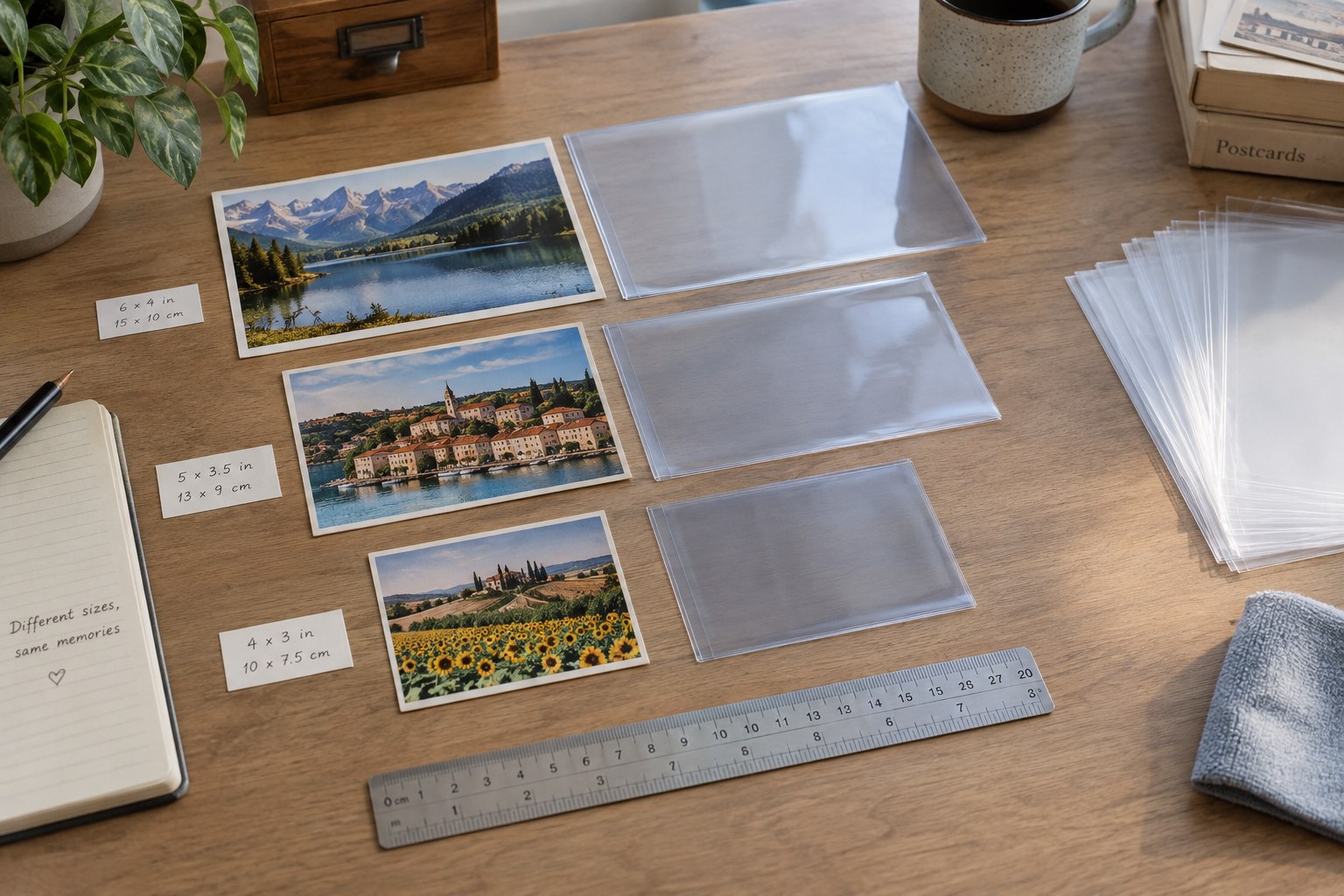
Measure the range before choosing a size
Lay out representative cards on a clean support and record their maximum height and width. Include projecting corners, irregular cuts and any attachments that must remain. Do not assume every card follows a modern standard size. A folded souvenir, a mounted photograph and a thick embossed card may need different enclosures even when their front designs share a theme.
Ask suppliers for usable interior dimensions and opening width. Exterior measurements include seams and do not prove that the card can enter comfortably. Use a paper template to test a proposed fit, leaving the original safely supported. If an edge is already torn or fragile, the insertion method matters as much as the final space inside.
Consider whether the postcard needs a supporting folder or board appropriate to its materials. Include that support in the dimensions rather than choosing a sleeve first and discovering there is no room for it. Ask about the plastic or paper specification and any adhesive. A general label such as archival should be backed by information relevant to the object.
Fit the sleeves into an accessible system
Choose the box or album around the filled enclosures. Several sleeve sizes can be stored in separate groups and reunited through the inventory. There is no need to trim a card or bend its edge to maintain a visually uniform row. Use a reference card in the main sequence when an oversized example lives elsewhere.
Plan how you will see both sides. A clear sleeve may allow viewing without repeated removal, but reflections and seams can obscure handwriting. Keep a readable photograph for frequent reference and avoid pulling the card in and out merely to check a transcription. Record whether a photograph was taken through the enclosure if that affects interpretation.
Label the outer housing with the inventory number and keep that number clear of the image or message. Before buying in bulk, trial a small set: insert suitable examples, place them in the intended storage, retrieve them and return them. Check for catching corners, crowding and difficult grip. A sleeve is useful when the entire storage routine works, not simply when the card can be pushed inside.


