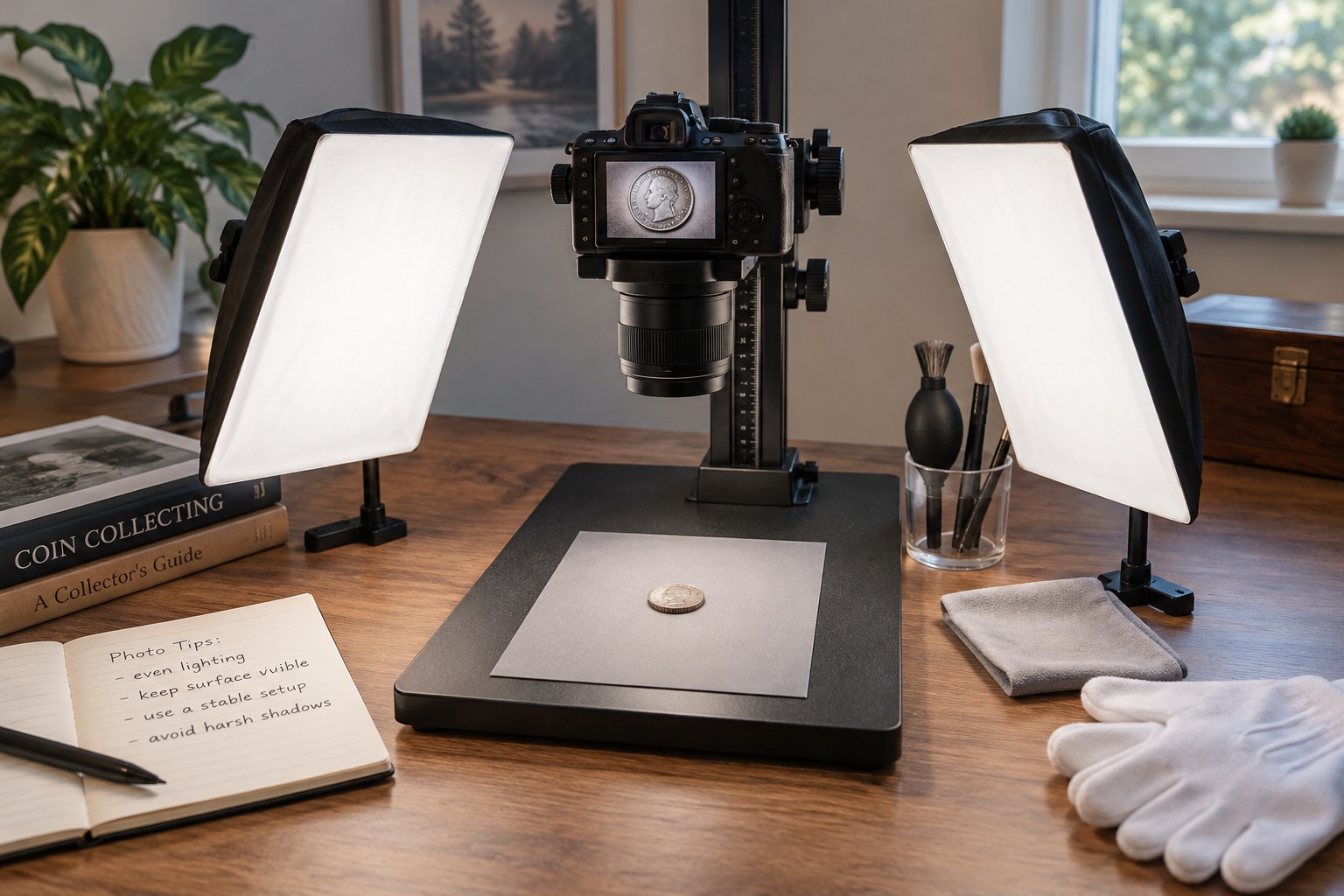
Taking stock of an inherited coin collection
An inherited collection may contain a filing system that is not immediately obvious. Begin by preserving relationships between objects, labels and papers before deciding what to keep or sell.
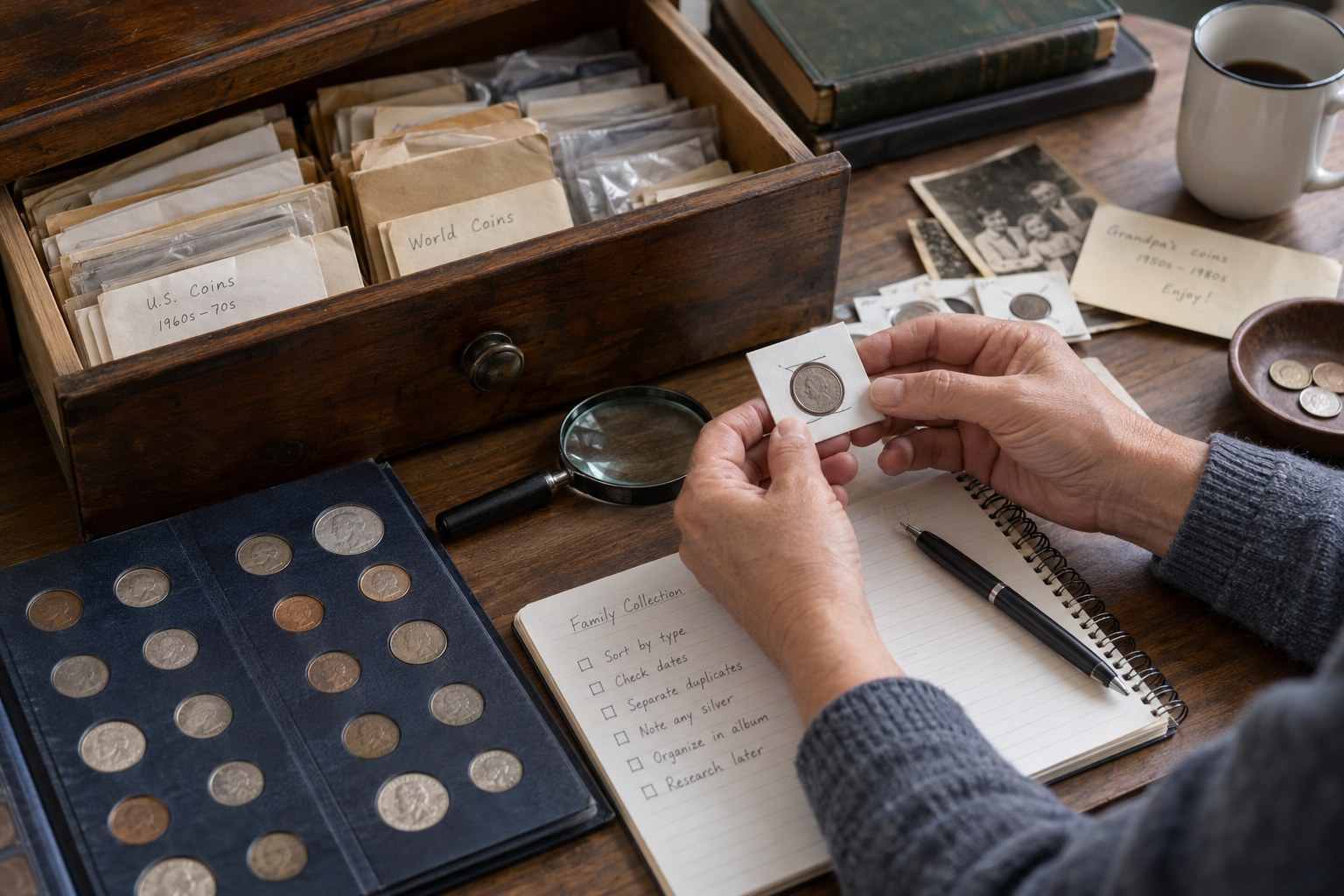
Make a map before making a catalogue
Photograph the boxes, drawers and albums as they are arranged. Give each container a temporary identifier and note where it was found. A label on a box may describe only part of the contents, so copy it as a label rather than treating it as a verified inventory. Keep loose notes and envelopes with their original groups while you work out the relationships.
Start with a broad count: albums, trays, labelled envelopes and loose groups. You do not need to identify every coin in the first session. Record obvious storage concerns and choose a clean, stable working area. Avoid spreading the entire collection across several rooms, where a small label can become separated from the object it explains.
Separate knowledge from recollection
Ask relatives what they remember about the collection, but record who supplied each detail and whether a document supports it. A remembered purchase at a fair is different from a dated receipt naming a specific coin. Both may be useful, provided they remain distinguishable. Photograph relevant paperwork before changing its arrangement.
Do not treat an old price written on an envelope as a current value. It may be a purchase cost, an asking price, a catalogue figure or a private notation. Copy the amount, currency and wording without interpreting them prematurely. Keep financial information separate from identification so a striking number does not lead the investigation.
Create manageable batches
Choose one container and assign individual IDs only where you can keep the connection secure. Photograph both sides of accessible pieces and retain existing holder information. If a group is too large to process safely, make a group record and return to it later. A completed record for one tray is more useful than hundreds of unidentified photographs from several mixed boxes.
Use plain descriptions for uncertain objects: a visible date, denomination text, main design and approximate size may be enough to begin. Leave attribution and authenticity unresolved when necessary. Do not polish pieces to make them look more presentable, and do not remove old labels or open sealed holders simply to make the photographs uniform.
Plan decisions separately from recording
Create separate fields for ownership decisions, research needs and physical location. A family member’s wish to keep a coin should not overwrite the identification record. If several people are involved, agree who can move objects and how changes will be recorded. Keep one current master inventory and give copies clear dates to prevent conflicting lists.
Before seeking offers, decide which groups need specialist identification or assessment. Request a clear description of the service and its scope. Avoid assuming that one quoted figure explains every object in a mixed collection. You may choose to retain a small documented group, sell another and postpone decisions about uncertain pieces; these can be separate actions rather than one rushed disposal.
Leave a usable record for the next person
At the end of each session, return objects to recorded locations and save the photographs and inventory together with a backup. Add a short note explaining the temporary numbering and unfinished work. Another person should be able to find a coin, understand what is known and see which questions remain. That clarity is valuable whether the collection stays in the family or changes hands.