Using a scale without treating weight as authentication
Weight is one measurement among several. A reading can prompt a better question, but a matching number is not an authentication result.
Know what the instrument reports
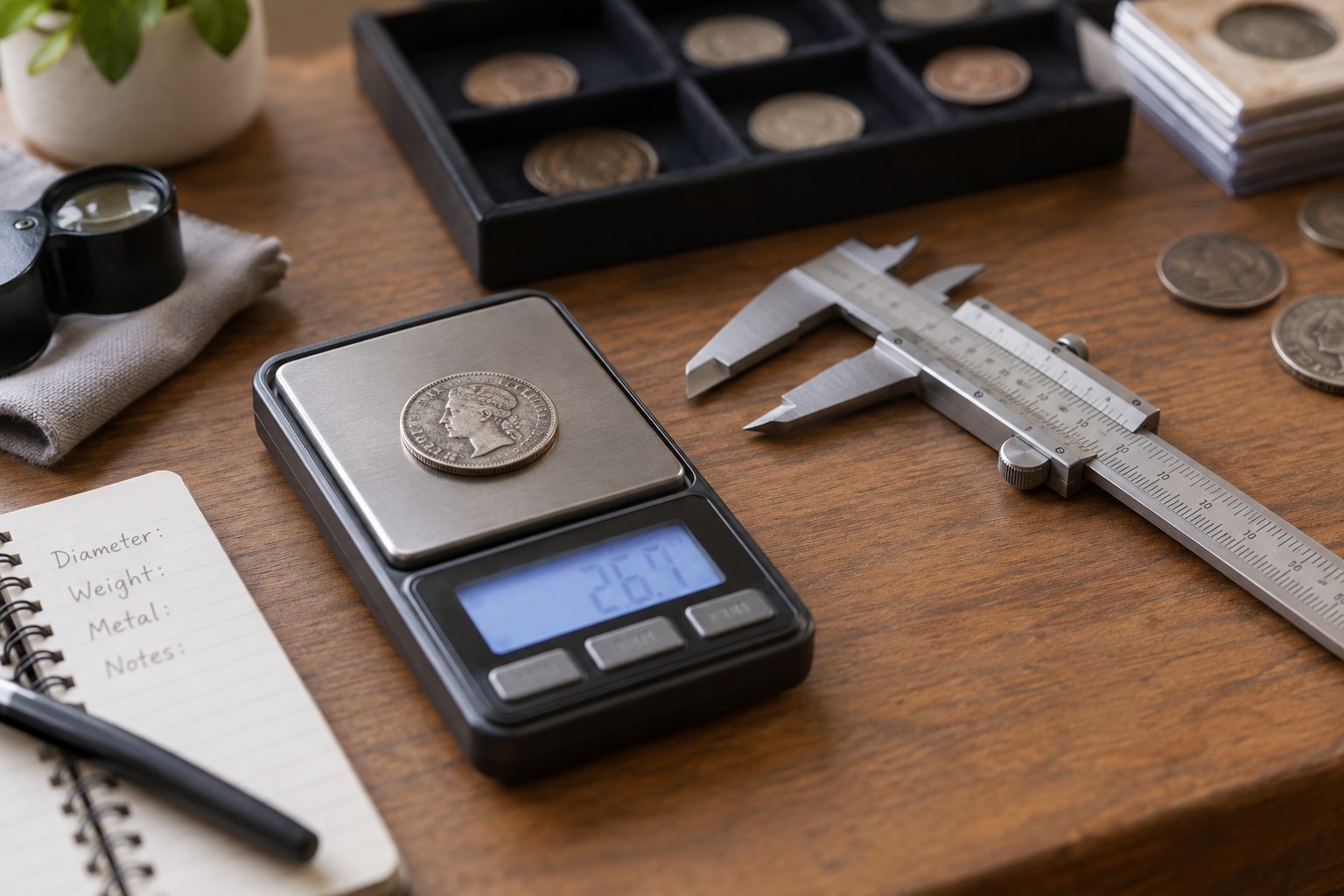
Read the scale’s specification before choosing it. Display resolution, capacity and stated accuracy are different characteristics. A screen showing several decimal places does not by itself establish that every displayed digit is dependable. Choose an instrument appropriate to the weight range you expect and follow its manufacturer’s instructions for setup and checks.
Put the scale on a stable, level surface away from drafts and vibration. Allow it to settle as directed and confirm the unit displayed. Grams and other units can be confused when a button is pressed accidentally. Record the unit with the value in the inventory, not in a distant note that may disappear when the row is exported.
Design a safe weighing sequence
Do not place an exposed collectible on an unsuitable or dirty platform simply to obtain a number. Consider whether a suitable support can be used and accounted for with the tare function. Check the support’s stability and the instrument’s capacity before introducing the coin. Follow the same sequence each time so you know what the reading includes.
A coin in a capsule cannot be compared directly with a bare-coin specification. Subtracting the weight of a different empty capsule may introduce uncertainty because the holders may differ. If removing the coin is undesirable, record gross weight including holder and state the limitation. An honest incomplete measurement is preferable to a precise-looking estimate presented as direct observation.
Repeat and investigate inconsistencies
Take another reading after removing and replacing the supported object. If the results differ substantially at the scale’s stated precision, investigate the setup before recording a preferred number. Check for movement, an unstable support or an incorrect unit. Do not average a set of obviously unreliable readings and assume that arithmetic has made the result reliable.
Keep the original readings and the instrument information when the measurement matters to a later assessment. A simple note can include date, scale model, unit, support method and any observed instability. This makes it possible to understand a future discrepancy rather than treating every difference as evidence that the object changed.
Compare like with like
Use a reference for the exact issue and understand whether it gives a nominal specification, a range or an observed example. Wear, attached material and measurement uncertainty may affect a comparison. A reference for a similar-looking issue is not an adequate substitute simply because it offers a convenient number. Record which reference you used and why you think it applies.
If the reading does not match your expectation, revisit the identification as well as the weighing method. The object may have been attributed incorrectly, the holder may have been included or the reference may describe a different variant. These possibilities should be examined before making a claim about authenticity.
Keep the conclusion proportionate
A matching weight does not establish composition, manufacturing history or authenticity. Conversely, an unexplained difference needs investigation rather than an automatic verdict. For a significant purchase or a disputed identification, provide the measurements and photographs to an appropriate specialist and explain their limitations. The scale contributes a documented observation; it does not replace the rest of the examination.