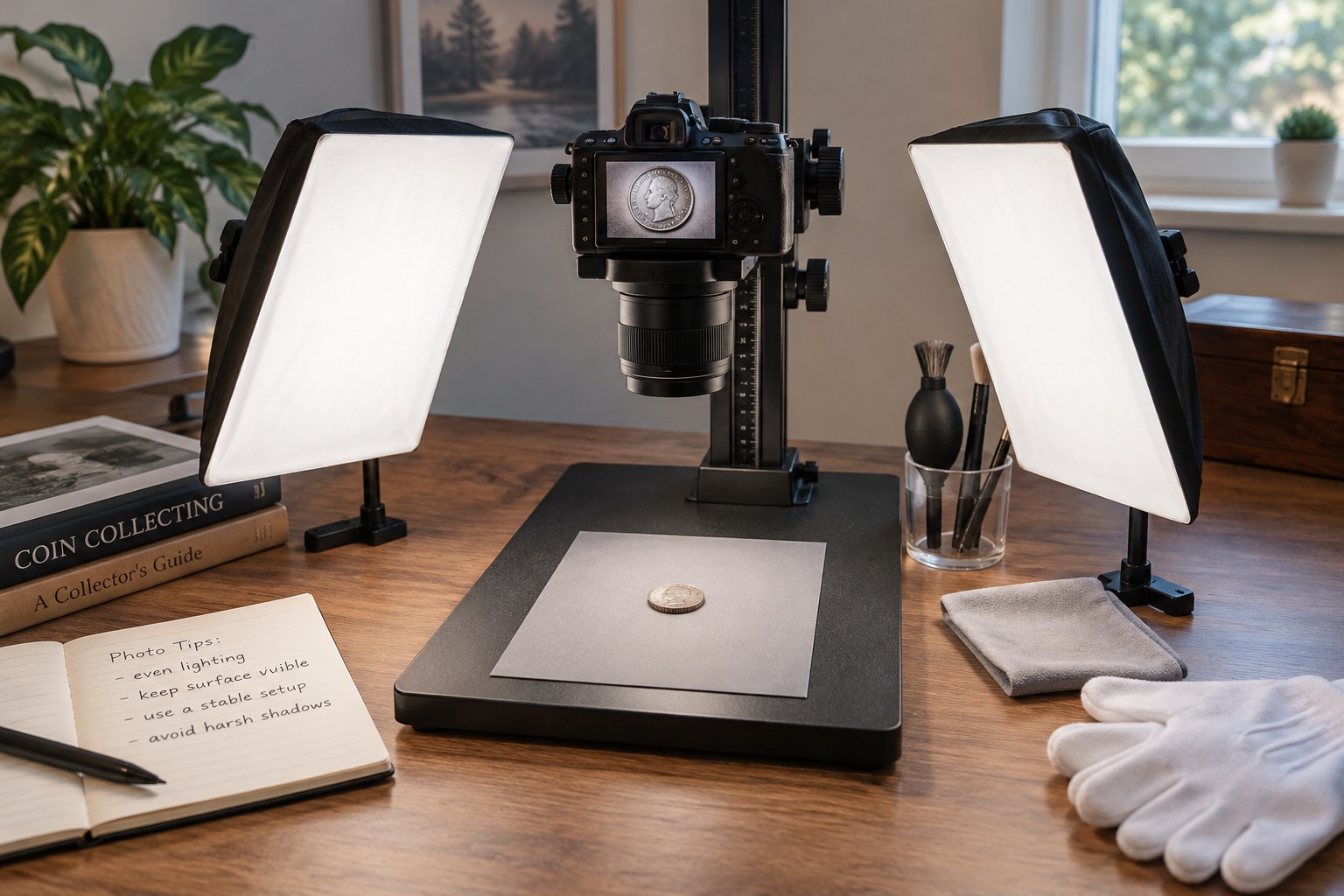
When a coin tray makes sense
Trays suit collections that you want to compare side by side. Their usefulness depends on the compartments, the way you move them and the space available for storage.
Start with the activity
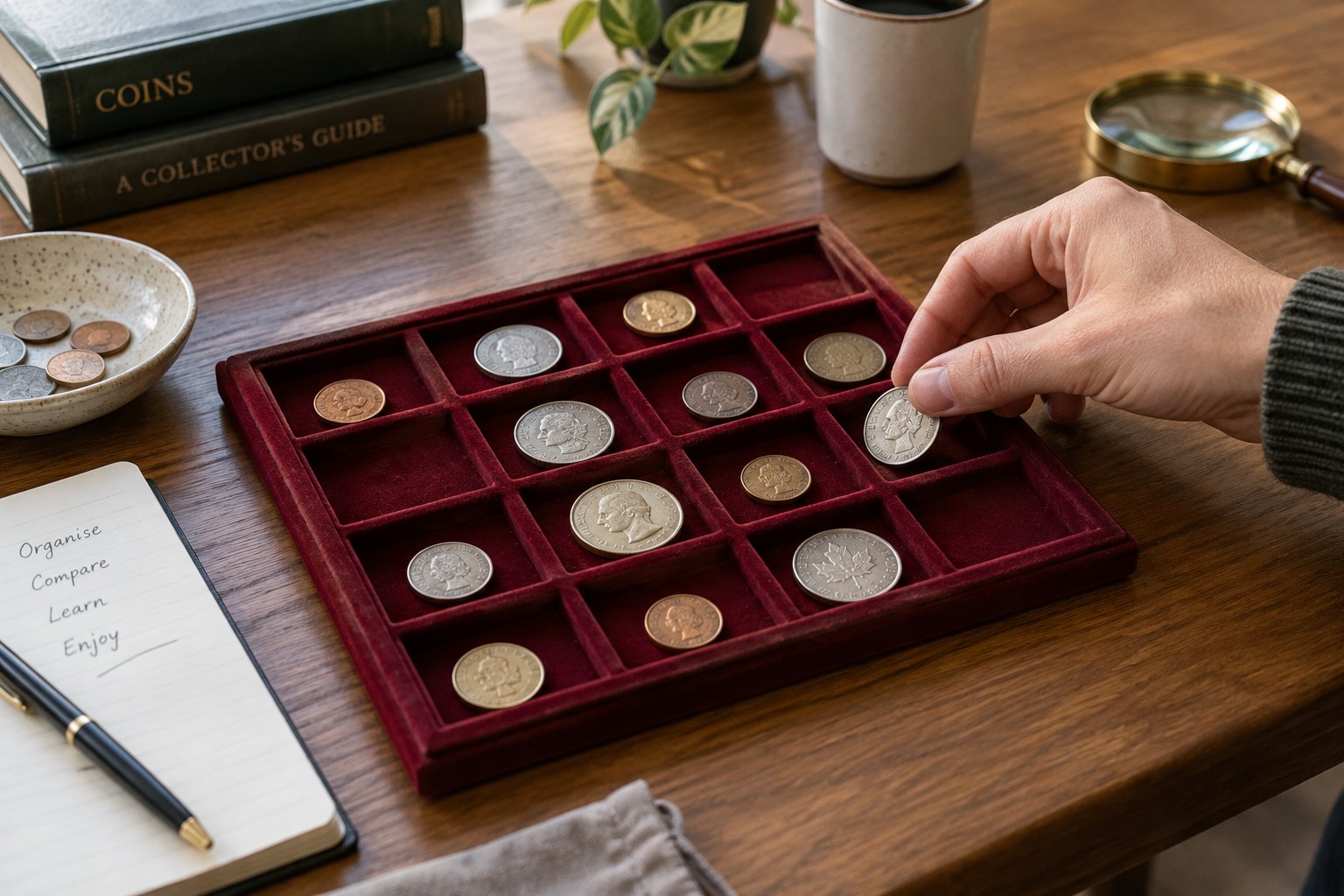
An album encourages turning pages through a sequence. A tray makes a group visible at once, which can help when comparing designs, sorting duplicates or preparing photographs. Decide which activity you actually do most often. A tray that looks impressive when full may be inconvenient if you need to move several other trays every time you want one coin.
Lay out the intended group on paper using the outside dimensions of the holders, not just the coin diameters. Include room for a readable number or label. Mixed collections may need different compartment sizes, while a uniform series may fit a regular grid. Do not buy deep compartments for small flat holders without checking how you will lift them out.
Consider the journey from shelf to table
Measure the shelf and the work surface where the tray will be opened. A large tray can be comfortable to view but awkward to carry through a narrow doorway or place beside a camera. Ask whether the base remains rigid when loaded and whether the tray has a lid or belongs inside a cabinet. A display tray is not automatically a secure transport container.
If coins remain in capsules, confirm that the compartments accommodate their exterior dimensions and permit removal without prying. If a tray is intended for direct contact, obtain information about the lining and its suitability for the particular objects. Colour and softness alone do not tell you whether a material is appropriate. Keep an existing protective holder when the replacement’s materials are uncertain.
Make the arrangement recoverable
Assign the tray an identifier and number its positions in a consistent direction. Record gaps deliberately rather than shifting every coin whenever a new example arrives. A photograph of the filled tray helps restore the layout after examination, but each coin still needs its own inventory connection. Otherwise two similar pieces can be swapped without anyone noticing.
Before expanding the system, use one tray for a complete session: retrieve it, examine several pieces, return them and put it away. Notice where your fingers need space and whether labels remain visible. Storage should support that routine without repeated contact with the coins. If the tray only works when left permanently open, reconsider whether a smaller format or a different arrangement would be easier to maintain.