Why not to polish a coin before selling it
Making a coin brighter is not the same as improving its condition. Before a sale, the useful task is documenting what is present, not changing the surface to match an imagined buyer’s preference.
Brightness is a poor target
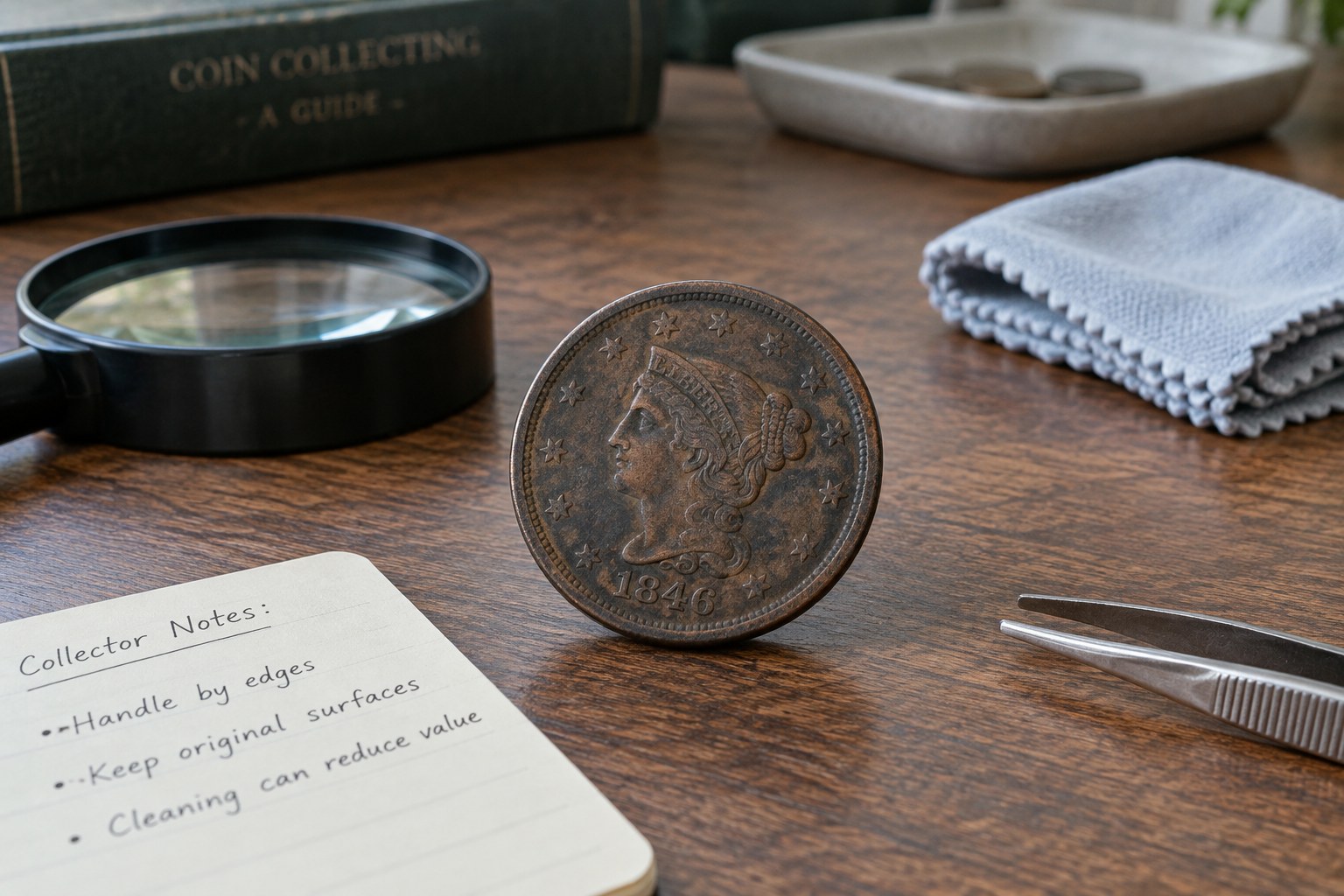
A circulated coin can have wear, deposits, scratches and colour changes that need different interpretations. Polishing blends those questions into a new surface that may be harder to assess. The Canadian Conservation Institute warns that polishing can damage coins. A cleaning product sold for household metal is not evidence that it suits a collectible, even when the metal name appears to match.
Do not assume that a dark area is dirt which must be removed before anyone can judge the piece. Photographs taken under different lighting may reveal enough information for an initial discussion. If a surface feature worries you, describe its position and appearance and ask an appropriately qualified specialist what further examination is needed. Avoid experimenting on a small patch: that patch remains part of the coin.
Prepare a sale record instead
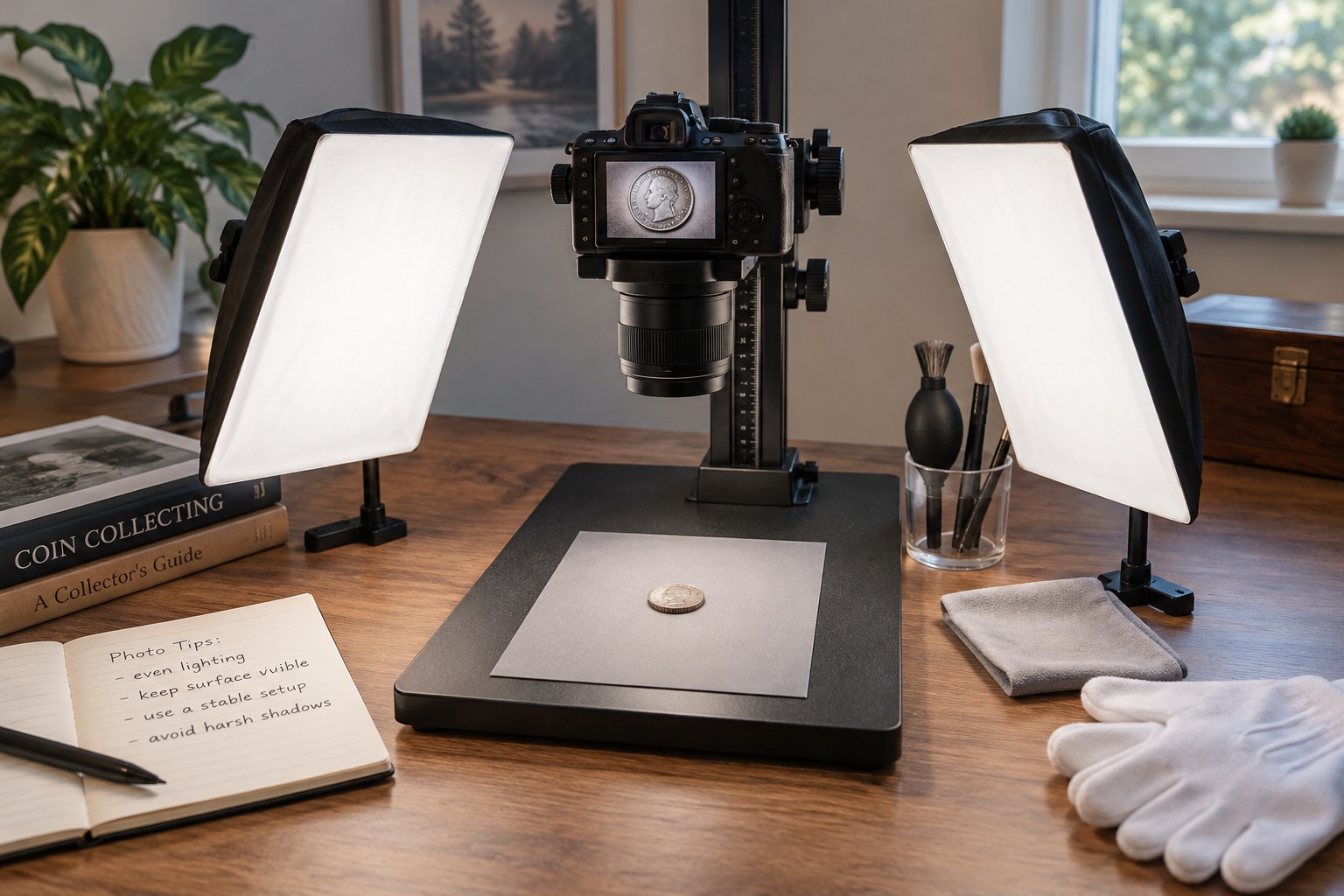
Take an overall image of each face and closer views of the areas you would otherwise be tempted to improve. Include the edge if it is accessible without unnecessary handling. Keep the original files so the appearance before sale remains documented. A buyer should be able to distinguish a limitation in the photograph from a mark on the object.
Write observable descriptions, such as a dark patch beside the date or fine parallel lines across the field. Do not call a surface original, professionally conserved or untouched unless you have evidence supporting that claim. If you know the coin was cleaned previously, retain that information even when it is inconvenient for the listing. If its treatment history is unknown, say so rather than filling the gap with reassurance.
Keep any old envelope, dealer ticket or conservation record that accompanied the piece. These do not automatically establish authenticity, but they may explain an earlier description or treatment. Link each document to the coin’s inventory number and photograph it separately. Do not press an old paper ticket against the coin merely to keep them together.
Ask a narrower question
When seeking advice, explain whether your concern is identification, condition, active change or sale preparation. These are different questions and may require different specialists. Send clear images and the treatment history you actually know. A remote opinion based on photographs has limits, especially when deposits or reflections hide the surface.
If there is no urgent conservation concern, leave the coin in an appropriate holder while you decide how to proceed. You can revise a description, add a photograph or postpone a sale. You cannot restore the previous surface simply by regretting a polish that removed material or introduced marks.