Assessing an incomplete comic run
An incomplete run is easier to assess when you separate the issues you want from duplicates, extras and unknowns. A large count alone says little about whether the lot suits your collection.
Build the issue list first
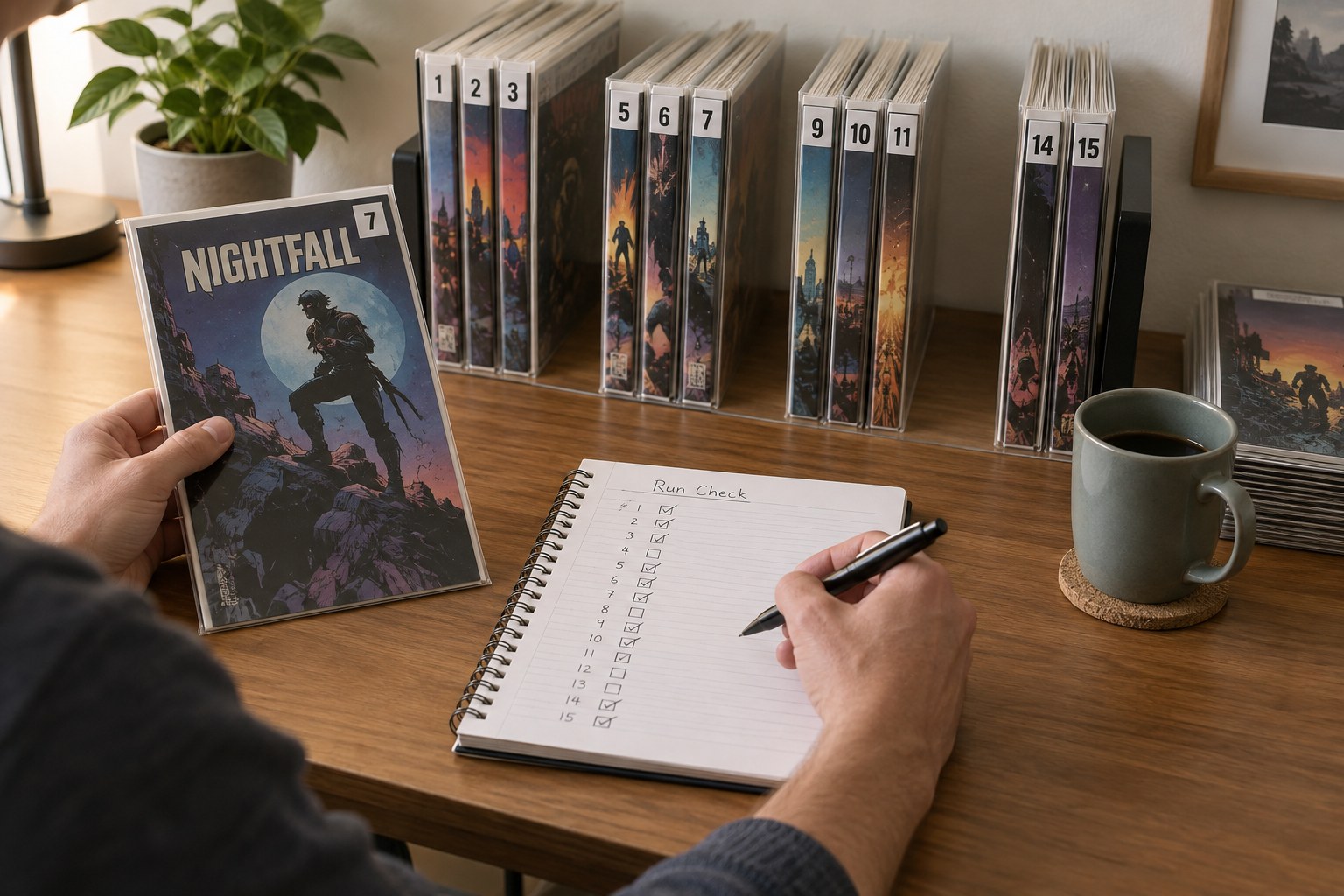
Ask for a written list of the included issue numbers and compare it with the photographs. Mark each number as visible, listed but not visible, or uncertain. Distinguish annuals, special editions and collected volumes from the numbered run. A seller may count all these as comics without intending to imply that they complete the main series.
Create a second column for what you already own. The useful additions are the intersection between the lot and your missing list, not the total number of objects in the box. If you collect a particular language or edition, add that requirement before evaluating the price. A duplicate number from another edition may be interesting, but it does not necessarily fill the gap you planned to fill.
Find out how condition varies
A group photograph often shows only the front covers of the top row. Ask whether the stated condition applies to every issue or represents an average. Request specific views of the issues that matter most to you, including their backs and any reported damage. It is reasonable for a seller to decline a lengthy photographic request, but you should then decide with that information gap intact.
Keep a separate list of copies you would regard as reading copies, temporary placeholders or unsuitable additions. Do not assume the least visible issues are in the same state as the best photographed ones. Likewise, a single damaged issue does not describe the entire lot; identify which observations belong to which copies.
Calculate what the lot actually gives you
Consider delivery, storage and the work of dealing with duplicates. Dividing the price by the number of comics can conceal a poor match if only a handful belong in your collection. Instead, write down the total outlay beside the confirmed additions you would keep. Treat the remaining copies as an unresolved responsibility, rather than assigning them an imagined resale value.
For example, a lot of thirty issues might provide eight wanted numbers, twelve duplicates and ten copies whose edition or condition is unclear. That is a different proposition from thirty confirmed gaps filled. The distinction helps you compare the lot with buying a smaller number of individually documented issues.
Before agreeing, save the issue list and the seller's answers. Confirm whether the photographed contents are the exact contents to be supplied, including any extras shown beside the main stack. On arrival, check against that same list before reorganising everything into your own boxes. A clear starting record makes omissions and misunderstandings easier to explain.