Identifying an edition from publication details
A familiar cover can belong to several editions. Identify the copy from its own publication details before borrowing a description from an online listing.
Transcribe before interpreting
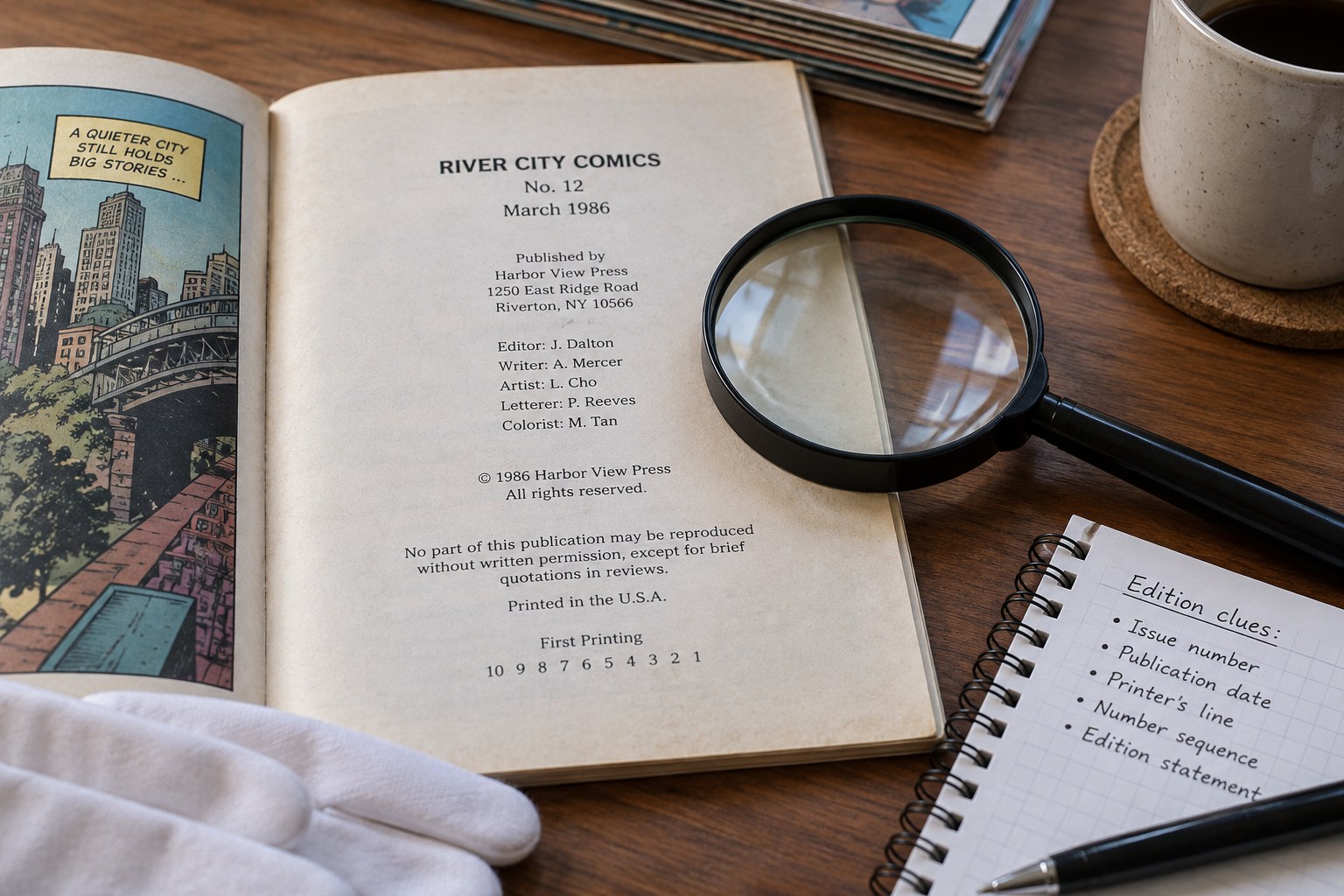
Find the publication information printed inside the comic, often in a small block of text. Record the publisher, issue number, stated date, country or market information and any printing statement exactly as they appear. Keep punctuation or abbreviations that might distinguish similar editions. If a line is obscured or unreadable, mark that uncertainty instead of filling it from memory.
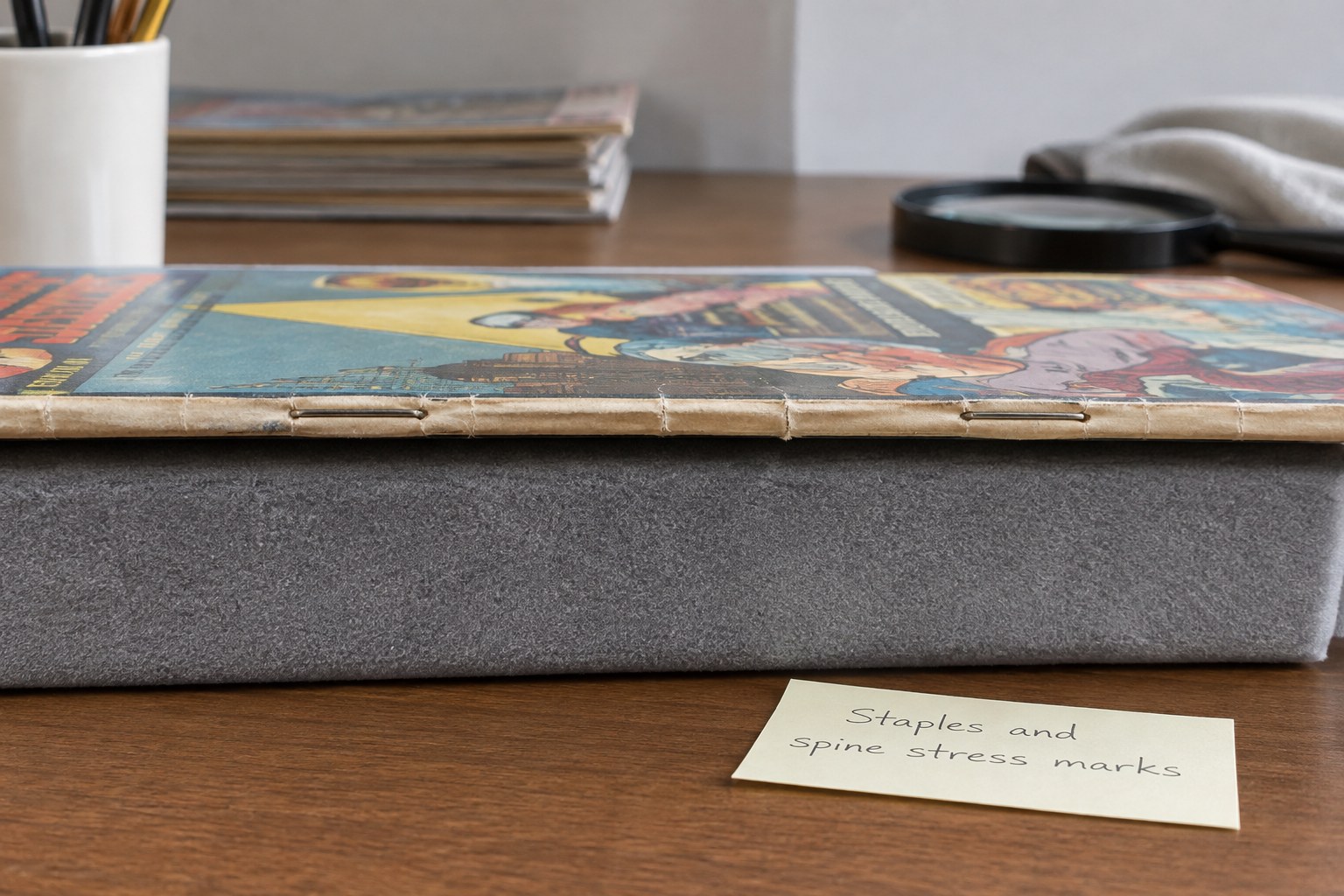
Photograph the information only if the book opens comfortably. Do not flatten a tight binding to capture every word in one picture. Two readable photographs with overlapping text are more useful than a single image obtained by stressing the spine. Record the page location so you can find the information again without repeatedly searching through the book.
Build a comparison from separate clues
Compare the printed details with the publisher's own catalogue or an available library record. The cover price, language, barcode and page count may help separate otherwise similar copies, but no single clue should carry the whole identification. A date in a copyright statement can refer to underlying material rather than the date that this particular edition was printed.
Keep the title as printed distinct from the series title used by a catalogue. A collected volume may repeat a story title that also appeared on an individual issue. Write down which format you are examining, whether it has a separate volume number, and whether the publication information describes a reprint. This makes later searches much more precise.
If two references disagree, retain both references with a short note about the difference. Check whether they describe the same market, language and binding. Avoid resolving the conflict by choosing whichever description makes the copy seem scarcer. An unresolved edition question is a useful reason to delay a purchase or seek specialist help.
Make the record usable for someone else
An inventory entry should state the evidence behind its identification. For example, record a printing statement and the photograph filename rather than simply writing first edition. Separate what you have read directly from what a seller told you. If a seller's description is your only source for a detail, say so.
When preparing a listing, include clear publication photographs and mention remaining uncertainty in plain language. A reader should be able to understand which copy is offered without interpreting a pile of search keywords. Save the original record when you later correct an identification; a dated correction explains why older photographs or receipts may carry a different description.