Measuring comics before buying bags
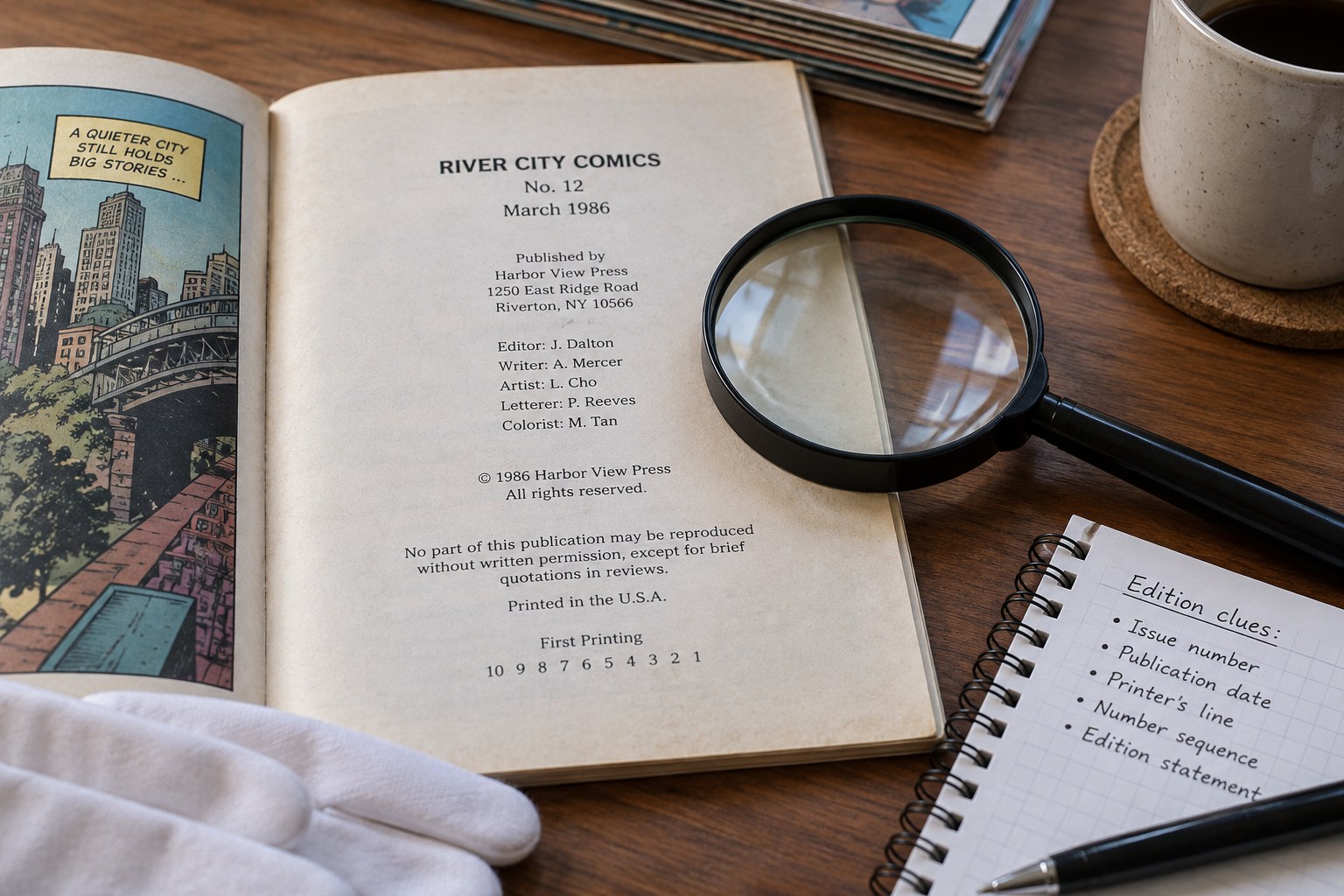
A comic's publishing era is a useful shopping clue, but it is not a measurement. Check the actual copy and its backing board before ordering a packet of bags.
Measure the closed copy
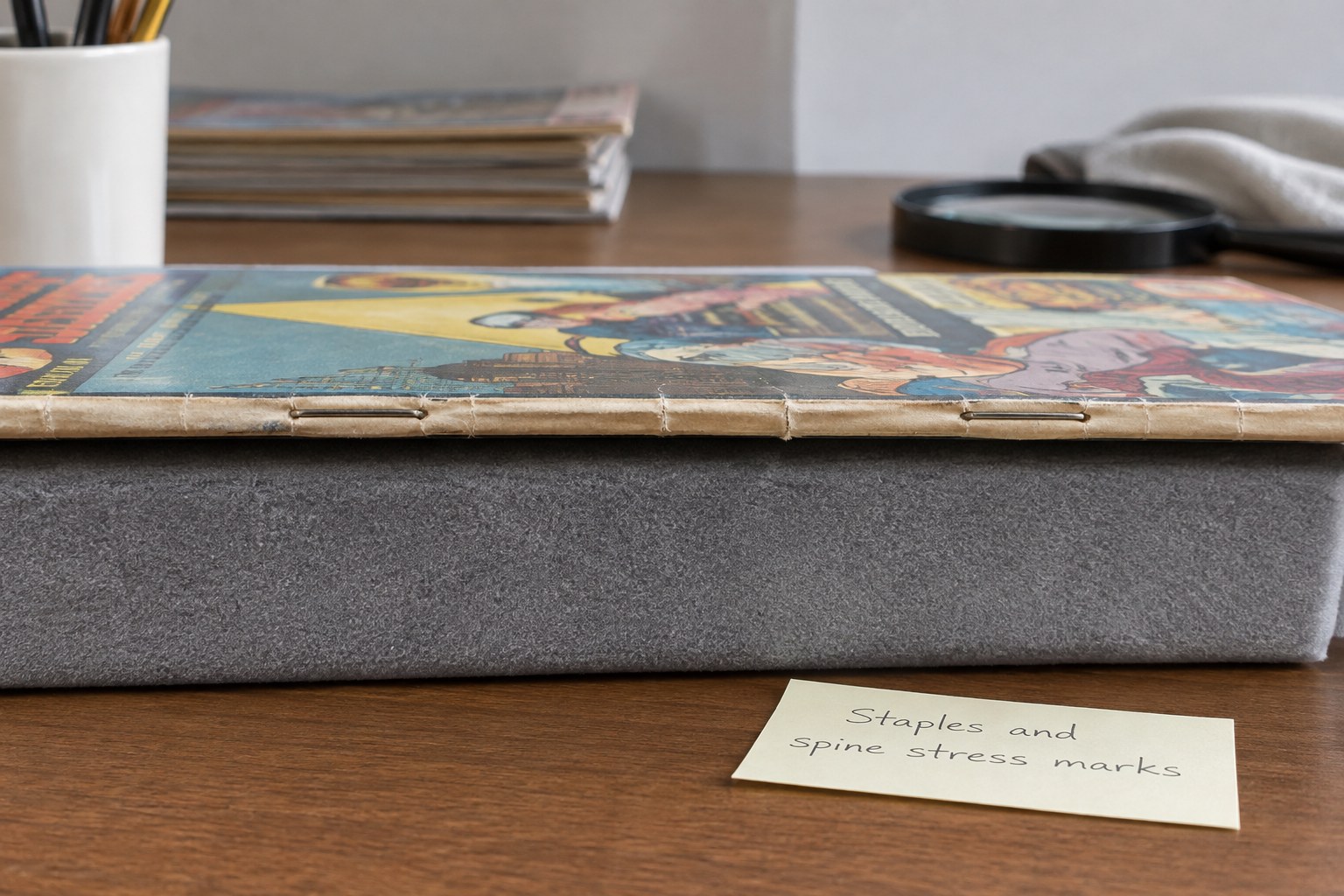
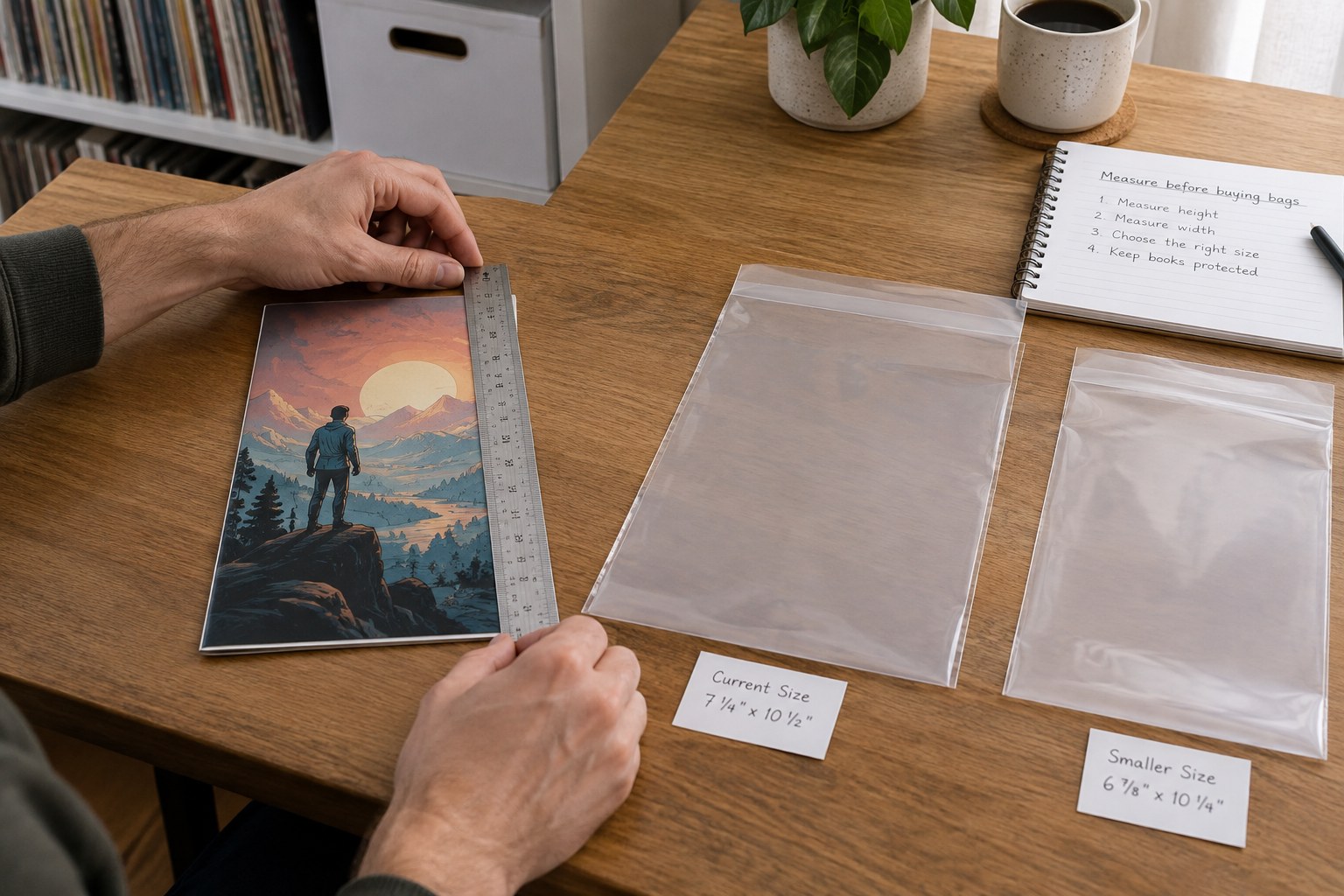
Place the comic on a clean, flat surface and bring a ruler alongside it. Record the greatest height and width without pressing the ruler against a projecting cover. Include any cover overhang rather than measuring only the inner pages. A thicker special issue, an oversized edition and a conventional stapled issue may need different bags even when they belong to the same series.
Measure several copies if you intend to house a run. Do not assume that the first and last issues have identical dimensions. Keep a note of the largest examples and any unusually thick ones; these are the copies that can turn an otherwise sensible bulk purchase into a poor fit.
Treat the board and bag as a pair
The backing board also occupies space. Compare its dimensions with the bag's usable opening and check whether the advertised bag width includes sealed edges. A board that fits tightly by itself may leave too little room for the comic. Thickness matters particularly when a bag has little flexibility or the book has a square spine.
Ask the supplier which measurements describe the internal space, which describe the overall bag, and whether the flap is included in the quoted height. Keep the reply with the product reference. Labels such as current, silver or magazine size are convenient categories, but they do not replace a dimensioned description of the product you will receive.
Buy a small test quantity
Try an inexpensive representative copy first, supporting it as it enters the enclosure. Stop if a corner catches or the cover starts to buckle. Do not squeeze a comic into a bag because the packet says it is the correct category. Check that the flap closes without bending the top edge and that adhesive cannot touch the comic when you open it again.
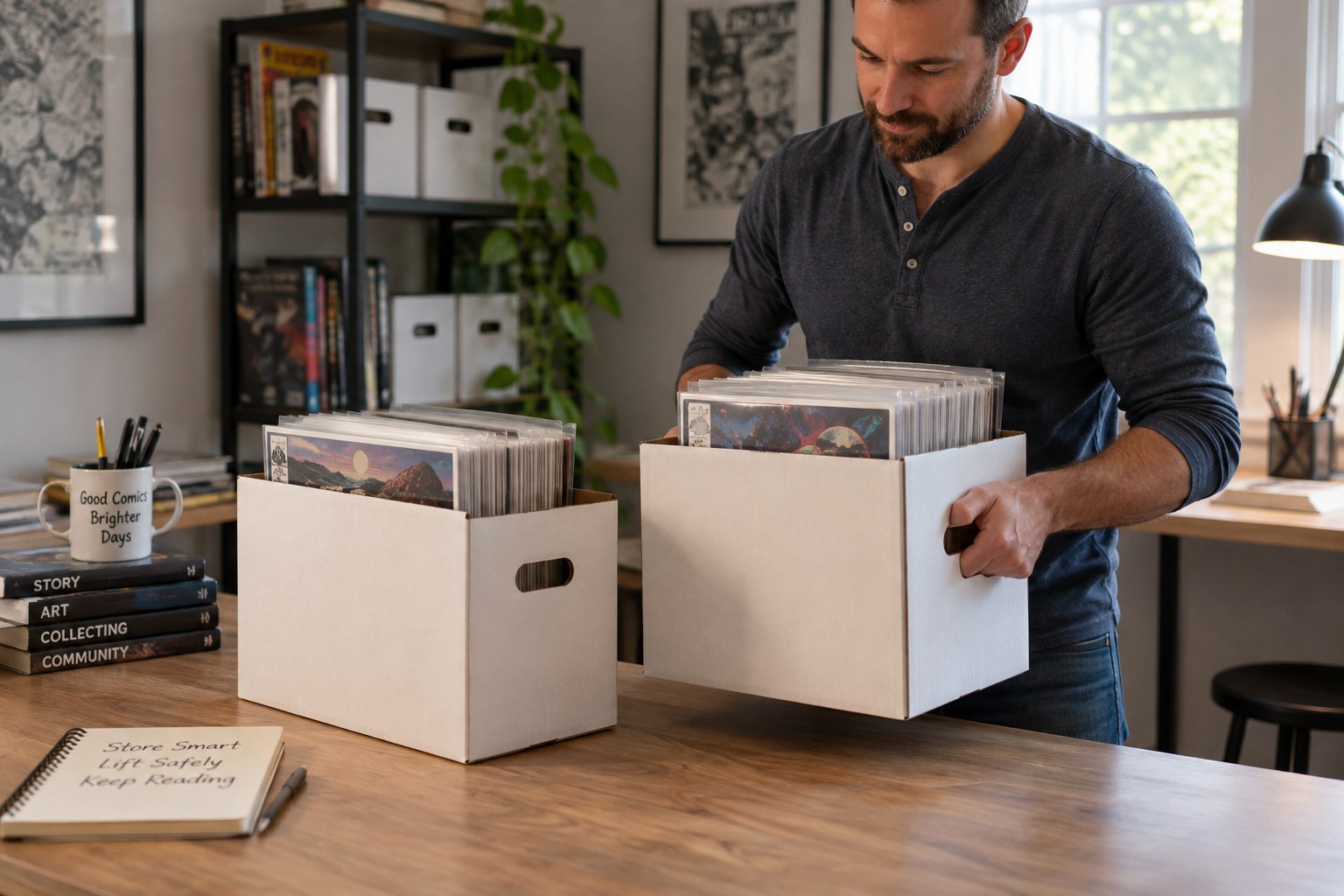
The bagged comic must also fit its storage box. Measure the assembled height and width, including any projecting flap, and leave room to remove a copy without scraping neighbouring bags. Record the bag and board references beside the dimensions of the test copy. When you reorder, confirm the specifications again rather than relying only on a familiar product photograph.
Keep any unused oversized bags separate and clearly labelled. A little extra space can sometimes be workable, but a comic sliding freely around a very large enclosure is not the same as a deliberately chosen, supported fit.