Comparing catalogue images with item photographs
A catalogue picture describes a product presentation. Photographs of the offered copy describe the object you may receive. Use the two kinds of image for different questions.
Establish that the reference is relevant
Record the catalogue's maker, product reference, release or edition and the date or source of the image. Compare those details with the listing. Similar packaging or a familiar model name may cover several colours, accessories or production versions. If the reference is for another version, keep it as background rather than treating every difference as a defect.
Look for notes describing prototypes, optional accessories or items shown for illustration. A promotional scene may include scenery or display furniture that was never supplied in the box. Write a separate expected-contents list from documented information, and identify anything you have inferred only from the photograph.
Compare feature by feature
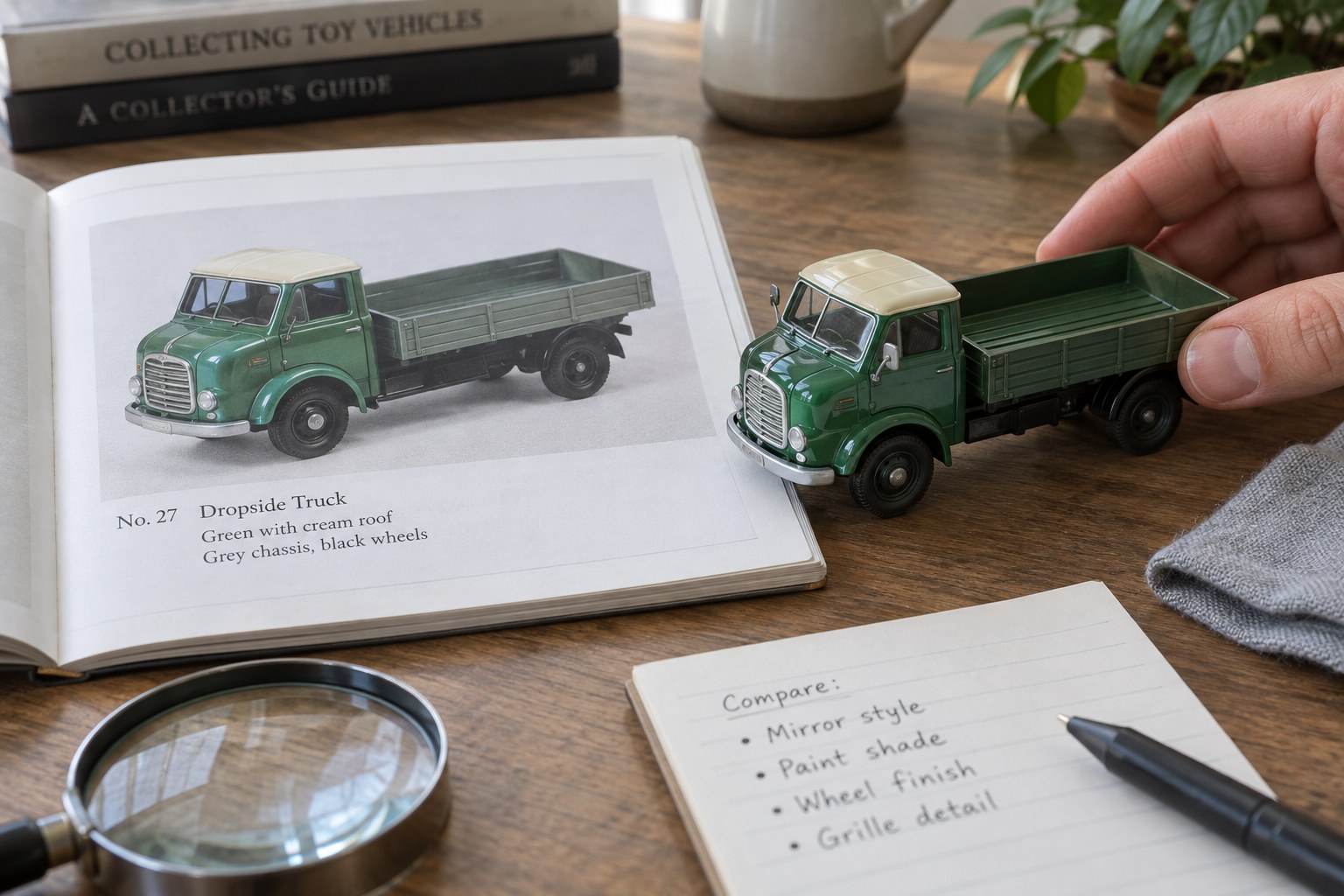
Ask for actual-copy views that roughly match the catalogue angles. Compare shape, visible fittings, colour placement, labels and packaging details in a systematic order. Differences in lighting can change apparent colour, so request a neutral view before concluding that a finish is wrong. Perspective can also make a projecting part appear shorter or hide it behind the body.
When you notice a difference, frame it as a specific question. For example, ask whether a rear fitting is present but hidden by the angle, or whether it is absent. This is more useful than sending the seller a catalogue image and saying the model looks different. Preserve the reply with the image that prompted the question.
Use the actual copy to assess condition
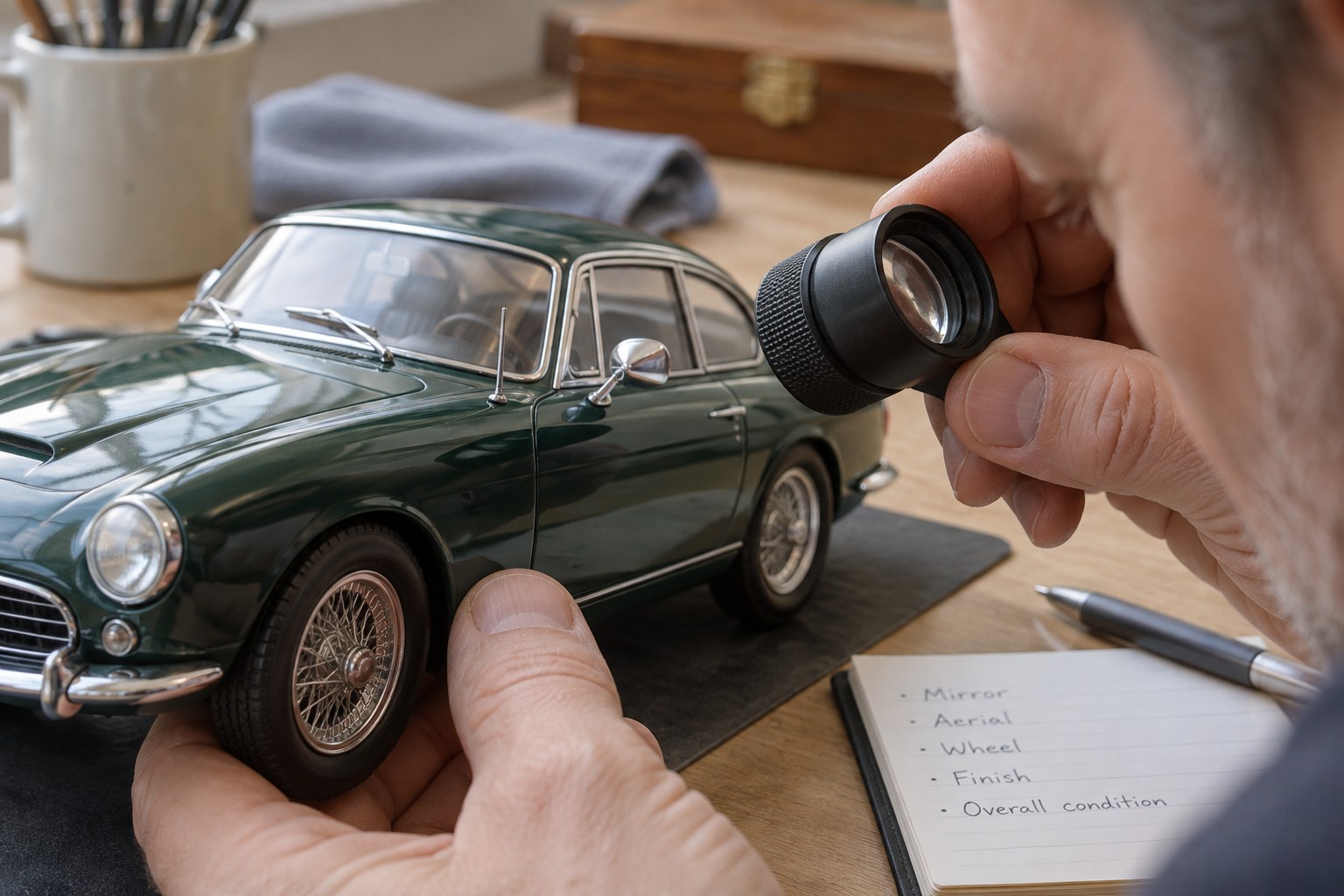
Catalogue images cannot show wear, repairs, missing parts or box damage on the offered object. Request those areas directly. A seller using only stock images has not supplied enough visual evidence for a condition-dependent decision, even if the product reference is correct. Decide whether to wait for photographs or leave the purchase rather than imagining the copy matches the publicity image.
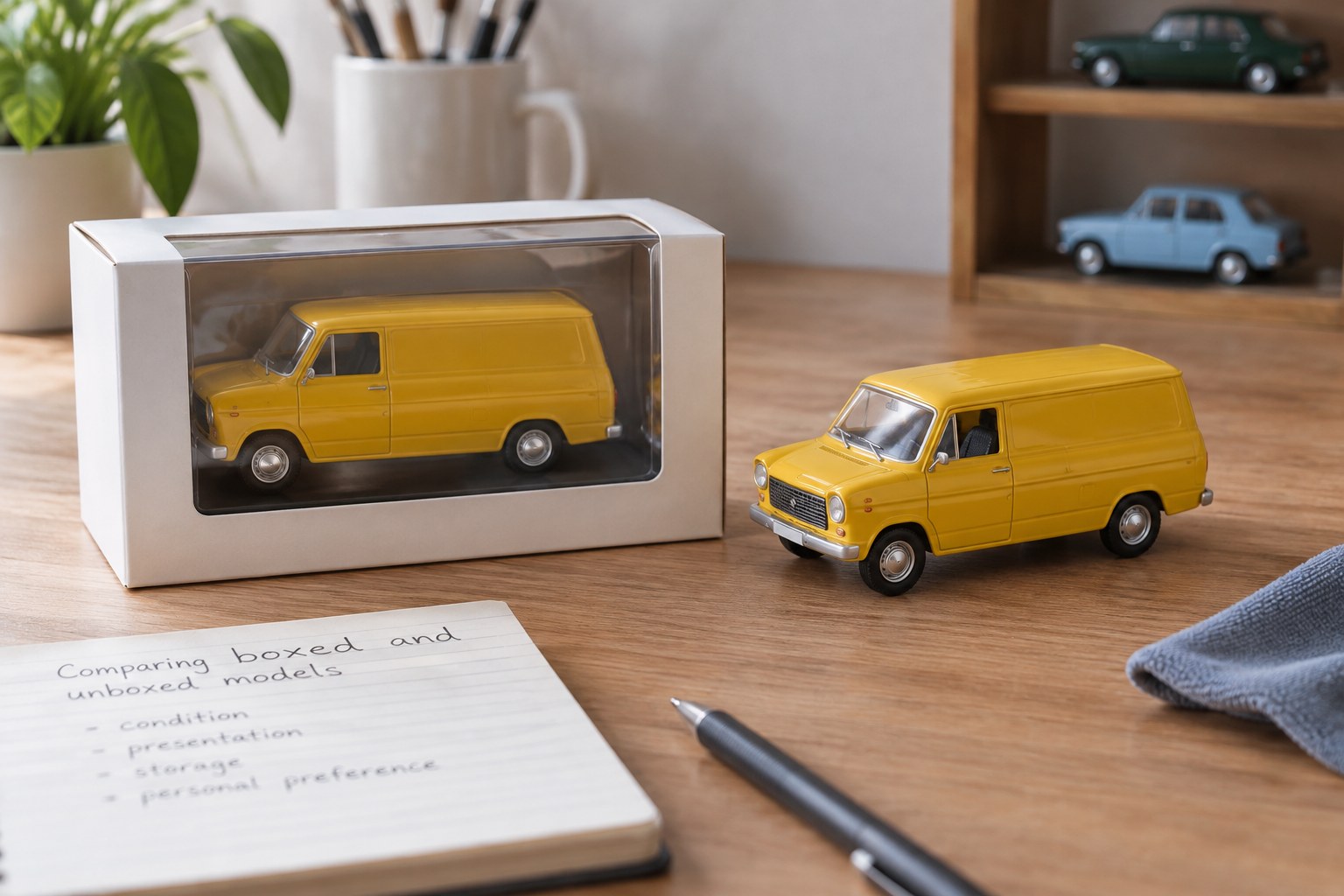
Keep the catalogue reference and listing images in separate folders or clearly label their roles. Do not place a manufacturer's image in your inventory as though it were a photograph of your own copy. Once the model arrives, document it yourself and compare it with the listing before reorganising its packaging.
If you later sell the model, use your current photographs and describe the reference source only where it helps identification. A correct catalogue match can support a product description; it does not by itself establish originality, completeness or authenticity of the individual item.