Describing a written and posted postcard
A written postcard contains several kinds of information: the pictured subject, the message, the address and postal markings. Describe each on its own terms before combining them into a history.
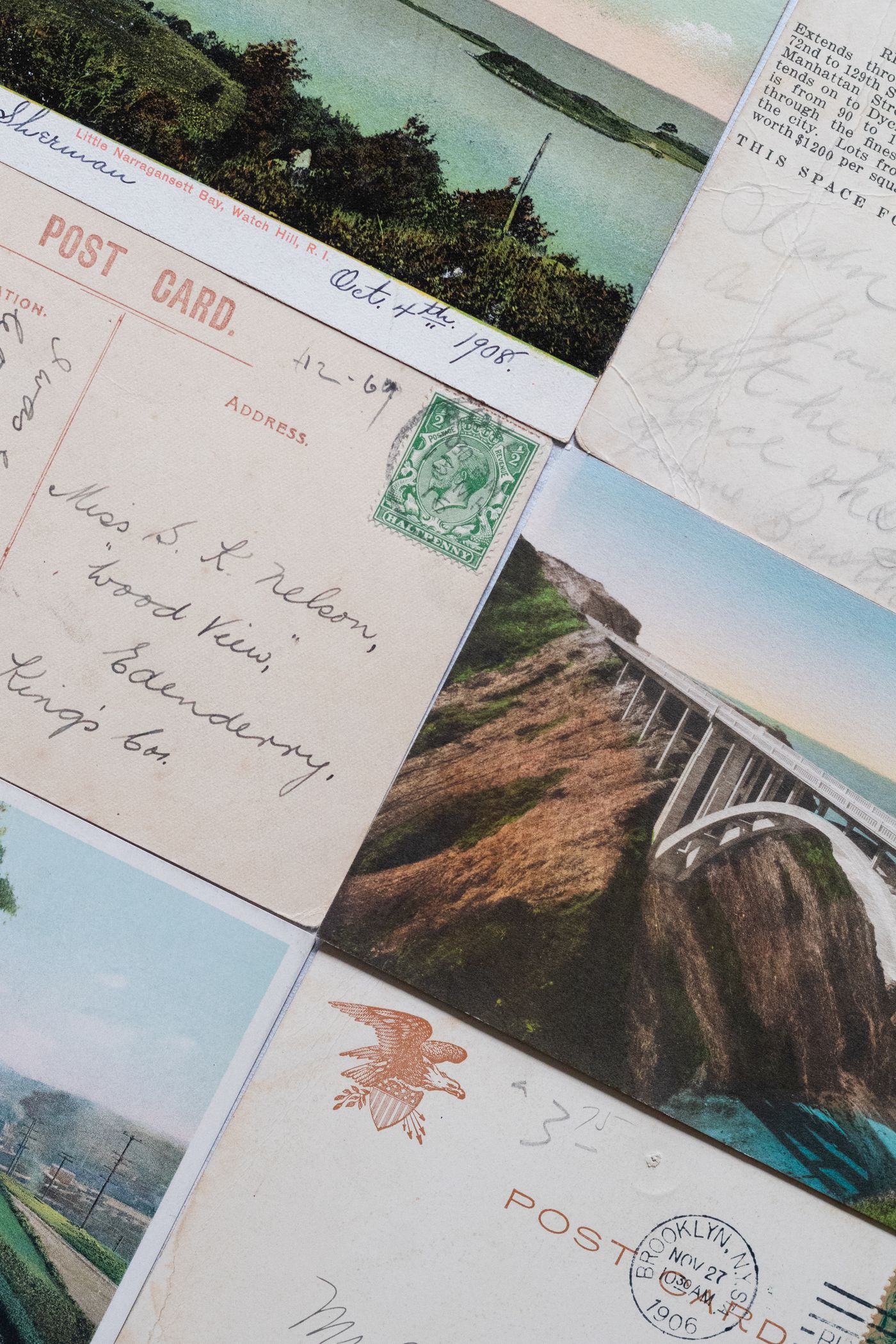
Identify the pictured side
Record the printed caption exactly, including a publisher’s name or series number where visible. A caption can name the view without proving when the photograph was taken or when the card was printed. Keep those dates in separate fields and leave them unknown when the evidence does not resolve them. Do not use the posting date as an automatic production date.
Describe the image in plain language so the card can be found even when its caption is unfamiliar. Include a named building only when the identification is supported; otherwise describe its visible role or position. A later handwritten place name should be recorded as an annotation, not silently substituted for the original printed caption.
Transcribe without completing the story
Copy the message and address into separate fields. Preserve uncertain words with a stated convention rather than guessing a plausible sentence. A transcription can omit the visual arrangement, so retain a photograph that shows line breaks, additions and writing around the edges. Note whether the message continues elsewhere on the card.
Distinguish the writer’s date from a readable postal date. The address identifies an intended destination, while a postmark may indicate another location. Do not assume the sender lived in the place shown on the picture or that the message proves the journey depicted. A postcard can be bought, written and posted at different times and places.
Describe condition and completeness
Record folds, corner wear, tears, stains and attachments with their locations. Explain whether all edges and both sides are visible in the photographs. A strongly written message may be part of the card’s interest, but it can also obscure printed information; describe that overlap rather than presenting only the clearer face.
Keep the stamp and cover information together with the postcard. Do not remove a stamp to reveal writing beneath it or erase a pencilled note to improve the appearance. If an old note seems unrelated, document it before seeking advice about its significance. Its presence is an observation; its origin may remain uncertain.
Prepare a proportionate public description
A sale or collection caption can summarise the view, readable dates and postal use without publishing the entire personal message. Consider what personal details are necessary to the purpose of sharing. Keep a fuller private transcription if useful for research. Explain any uncertain reading and show the actual card offered, allowing the description to remain informative without inventing a biography for the people named.


