Keeping documentation for a signed item
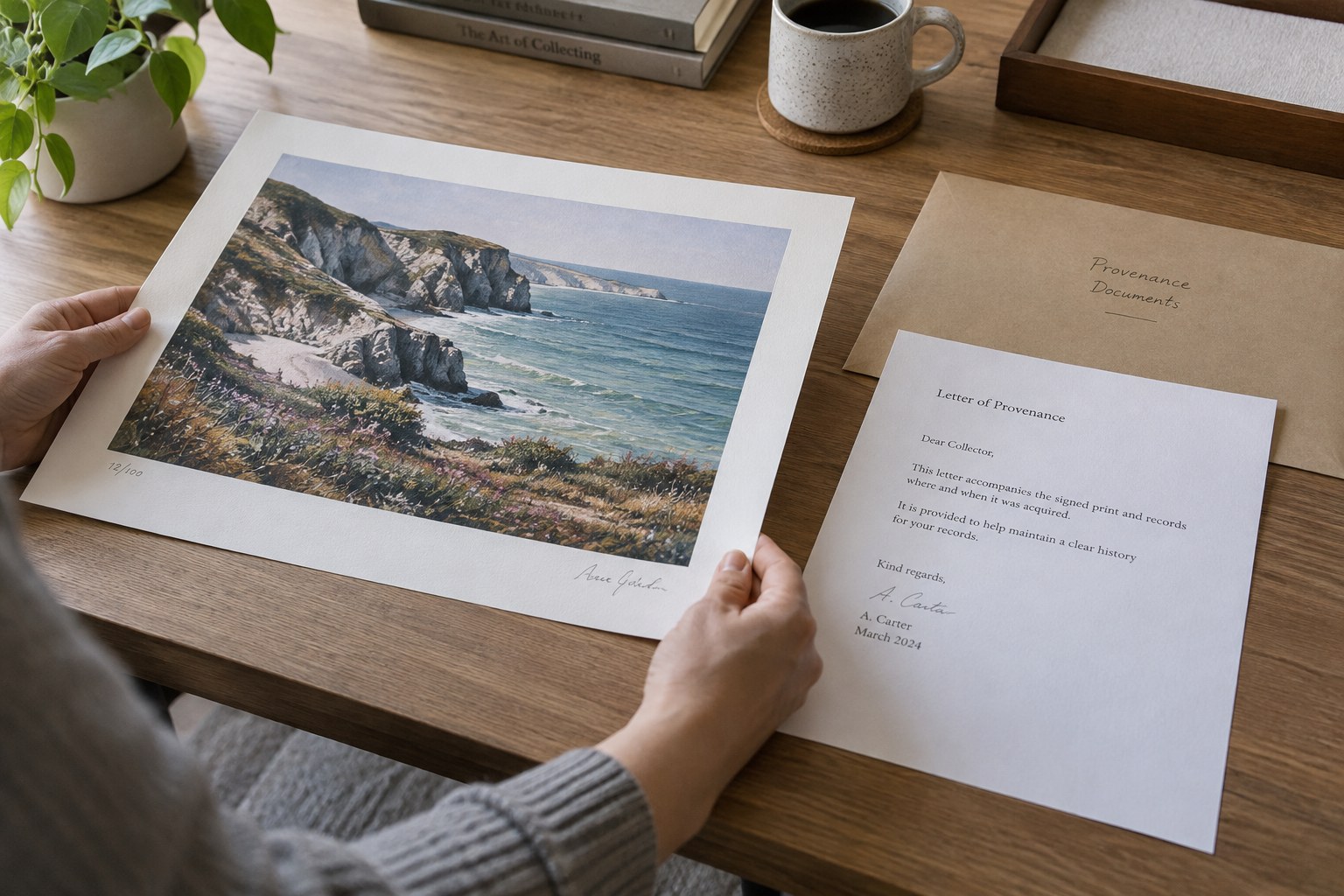
Documentation can explain how a signed item entered a collection. Keep each record connected to the object while being clear about what the record actually establishes.
Separate the object from its claims
Give the signed item an inventory number and photograph the whole object, the signature and any inscription. Transcribe what you can read without completing unclear letters by assumption. Record the location of the signature and the materials it appears on. A signature on a loose insert is different from one written directly on the main object, even when both are sold together.
List the accompanying claims separately: who the signature is attributed to, where it was reportedly obtained and who supplied that information. A seller's story, a receipt and an authentication opinion are different kinds of evidence. Keeping them separate prevents an attractive narrative from becoming an unsupported fact in your own catalogue.
Preserve the chain of records
Keep receipts, correspondence, event documents and any certificate together in a folder identified with the same inventory number. If you attended an event yourself, write down the date, location and what you directly observed while the details are fresh. Do not imply that an event ticket proves every object acquired around that event was signed there.
Scan or photograph documents in full, including their backs when relevant. Preserve original filenames or add a clear index that identifies the source and date. Keep original documents in suitable separate storage rather than attaching them to the collectible with tape, staples or adhesive pockets. A digital copy improves access but does not make the physical original unnecessary.
Where an authentication service provides an online record, consult its official website directly and record the exact scope of the result. A number that matches a database is useful evidence to consider, but it should not be expanded into claims the issuer has not made. Retain the wording rather than rewriting it as an unconditional guarantee.
Record gaps and later changes
If the history begins with an undocumented previous owner, say so. A clear gap is preferable to a continuous story assembled from guesses. When someone provides new information, add it with a date and source rather than silently replacing the earlier version. This allows a future reader to distinguish contemporary evidence from later recollection.
Before selling or exchanging the item, prepare copies of the relevant records and specify which originals will accompany it. Remove unrelated personal details from shared copies while preserving the unedited originals privately. Describe the documentation accurately in the listing: paperwork supplied by a previous owner should not be presented as your own witnessing of the signing.