Organising a missing-card checklist
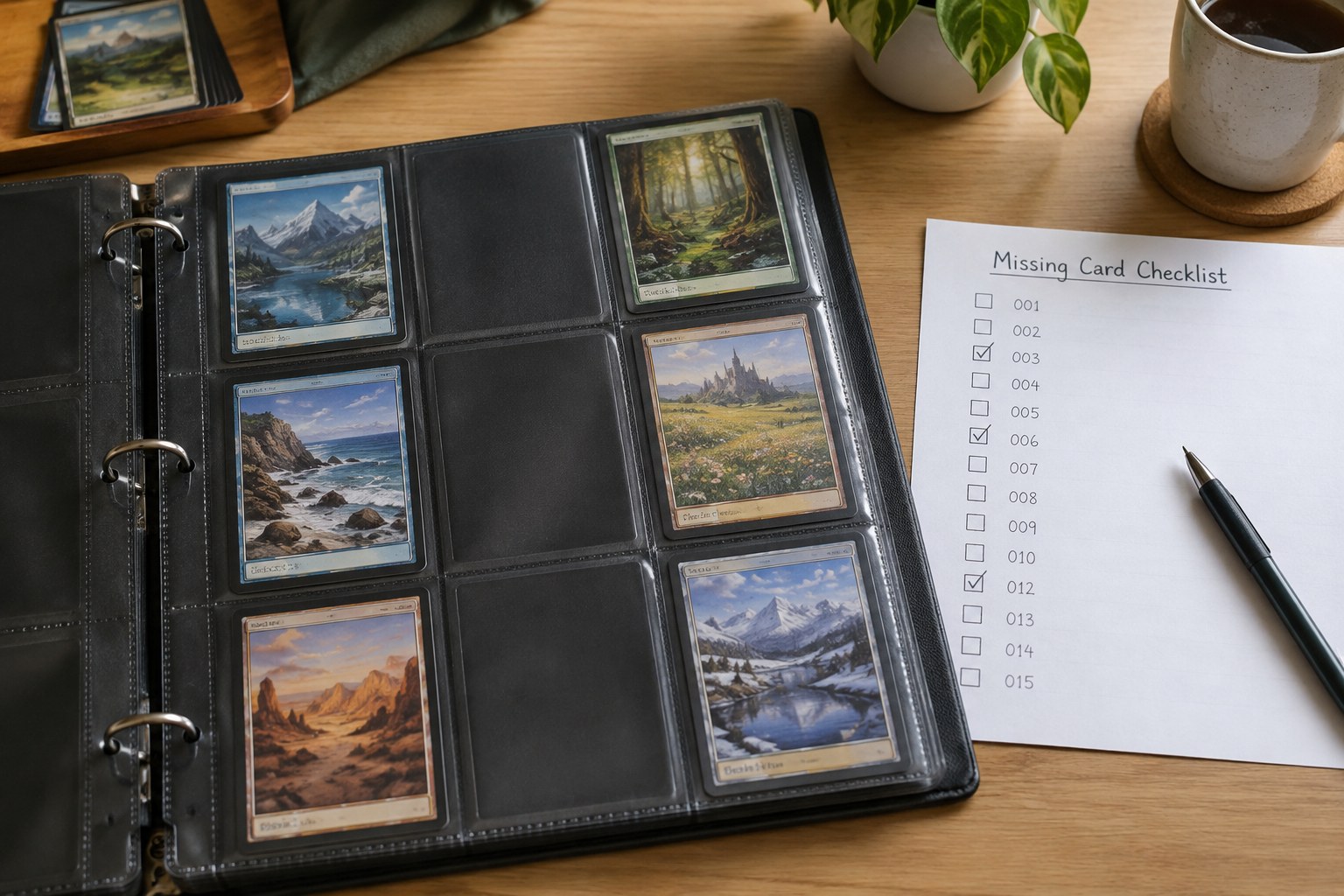
A missing-card checklist should answer a shopping question quickly: is this exact card needed? Clear identifiers matter more than elaborate formatting.
Define the set before counting gaps
Write the set name, publisher, language and edition at the top of the checklist. Decide whether promotional cards, parallel finishes and later reprints belong to your goal. If you include them, give them distinct fields or separate sections. A number alone may not distinguish two cards that look similar but belong to different versions.
Create one row for every card within the chosen boundary. Use the printed card number where available and add the name or subject as a cross-check. Leave unknown information blank with a note instead of inventing a sequence. If you use a publisher's checklist, record its source and check whether it includes the same edition you collect.
Make status unambiguous
Use a small set of statuses with clear meanings. Missing, owned and incoming are enough for many collections. Incoming should mean an agreed purchase or exchange that has not yet been received, not a card you merely hope to buy. Keep quantity separate from status so three copies of one card do not hide a gap elsewhere.
Add a condition requirement only when it affects your search. A worn reading or playing copy might count as owned while a replacement remains on a separate wish list. This is clearer than marking the same card both missing and present. Give replacement searches their own note explaining what you want to improve.
Update at the point of change
When an order is agreed, change the relevant rows to incoming and record a reference to the transaction. After arrival, compare the cards with the list before marking them owned. If an item differs in language, finish or number, leave the original gap open and record the unexpected copy separately.
Keep a dated shopping export on your phone or on paper, but return changes to one master list. Two independently edited checklists soon disagree. Before visiting a fair or arranging an exchange, refresh the export and remove cards already incoming. A compact, current list is more useful than a beautiful spreadsheet that still includes last month's purchases.
Review the collection boundary occasionally. If you decide not to pursue a difficult subset, mark it outside the current goal rather than pretending it is complete. The checklist should reflect your collecting decisions, not pressure you into buying every printed variation.