Organising small collections without excess accessories
A small collection rarely needs every accessory sold for its hobby. Start with the objects and the way you use them, then buy storage to solve an identified problem.
Make a simple inventory before shopping
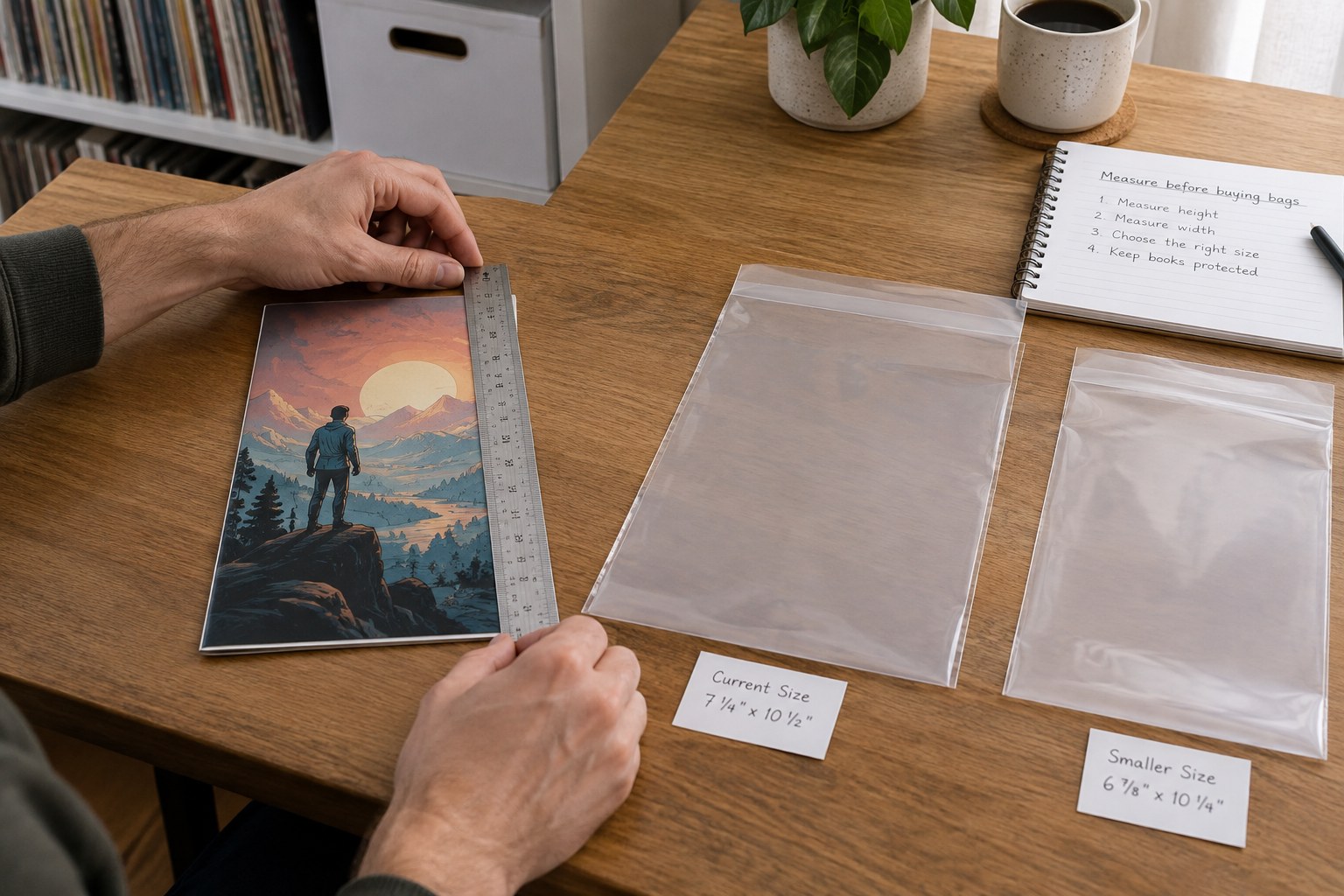
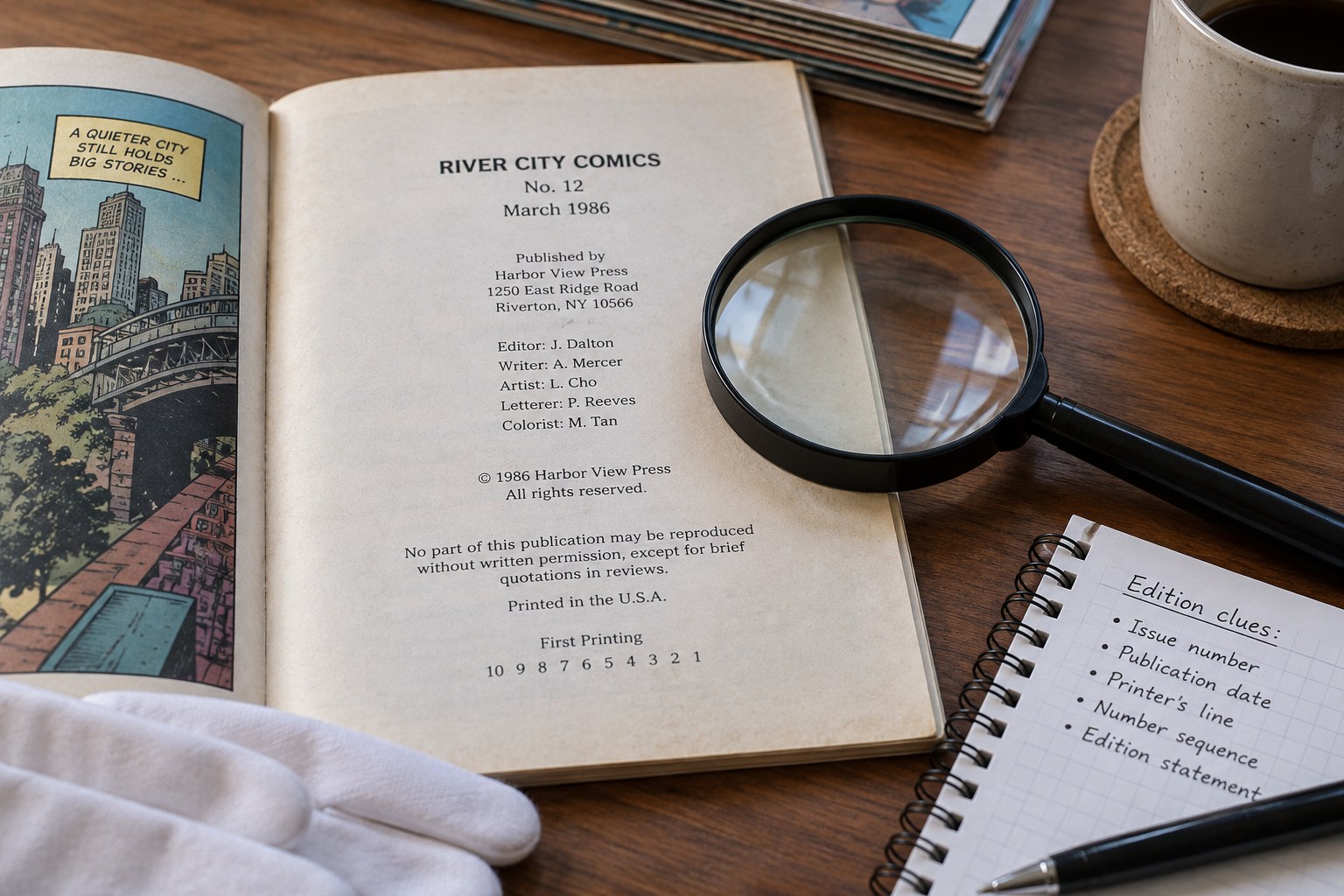
Lay out a manageable group on a clean surface and count the different formats. Record dimensions, quantities and any fragile or unusual examples. Separate the collection itself from packing material, duplicates and items awaiting identification. This tells you whether you need one modest box, several sizes of enclosure or simply clearer labels for storage you already own.
Choose a basic order that you can explain in a sentence. It might be by series and number, by subject or by acquisition date. Use a short list with an identifier and location for each item. A complicated database is unnecessary if it creates more maintenance than the collection requires; a clear spreadsheet or notebook can serve the same retrieval purpose.
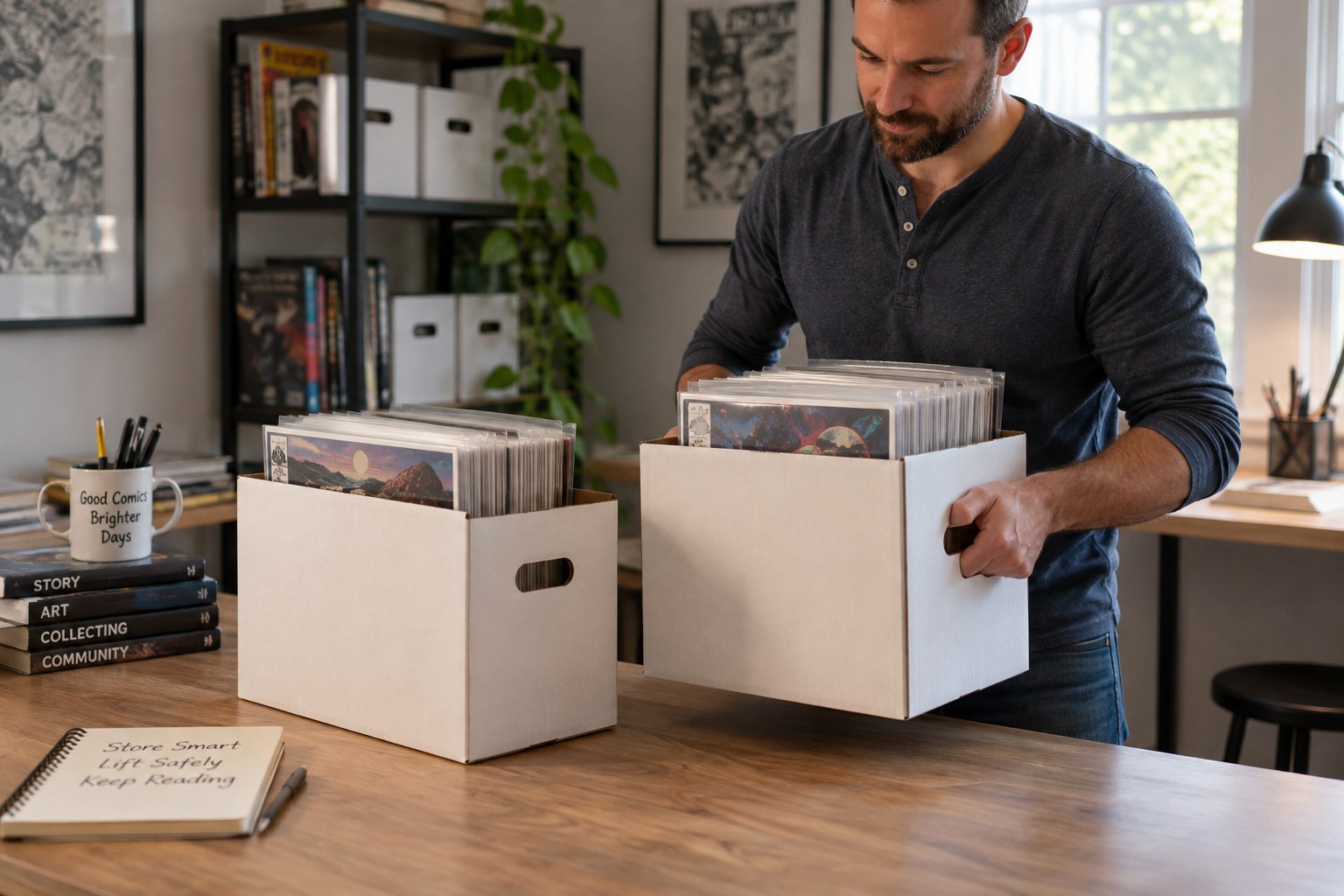
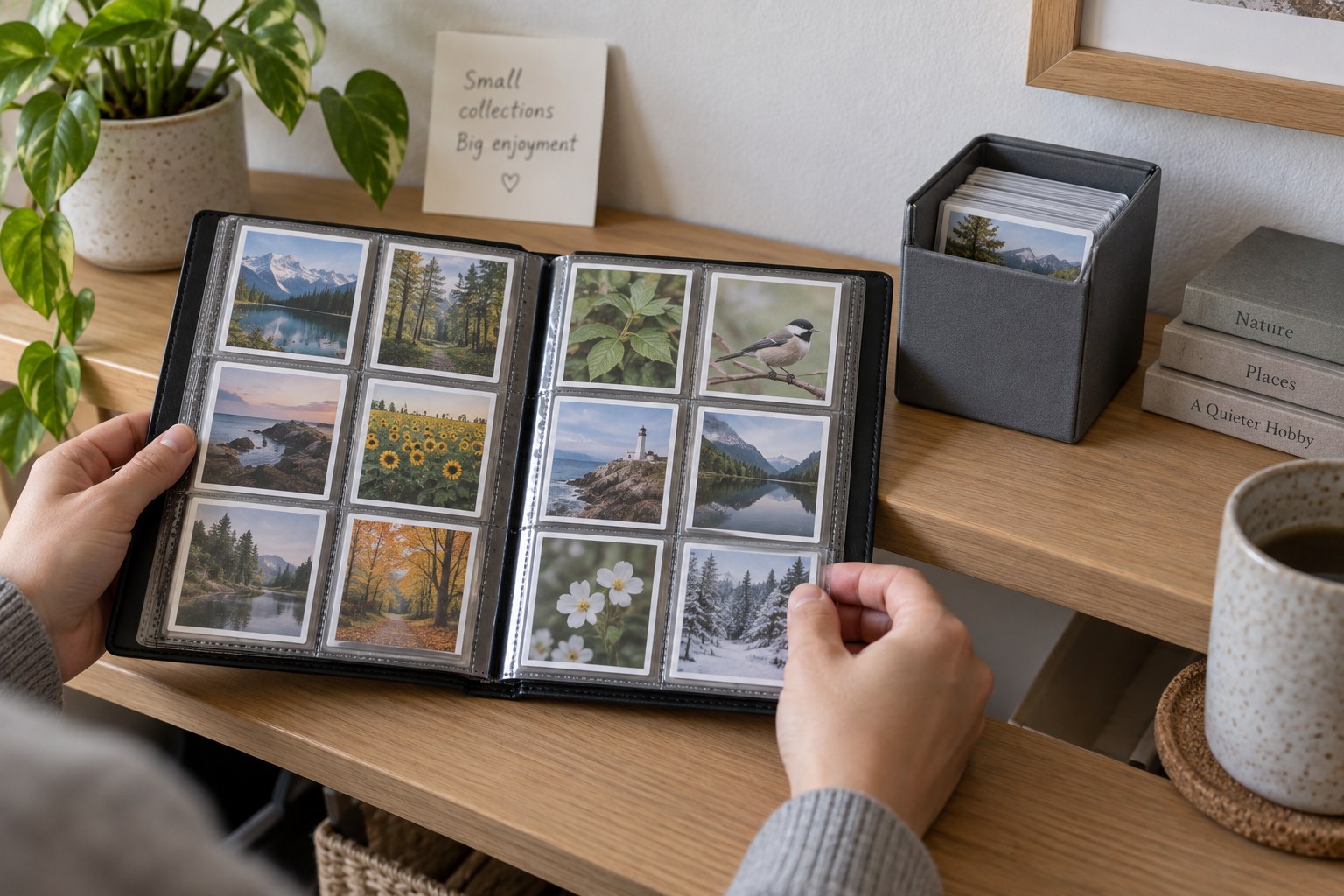
Identify the immediate difficulty. Are cards slipping in oversized pockets? Are comics stacked where you cannot reach them? Are you buying duplicates because the list is unclear? Each problem suggests a different solution. A display stand will not fix an incomplete inventory, and a larger binder will not make unsuitable pockets fit properly.
Buy in stages and reassess
Try a small quantity of the enclosure that addresses the actual problem. Check fit, retrieval and the space it occupies before buying a matching set for future additions. Keep the specification or packaging reference of what works. This is more useful than saving a collection of vaguely similar accessories whose dimensions you cannot remember.
Set aside a modest area for supplies and label it separately from the objects. Keep only quantities you are likely to use, and do not let empty packaging become a second collection by accident. If you retain original packaging because it belongs to an item, link it to that item's record and store it as part of the collection.
Review after a few additions. If the arrangement still lets you find, inspect and return each piece comfortably, there may be nothing to buy. Expand when a real limitation appears. A small collection can remain small by choice; the storage system does not need to imply that every empty space must eventually be filled.