Photographing glossy cards with controlled reflections
Reflective cards need more than one lighting angle. The aim is to show the design and the surface honestly, rather than make every reflection disappear.
Establish a neutral overview
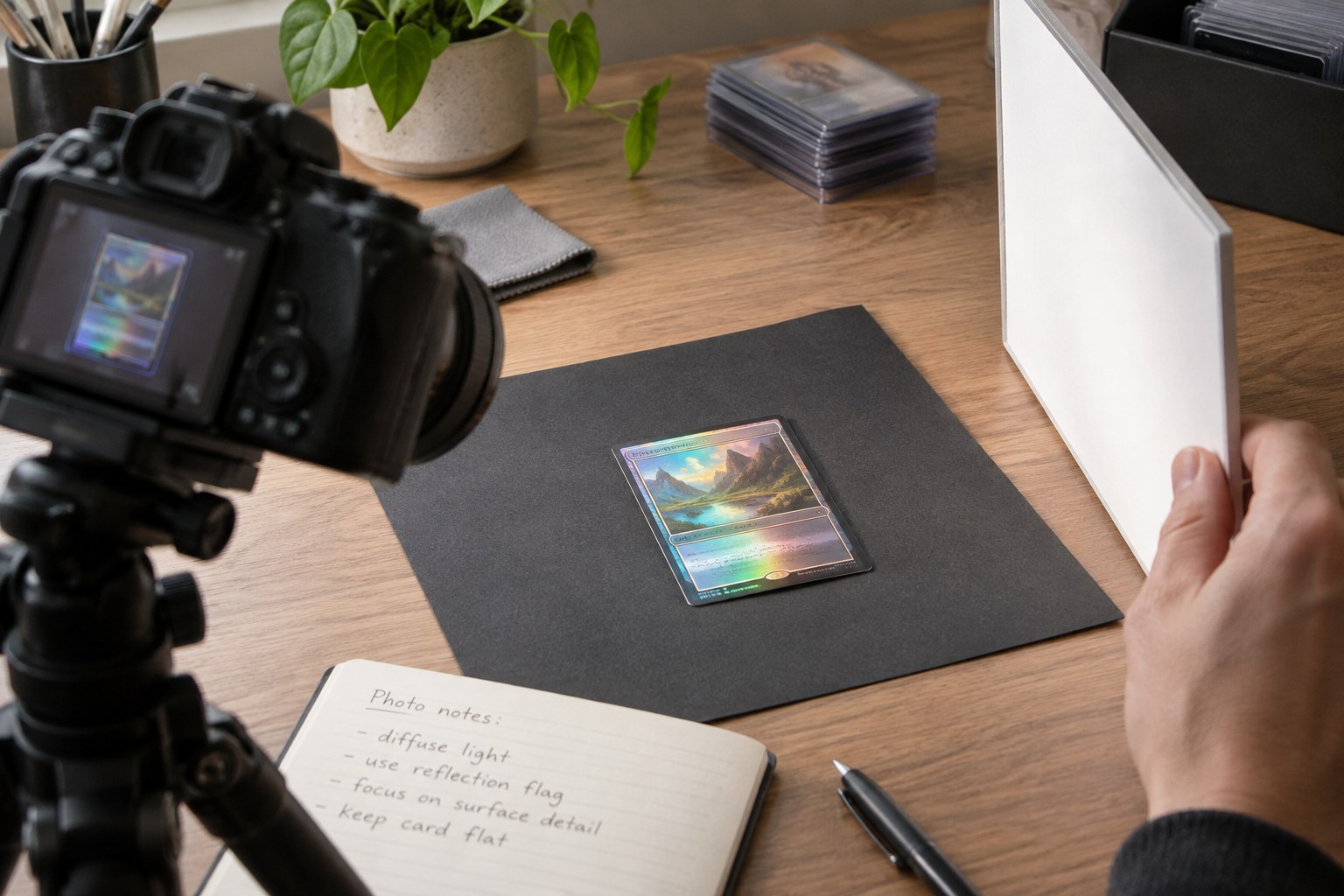
Place the card on a clean, stable support and arrange the camera so its face is approximately parallel to the card. Begin with soft, even light from the side. Take a full front image and a full reverse image before attempting dramatic angles. These neutral views establish the outline, borders and overall appearance that close-ups cannot provide.
Review the image for reflections of the camera, your hands and the room. Move the light or camera slightly rather than repeatedly lifting the card. A white patch across the centre can conceal printed detail, while a very dark exposure may hide surface marks. Check both the brightest and darkest areas on the actual image, not just on the camera preview.
Use reflections as information
A foil effect may appear quite different as the viewing angle changes. Add an angled photograph that shows this effect and label it as an angled view. Keep the neutral image in the sequence so the buyer can distinguish a lighting change from a different colour version. Avoid presenting the most colourful angle as the only representation of the card.
For a suspected surface line or indentation, make a separate detail image with light positioned to reveal it. Include a wider view that locates the feature. The fact that a line disappears under another light does not mean it is absent. Conversely, a reflection on an outer sleeve should not be described as damage to the card without a clearer observation.
Keep processing modest
Crop empty background and rotate the image if necessary, but preserve the full card outline in at least one view. Do not increase saturation until a familiar foil becomes a colour it does not normally show. Avoid sharpening that creates bright outlines along edges or smoothing that removes surface texture.
If you adjust exposure, apply it to make the file closer to what you observed and retain the original. A listing should not depend on a filter to reveal essential information. Where the camera struggles with the effect, explain that the finish changes with light and include several unfiltered angles.
Check the finished sequence
Arrange the photographs in a readable order: neutral front, reverse, angled finish and relevant details. Make sure the same copy appears throughout, especially when several cards share artwork. Use an inventory identifier in filenames to prevent accidental mixing.
View the sequence on a small screen as well as a larger display. Important defects should not require a buyer to guess which tiny thumbnail matters. Keep captions specific, such as lower edge detail or foil viewed from the left, and distinguish what the image shows from what remains uncertain.