Preparing a card exchange by post
A postal exchange works best when both collectors agree on the exact cards and the practical details before either parcel leaves. A short written agreement prevents avoidable mismatches.
Match cards by identity and condition
Create a list for each side of the exchange with set, number, language and any relevant finish or edition. Add photographs of the actual copies, not catalogue images. Identify visible wear and any point you have not inspected. If a card is being supplied as a temporary placeholder or playing copy, state that explicitly rather than assuming both people use the same condition vocabulary.
Confirm quantities and avoid ambiguous phrases such as the cards in the photo when extra cards appear in the background. Number the entries and have both collectors confirm the same version of the list. If the agreement changes, replace the list in one clear message instead of leaving the final contents scattered across several conversations.
Agree on dispatch details
Decide when each parcel will be sent, which delivery service will be used and whether tracking is included. Check the carrier's current rules for the destination and contents. Do not assume a domestic arrangement will work unchanged across a border. Each person should understand any cost they have agreed to pay before posting.
Exchange addresses through an appropriate private channel and confirm them in a readable format. Avoid copying an address from an old parcel without checking it. Keep personal information out of public photographs and shared collection lists. A parcel reference can be recorded in your inventory without making someone's home address part of the visible catalogue.
Pack so the opening is straightforward
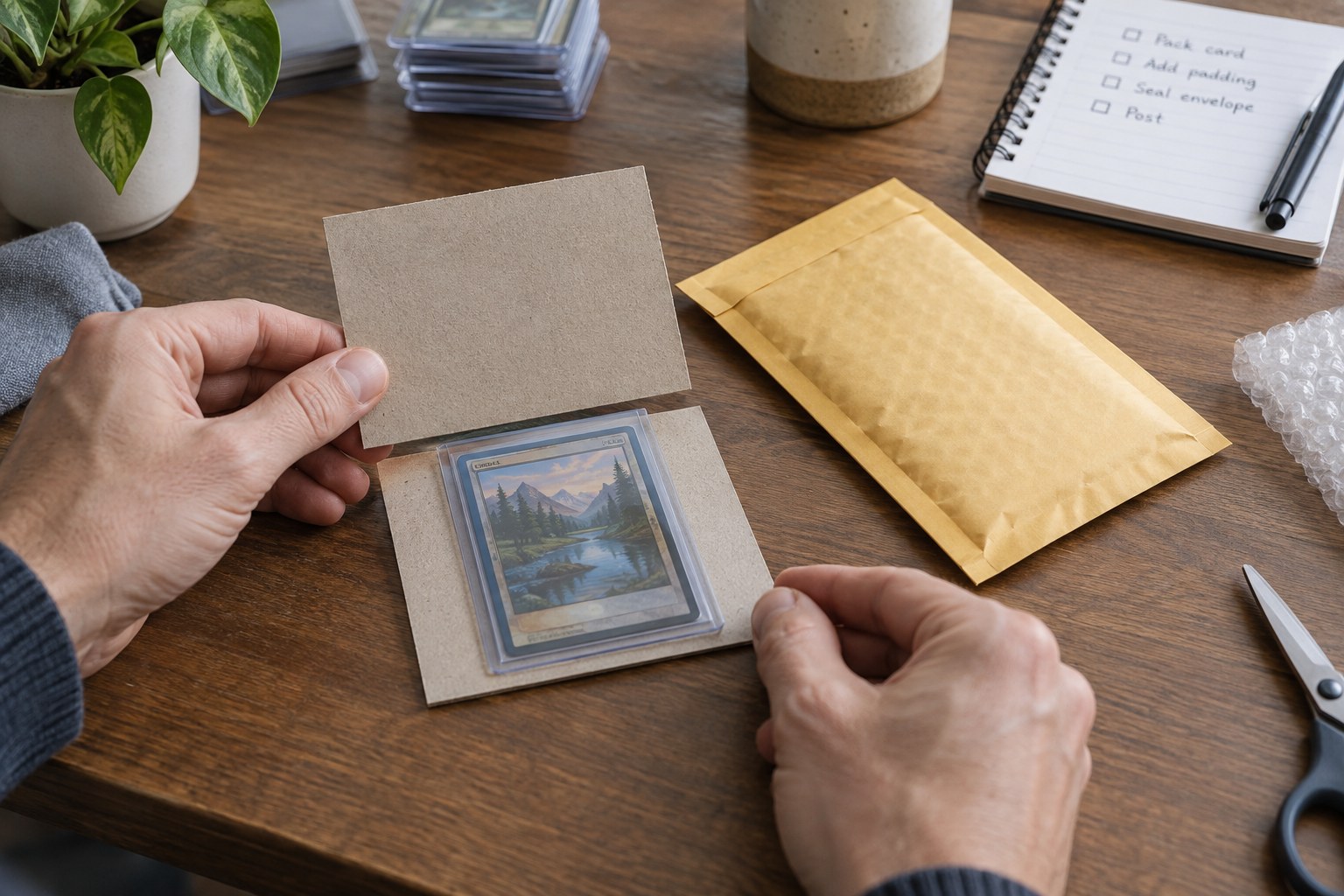
Use suitable individual protection and a rigid outer arrangement that prevents bending without pressing on the card faces. Secure the protective layers rather than applying adhesive to cards or sleeves where it could contact them during removal. Include a small contents list with the agreed item numbers, keeping it separate from the cards.
Think through how the recipient will open the package. Excessive tape can create a cutting hazard close to the contents. Mark the opening route on the outer protection where useful and avoid hiding a small card loose among packing material. Photograph the packed arrangement before closing the outer parcel, retaining the images privately with the exchange record.
Close the record after arrival
When the parcel arrives, compare its contents with the agreed list before filing cards into albums. Record arrival and acknowledge receipt through the same conversation. If something differs, photograph the relevant item and explain the difference using the list entry rather than a vague complaint.
Update your missing-card list only after confirming identity and condition. Keep the exchange record linked to the new inventory entries, and mark outgoing copies as exchanged. This final step prevents a card that has left your collection from remaining listed as available for another exchange.