Recording information without writing on the object
A note is useful only if it stays connected to the correct object. Build that connection through the housing and inventory rather than writing directly on the collectible.
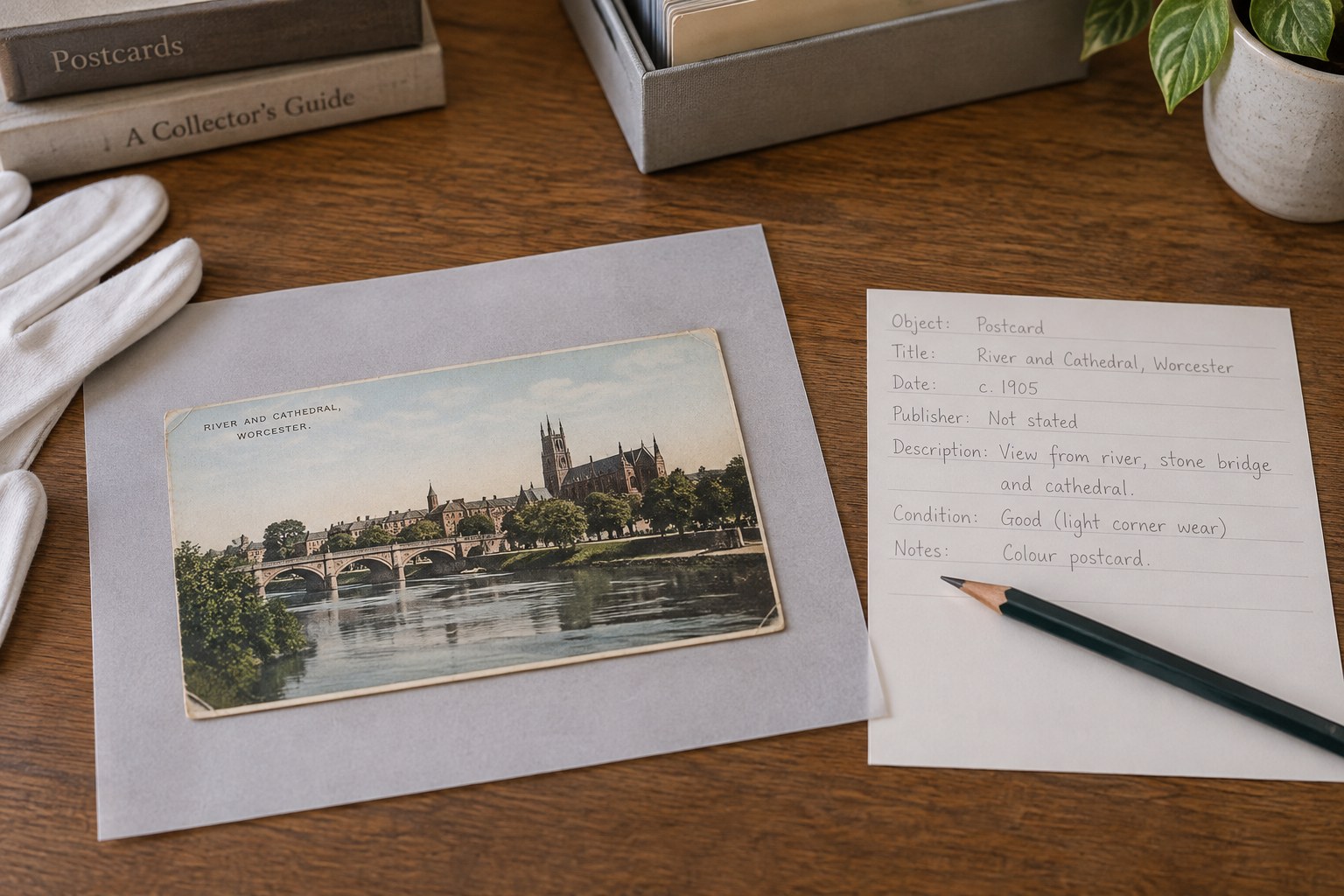
Use a stable reference
Assign an inventory number that does not depend on a changing interpretation. If a postcard’s place or a coin’s date is uncertain, avoid embedding the proposed answer in its only identifier. A simple sequence can remain stable while the descriptive fields improve. Check for duplicates before assigning a new number and keep a record of retired numbers rather than reusing them.
Put the reference on a suitable outer enclosure or associated support, away from contact with the object. Prepare the label before the object is inside when that avoids pressure from writing. Choose a method compatible with the housing and confirm that it remains readable during ordinary use. An adhesive label should not be allowed to migrate onto the collectible.
Keep observations in a separate record
Use fields for identity, condition, source and location instead of crowding every fact onto a tiny label. The label needs to lead to the record, not reproduce it. Include photographs showing the whole object and any distinguishing details. Two similar pieces should be distinguishable without relying on the person who first numbered them.
When taking temporary notes at the table, write the inventory number first. A page headed only blue postcard or small coin can become ambiguous before the session ends. Record uncertain readings as uncertain and distinguish an observation from a proposed explanation. Date additions that may matter to a later condition comparison.
Protect the connection during movement
Before removing an object from its housing, place the housing and reference beside the prepared work area. Work with one object at a time when similar pieces could be confused. If the object needs another enclosure, transfer the reference and verify it against the photograph before putting the old one aside. Keep old labels when they contain provenance or earlier descriptions.
For a display, use position labels or a separate caption linked to the inventory. Photograph the arrangement and record temporary locations. After dismantling it, check every object back into its normal housing. The system should survive a change of box, a revised identification and another person’s involvement without requiring fresh writing on the original each time.


