Separating playing cards from collection copies
Cards used regularly at a table have a different routine from copies kept for a collection. Separate those roles so a game session does not quietly change the condition record of a stored copy.
Assign a role to each physical copy
Start with the copies you actually own rather than an ideal future collection. Decide which are for play, which are for reference and which you prefer to keep stored. A duplicate may serve either role, but give it a distinct inventory identifier if condition or purchase history matters. Two identical card names do not mean two interchangeable physical objects.
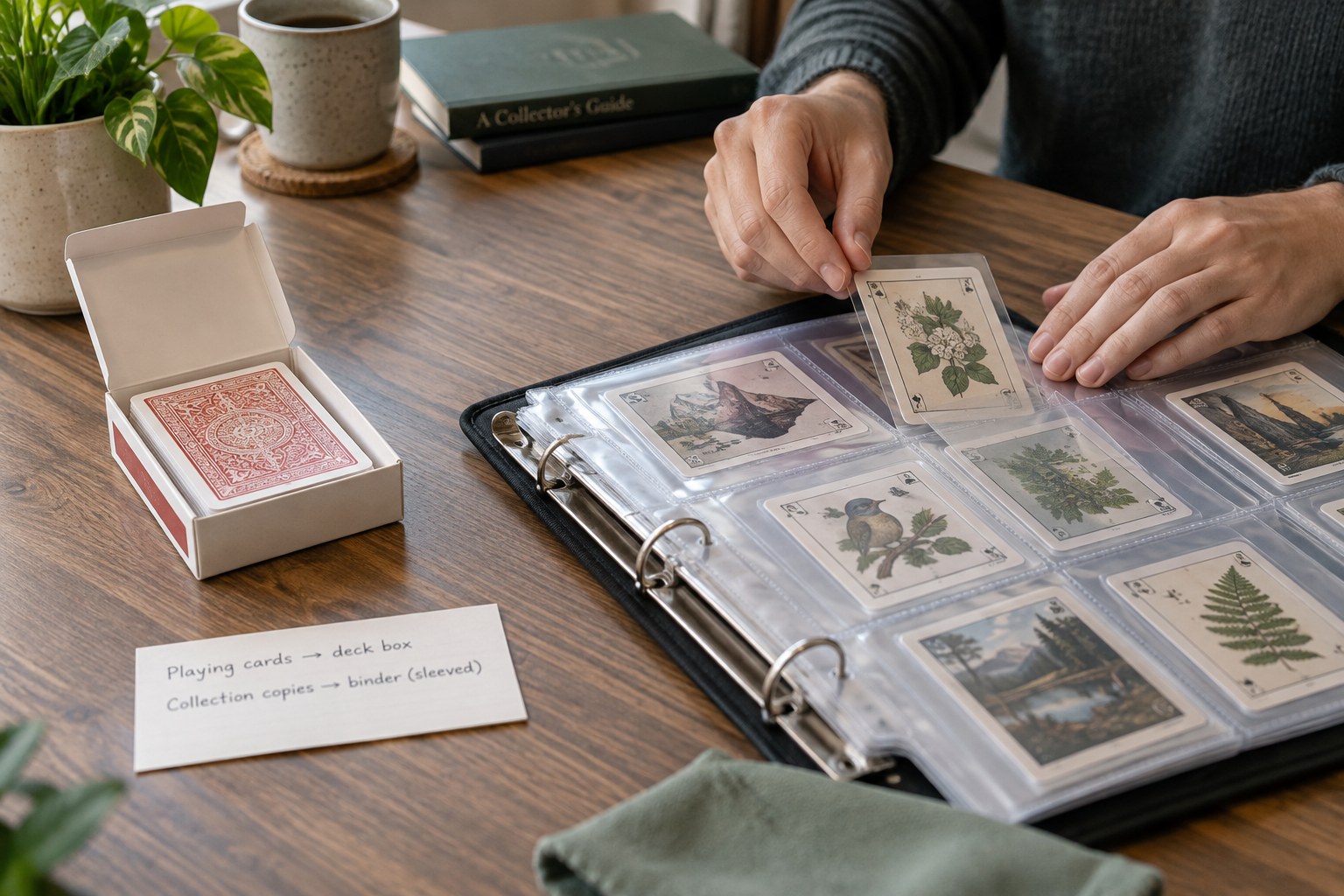
Write the role in the catalogue and use separate deck boxes or binder sections. Label the outside of the container, not the card. If you borrow a stored copy for a game, record the move and inspect it before returning it. This is especially useful when a collection is shared and more than one person retrieves cards.
Choose sleeves and storage for the intended use. Check a game's current organised-play requirements directly with its organiser if you plan to enter an event; do not assume a display sleeve or altered card will be acceptable. For casual play, agree on the handling arrangement with the other players before bringing out a copy you would be reluctant to replace.
Keep the two routines distinct
Prepare a playing set before the session begins, with the needed cards already in their intended sleeves. This reduces last-minute borrowing from collection pages. After play, count the set and check for cards placed in the wrong deck box. Make any condition notes while the memory of the session is clear, rather than relying on an older catalogue description.
For stored copies, organise access around viewing and comparison. Keep their location stable and avoid placing the collection binder in the middle of a playing surface. A clearly separate viewing area makes it easier to know which cards are available for a game and which are being shown only for inspection.
Review the arrangement when interests change. A card that was once essential for play may later move into the collection, or the reverse. Date that change and preserve earlier condition notes. The purpose is not to create a hierarchy between playing and collecting, but to make each copy's use and history understandable.