Storing comics without compression
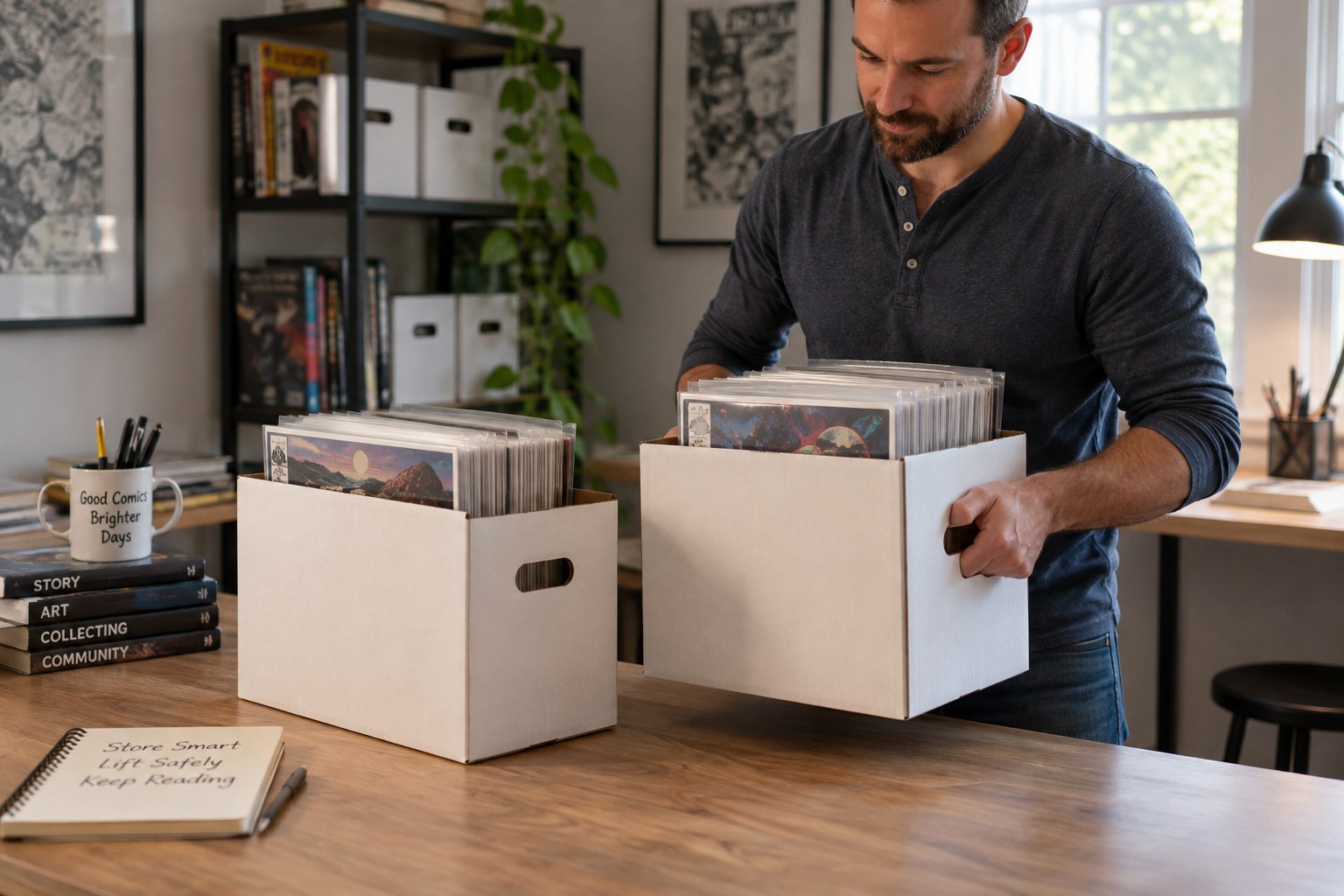
An orderly row of comics should still leave room to remove an issue. Pressure is not a substitute for support, and a tightly packed box can be difficult to use.
Look at the filled box, not the empty one
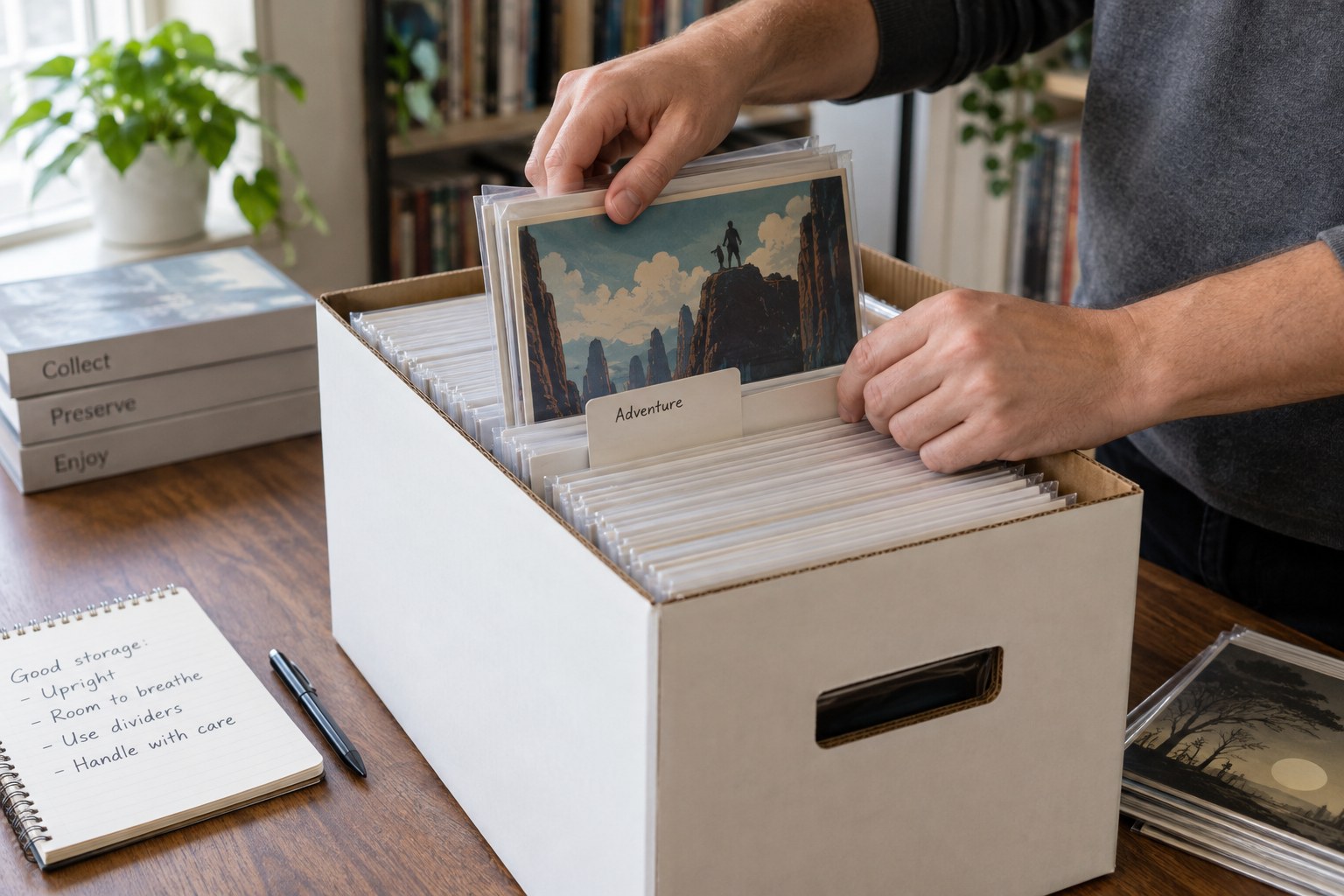
Set the box on a stable surface at a comfortable height. With the comics upright and supported, look along the top edges. Covers should not be folded over to fit beneath the lid, and bag flaps should not be trapped in a way that pulls on the comic. If the row bows or individual issues lean sharply, review the arrangement before adding more.
Try removing a copy from the middle using its enclosure, while supporting neighbouring issues. If the only way to grip it is to pinch the top of the paper or force several comics apart, the box is too crowded for that arrangement. Remove a small group to another suitable container and repeat the check. There is no benefit in meeting an advertised capacity if ordinary retrieval becomes difficult.
Support a short row without squeezing it
A partly filled box presents the opposite problem: unsupported comics can lean into empty space. Use a suitable divider or support intended for the container, with a smooth face that does not press a narrow edge into the nearest comic. Check that it stays in position when you remove an issue. Loose household objects make poor supports if they can shift or introduce sharp corners.
Keep thick volumes and unusually large editions separate when they interrupt an otherwise even row. A single book with a projecting spine can transfer pressure to a neighbouring cover. Record the alternative location in your catalogue rather than forcing every issue of a series into the same box for visual consistency.
Leave space for use and growth
Label the box with its contents and review it when new issues arrive. A small amount of working space makes it possible to check a label, move a divider and return a comic without scraping its bag. Put the lid on gently and confirm that it closes naturally; never use the lid to push down contents that stand too high.
The Library of Congress recommends supportive housing and avoiding overcrowding for comic collections. Treat that as a storage principle, then adapt the arrangement to your copies and furniture. If a book is already distorted or fragile, moving it into a roomier box will not repair it. Record its condition and seek conservation advice before attempting to flatten or alter it.