Cataloguing variant covers without duplicate records
Variant covers need two levels of description: the issue they belong to and the individual copy you own. Keeping those levels separate prevents both accidental duplicates and missing copies.
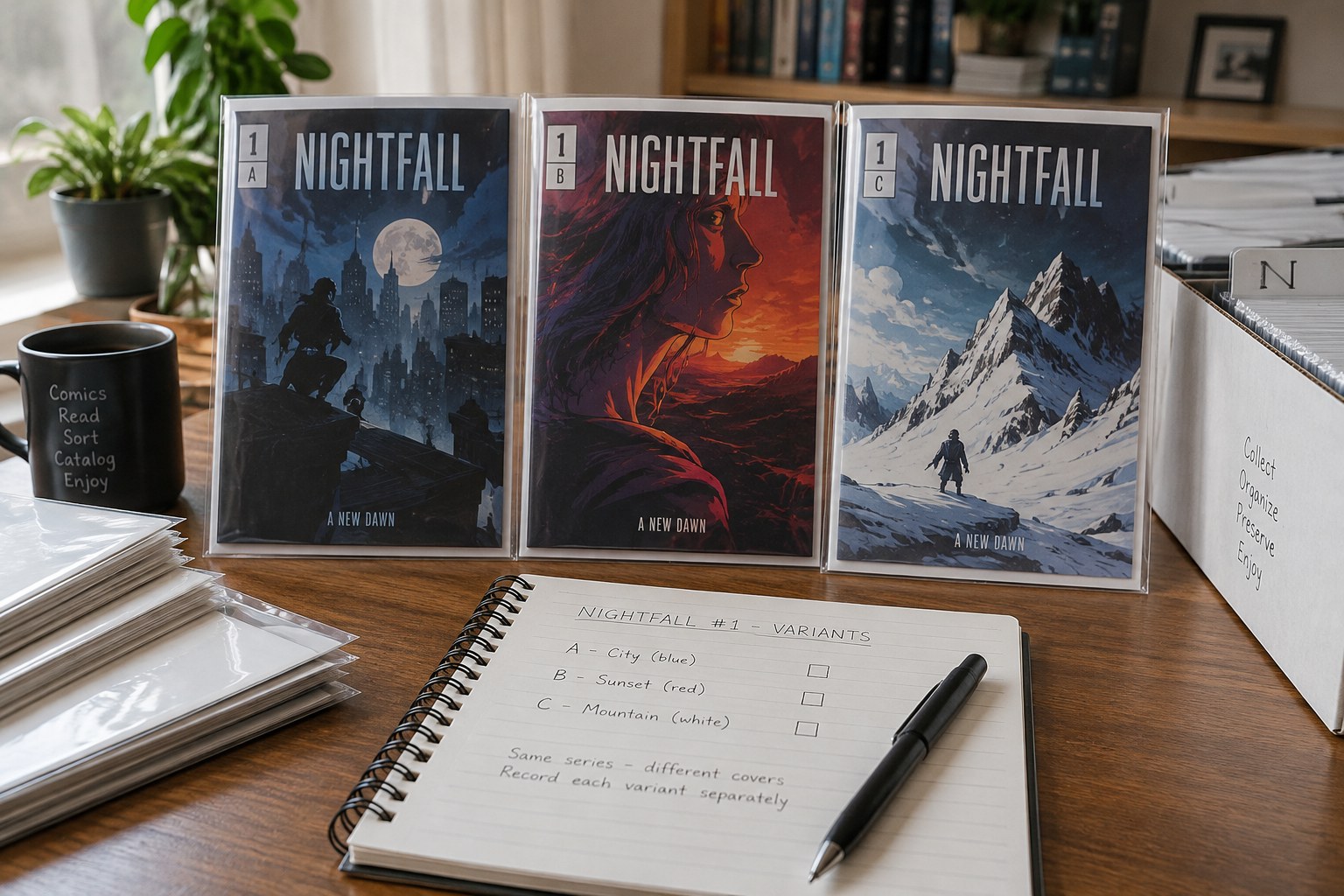
One issue can have several cover records
Begin with a shared issue entry containing the series, issue number, publisher, language and publication details. Under that entry, create a separate variant record for each cover you intend to track. Use the publisher's designation when you can verify it, preserving its spelling. If you only know a retailer's description, record that as the source rather than presenting the name as an official designation.
Add a small cover photograph and the printed barcode or other distinguishing details where available. Describe the visible artwork in ordinary words as a secondary aid. An image of a character standing against a red background can help you find the right entry, but it should not replace publication evidence when similar artwork appears in another printing.
Give every physical copy its own number
If you own two copies of the same variant, they still need separate inventory identifiers. Their purchase history, condition and storage location may differ. Link both identifiers to the same variant record rather than creating two competing descriptions of the edition. This avoids correcting the title in one place while leaving a second entry unchanged.
Keep ownership status separate from the checklist. Wanted, owned, reserved for exchange and sold describe your relationship to a copy, not the identity of the cover. A sold copy can remain in the historical record without making the current collection appear complete. Include the date of any status change so you can understand an older export or printed list.
Handle uncertainty without multiplying records
Before adding a newly discovered cover, search your catalogue by issue number, barcode and image. Check whether it is already listed under another name. If two entries describe the same variant, merge the descriptive record while retaining both physical-copy identifiers and their history. Do not delete a purchase record simply to make the catalogue look cleaner.
When a cover's status remains uncertain, use a temporary description and a photograph filename. Note the question to resolve, such as whether the copy is a later printing or a retailer edition. Review that question when better evidence becomes available. A clearly marked provisional entry is more useful than several confident names for what may be the same cover.
Export a small sample and test it as a shopping list. Can you tell at a glance which cover is missing and which physical copies are duplicates? If not, adjust the fields before cataloguing the rest of the collection.